
During this time, I have been monitoring the on-chain capital flow in the Middle East. I initially just wanted to see if there were changes in stablecoin inflows and outflows, but the more I looked, the more I felt something was off.
The issue is not how much funding there is, but how the funding is 'accepted'. In the past, if you had money, you could participate on-chain, but now it is slowly becoming: having money does not necessarily mean you have the qualification to participate.
This change is particularly evident in the Middle East.
On one hand, the amount of funds in this region has always been significant, and the dependence on the crypto market is increasing;
But on the other hand, the real environment is very complex. Sanctions, compliance, and regional risks overlap, making 'who can participate' a question that must be taken seriously.
In other words, money does not fail to come in, but rather needs to be filtered after it arrives.
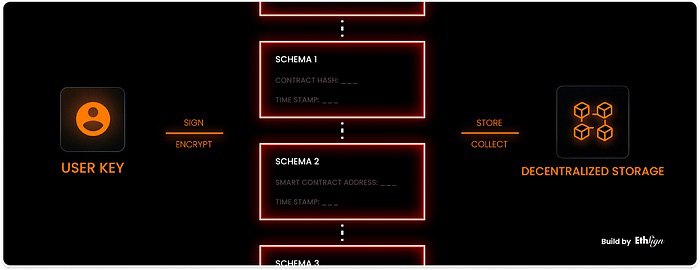
I initially thought this was each project party's own risk control behavior, but after observing more, I found that this kind of 'filtering' is becoming a consensus.
Airdrops are starting to have conditions, distributions are beginning to consider identity, and even participation in some agreements is implicitly setting thresholds. If this trend continues, a question will arise: Is there a more standardized and reusable way to do this?
At this point, I began to look at it anew.@SignOfficial SIGN.
Many people see SIGN as a tool for issuing tokens, but if you view it in the context of the Middle East, it actually resembles providing a kind of 'filtering infrastructure.'
Through attestation, certain attributes of users become verifiable conditions, and then through privacy mechanisms, these conditions can be established without exposing specific information. In other words, it does not solve the question of 'how to distribute money,' but rather 'who should receive the money.'
This might just be optimization in ordinary markets, but in an environment like the Middle East, it could very well become a necessity. Because the core issue here has never been a lack of funds, but rather a lack of a mechanism that can filter without completely exposing itself.
Without such tools, project parties either choose to filter roughly or take on risks, and both approaches are not conducive to long-term development.
You can understand the value of SIGN from a more direct perspective: it makes 'eligibility for participation' programmable.
Who could participate before was a vague judgment; now it can become clear rules.
Before, distribution was a broad net; now it can be precise filtering.
Trust used to rely on experience; now it can be established through verification.
Once these three points are established, it is not just an improvement in efficiency, but a change in the rules themselves.
It is precisely because of this that I began to feel that the Middle East might become the place where SIGN first reveals real demand. The reason is simple: the problems here are more real, more urgent, and more concentrated. Many demands that are only 'optimized' in other markets have become 'must-solve' issues here.
Once projects in this area begin to use this 'verification + distribution' logic on a large scale, the frequency of SIGN's use will significantly increase. One characteristic of infrastructure projects is that as long as usage increases, value will gradually emerge, rather than being driven by emotions.
Many people like to ask a question: When will such projects explode? But I am more concerned with another matter: Is there a possibility that it could first become the 'default choice' in a certain area? If the answer is yes, then subsequent growth is not just a narrative, but diffusion.
From the current situation, the Middle East meets these conditions.
So my current judgment is actually quite direct: SIGN's short-term price may not necessarily be directly linked to the situation in the Middle East, but its long-term value is likely to be validated first in this region.
Once verification is established, it is only a matter of time. $SIGN #Sign地缘政治基建