
I'm watching @MidnightNetwork the way you watch something quiet but important unfolding, like a light turning on in a dark room, and I can’t ignore this feeling that it’s trying to fix something we’ve all learned to live with but never really accepted—the silent loss of control over our own data. There’s a strange discomfort in realizing how much of ourselves already exists online, scattered across systems we don’t understand, owned by entities we never chose, and this project seems to be gently pushing against that reality.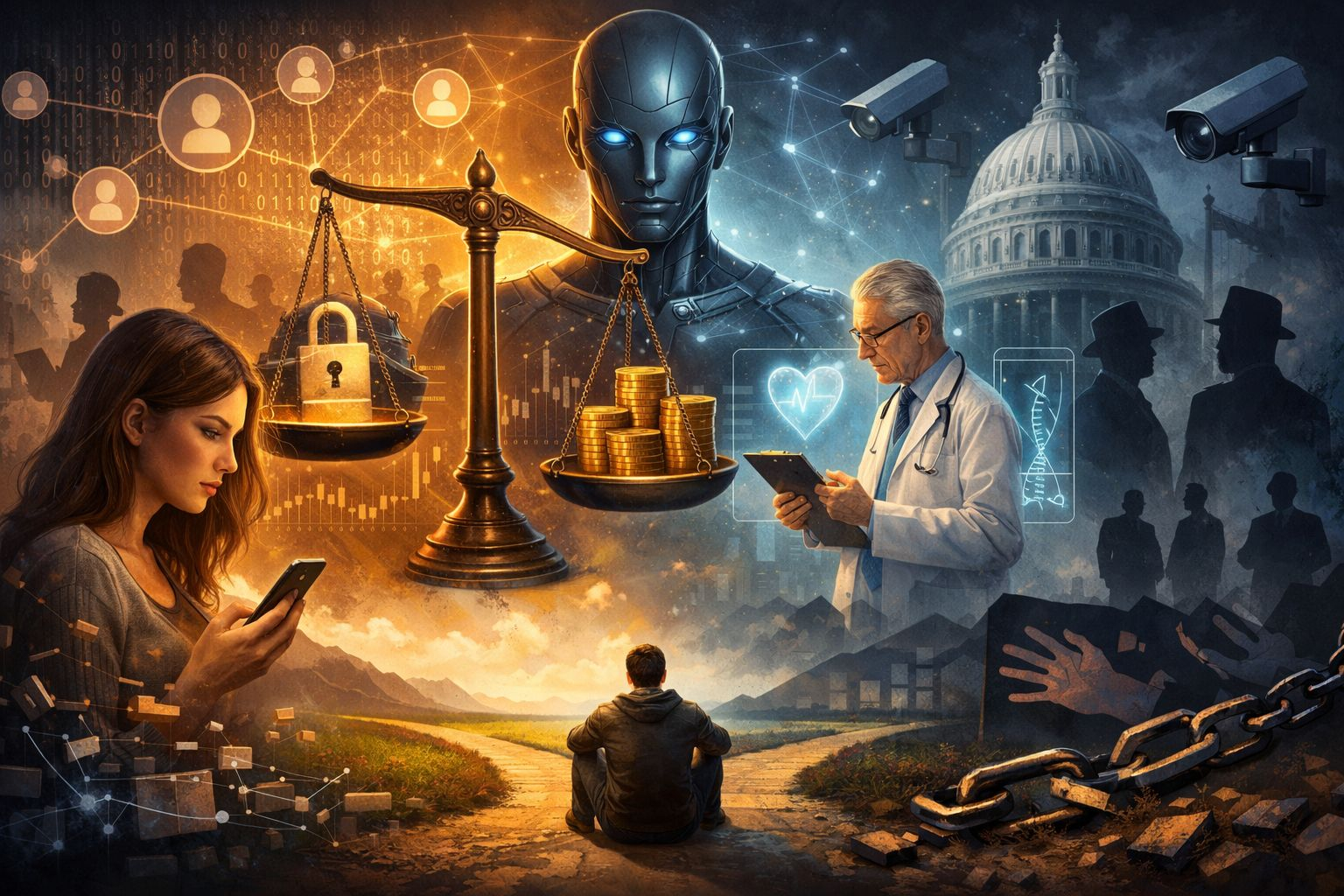
When I look at it more closely, it doesn’t feel loud or aggressive in its promise. It feels almost careful. Like it understands that trust is broken, and you can’t rebuild that by force. The idea of giving people control over their identity and information sounds simple, but emotionally, it’s heavy. Because control also means responsibility, and not everyone is ready to carry that weight. We’ve been trained to trade control for convenience, to click “accept” without thinking, to move fast instead of thinking deeply. So I wonder, even if the system is ready… are people ready?
There’s also something slightly unsettling about how artificial intelligence might fit into all of this. AI can protect, optimize, and predict, but it can also distance us from understanding what’s really happening. It’s like trusting a system that thinks faster than you, but can’t fully explain itself in a way you feel. And when that system is managing sensitive data—your identity, your history, maybe even your health—it becomes less about technology and more about emotional trust. Not just “is it safe?” but “do I feel safe
The financial layer adds another kind of tension. Whenever value is introduced, behavior changes. People stop thinking long-term and start reacting short-term. A network that wants to build trust can easily get pulled into cycles of hype, speculation, and noise. And I can’t help but think about how many good ideas lost their direction because money arrived too quickly, before the foundation was strong enough to hold it.
Then there’s the deeper, more human side of it—places like healthcare, where data isn’t just data. It’s fear, hope, survival. If @MidnightNetwork ever touches spaces like that, the expectations won’t just be technical—they’ll be emotional. People don’t just need systems to work; they need to believe in them. And belief takes time, consistency, and a kind of honesty that technology alone can’t provide.
Regulation feels like an invisible pressure in the background. Not loud, but always present. Systems that empower individuals often challenge existing structures, and those structures don’t always respond kindly. It creates this quiet tension between innovation and control, between freedom and order. And somewhere in the middle of that, projects either adapt… or disappear.
Adoption, though, is where everything becomes real. It’s easy to talk about change, but much harder to live it. People stay where things are familiar, even if those systems aren’t perfect. So @MidnightNetwork isn’t just building technology—it’s trying to shift behavior, and that’s one of the hardest things to do. You’re not just asking people to use something new; you’re asking them to think differently about something they’ve ignored for years.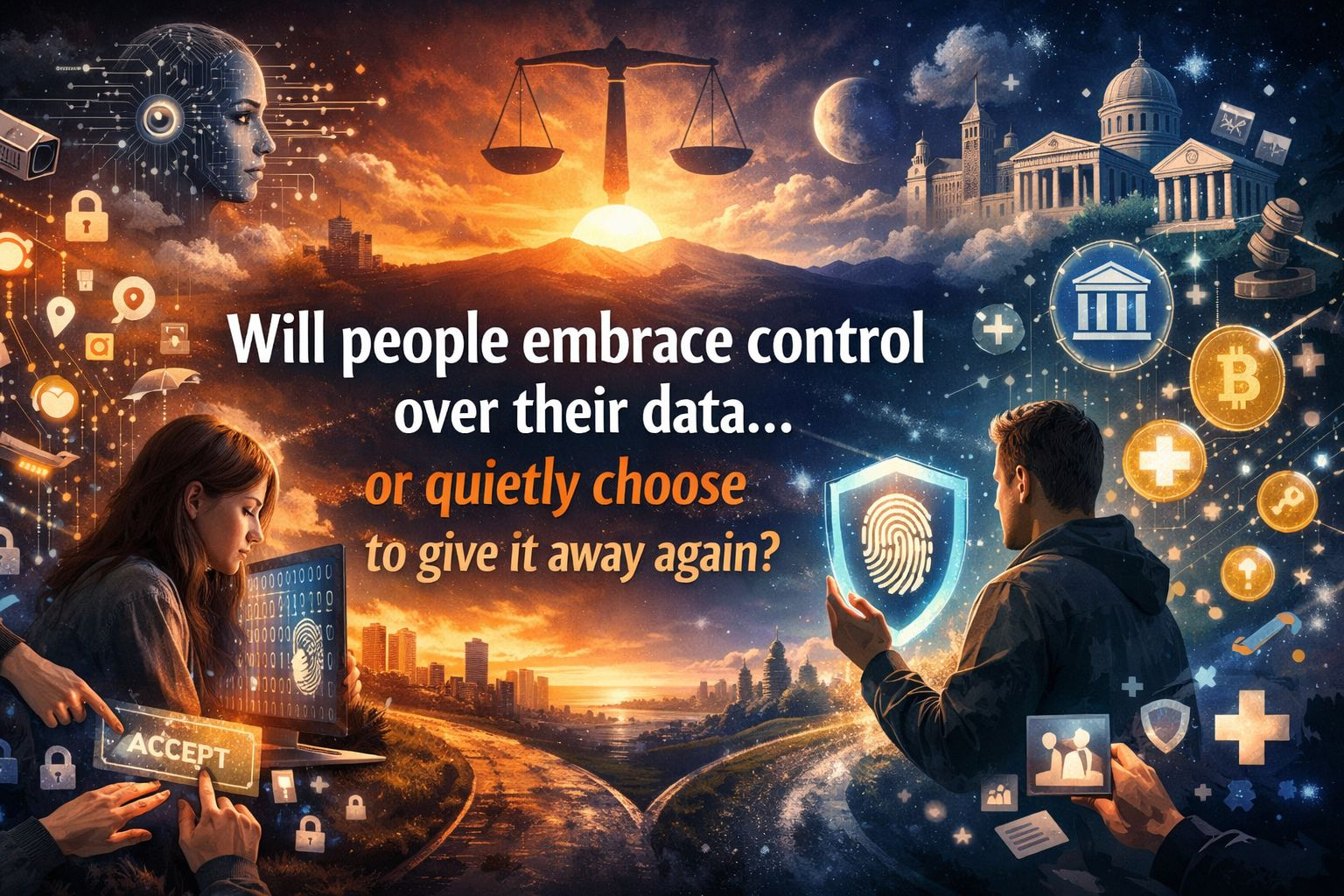
And the more I sit with it, the more it feels like this project is not just technical—it’s emotional. It touches on trust, fear, control, and the quiet discomfort of realizing how little ownership we actually have over our digital lives.
So I keep coming back to this, and it doesn’t leave me easily: even if @MidnightNetwork succeeds in giving people real control over their data… will people embrace that freedom, or will they quietly choose to give it away again