
Portable Trust: The Biggest Missing Layer of Crypto?
We call crypto borderless... but if we look honestly, trust is still not borderless at all.
The reality today is that if you prove your identity eligibility or any credentials on one chain, that proof remains limited to that environment. As soon as you move to another chain or app, the system treats you as a stranger again. Same wallet, same data, same user but once again verification.
This is not just an inconvenience; it is a structural inefficiency that multiplies with every new chain and every new protocol.
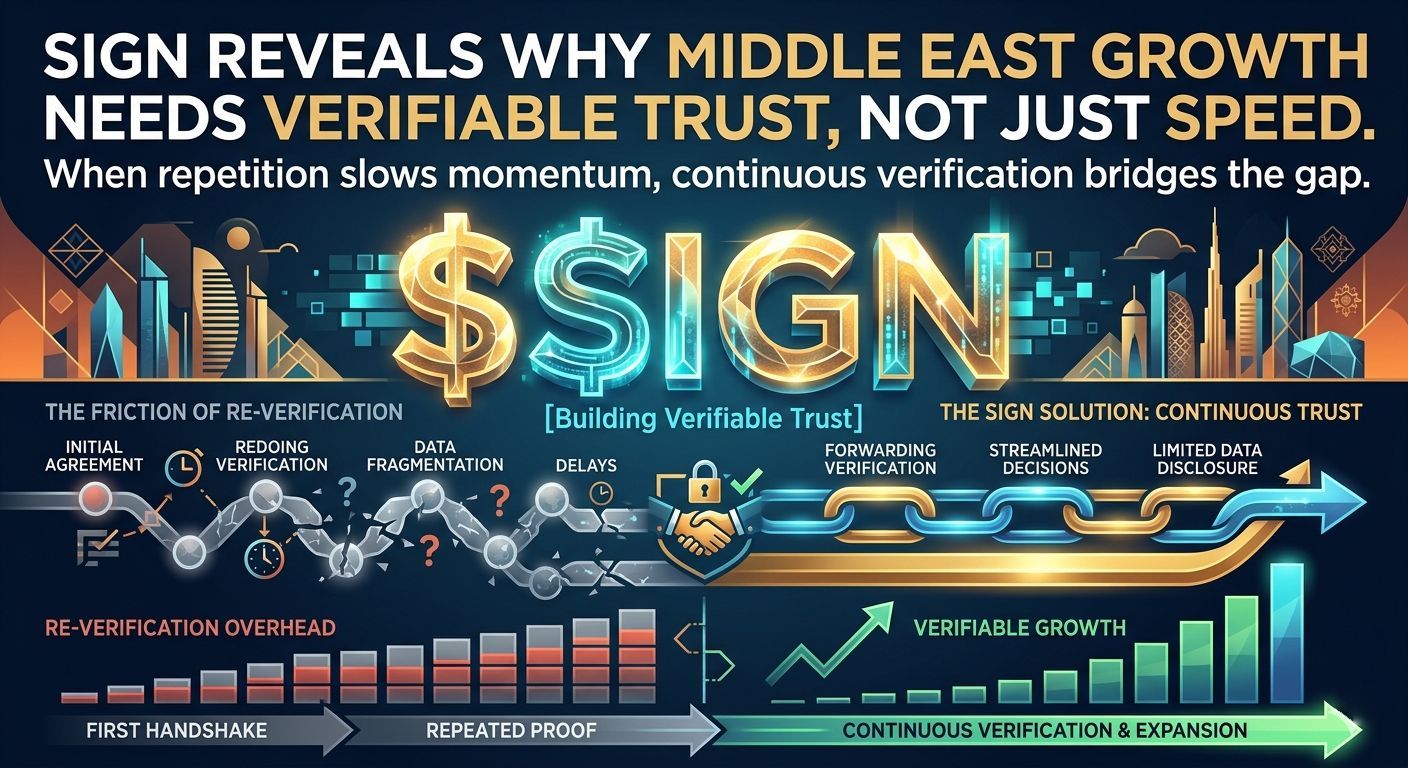
The Real Cost of Fragmentation
Every new ecosystem builds its own verification logic. Every app creates its own trust model. Result?
Duplicate verification flows
Extra gas fees
Slow onboarding
User drop-off
Waste of developer time
All of this is happening because there is no 'shared trust layer' in crypto.
And until trust is portable, interoperability will be limited to messaging only meaning data can move, but trust cannot.
Sign's Approach: Layer Below Noise
This is where Sign's approach feels different.
It is not chasing the typical cross-chain narrative. Nor is it just becoming a solution for messaging or bridging. Its focus is on a deeper problem: making attestations portable.
In simple words:
If a claim has been verified in one place
And it is cryptographically backed
So there should be no need to verify it again everywhere
Sign is building this concept where proofs are not just static records, but become reusable assets.
ZK Programmable Trust = Real Shift
The core idea is to make trust programmable.
Meaning:
Proofs secured through ZK (zero-knowledge)
No privacy compromise
And other systems should be able to directly verify those proofs
If this works properly, then:
KYC will happen once, not repeatedly
Airdrop eligibility will not be repeated
Reputation will not need to be rebuilt
Trust will be created in one place... and will work everywhere.
But the Challenge is Still Remaining
The theory is strong but execution is not easy.
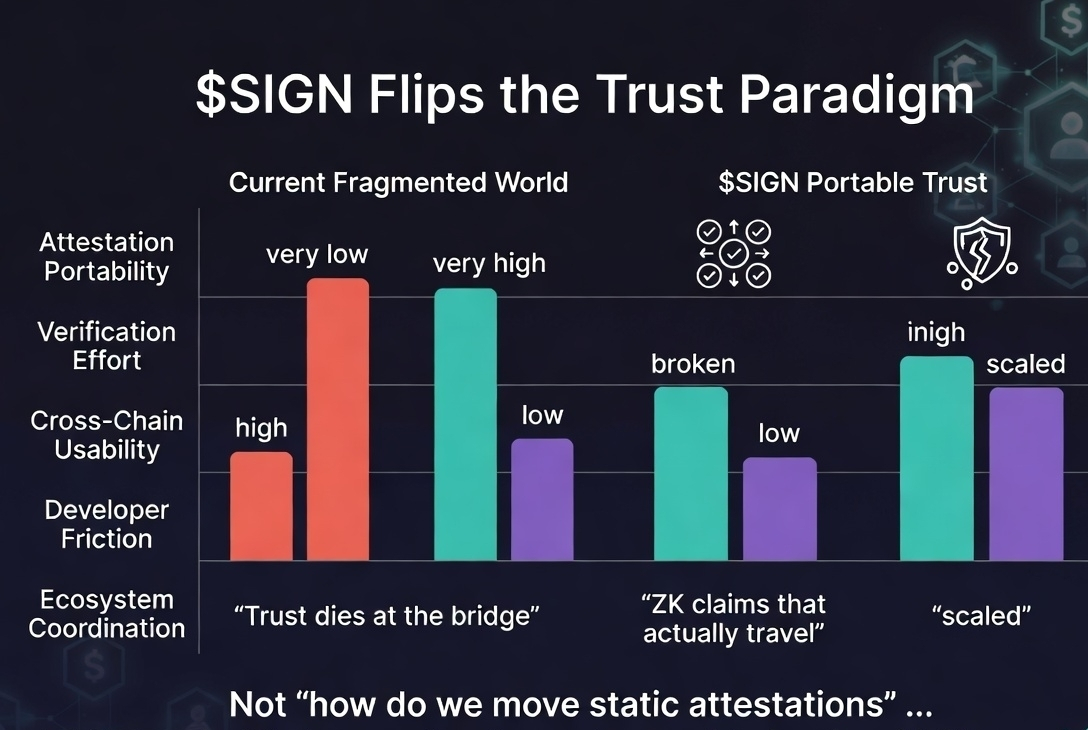
For this model to be successful:
Developers will need to adopt
Protocols will need to be integrated
The ecosystem will need to agree on a shared standard
Crypto has historically suffered from fragmentation. Every chain protects its own sovereignty. This is why coordination is the most difficult problem.
Why is this Important?
If portable trust is solved, then the impact will not be limited to verification.
This will enable:
Seamless cross-chain user experience
Faster onboarding
Better capital efficiency
And a genuinely connected ecosystem
Then crypto will not just be multi-chain but will actually become interoperable.
Final Thought
For now, portable trust is an underappreciated problem. People are ignoring it because it is not flashy.
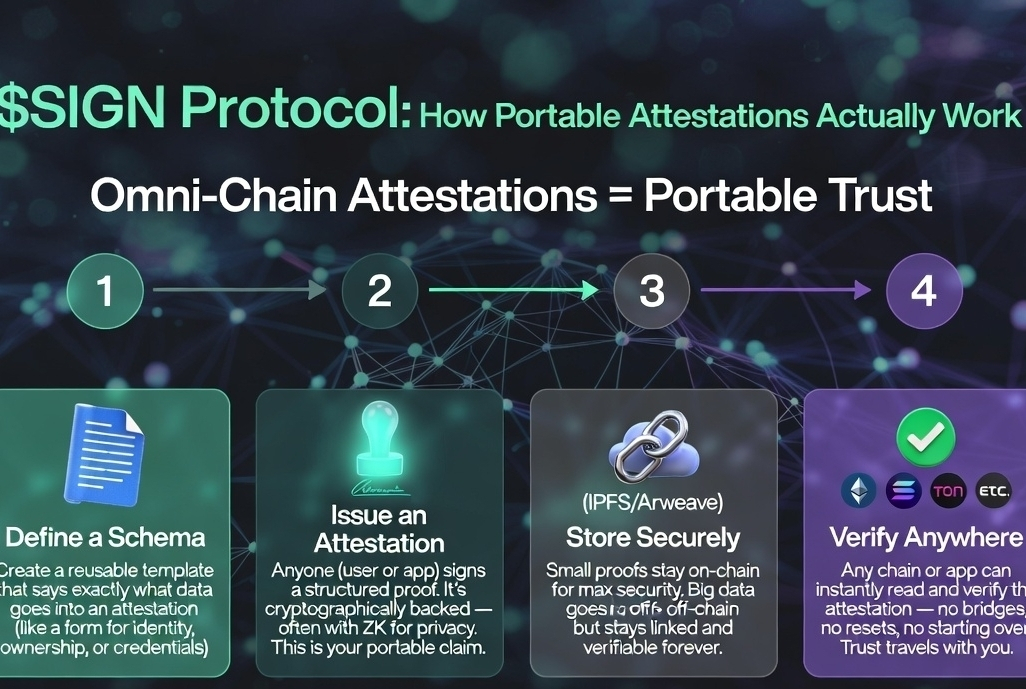
But in the long term, this could be the layer that converts fragmented systems into a coherent network.
I am not seeing this as hype… but rather as a signal of a structural shift.
And if this works, the crypto experience could fundamentally change.
@SignOfficial #signdigitalsovereigninfra $SIGN #PortableTrust #Web3 #ZK #CryptoInfra