#night @MidnightNetwork $NIGHT
I used to think blockchain's radcal transparency was the point. Open ledger. No trust required. Everyone can verify everything.
Then I caught myself hesitating to use a wallet for something simple. Not because of fees. Not because of speed. Because I didn't want every future counterparty to see that transaction.
That's when I realized the problem.
Blockchain now touches business treasury management, payroll, supply chains, and identity systems. In all of these contexts, permanent visibility creates real risk. A competitor can track a company's on-chain activity. An individual's spending history becomes public record accessible to anyone motivated enough to look.
The logic eas perfectly working in 2009. It doesn't work in 2026.
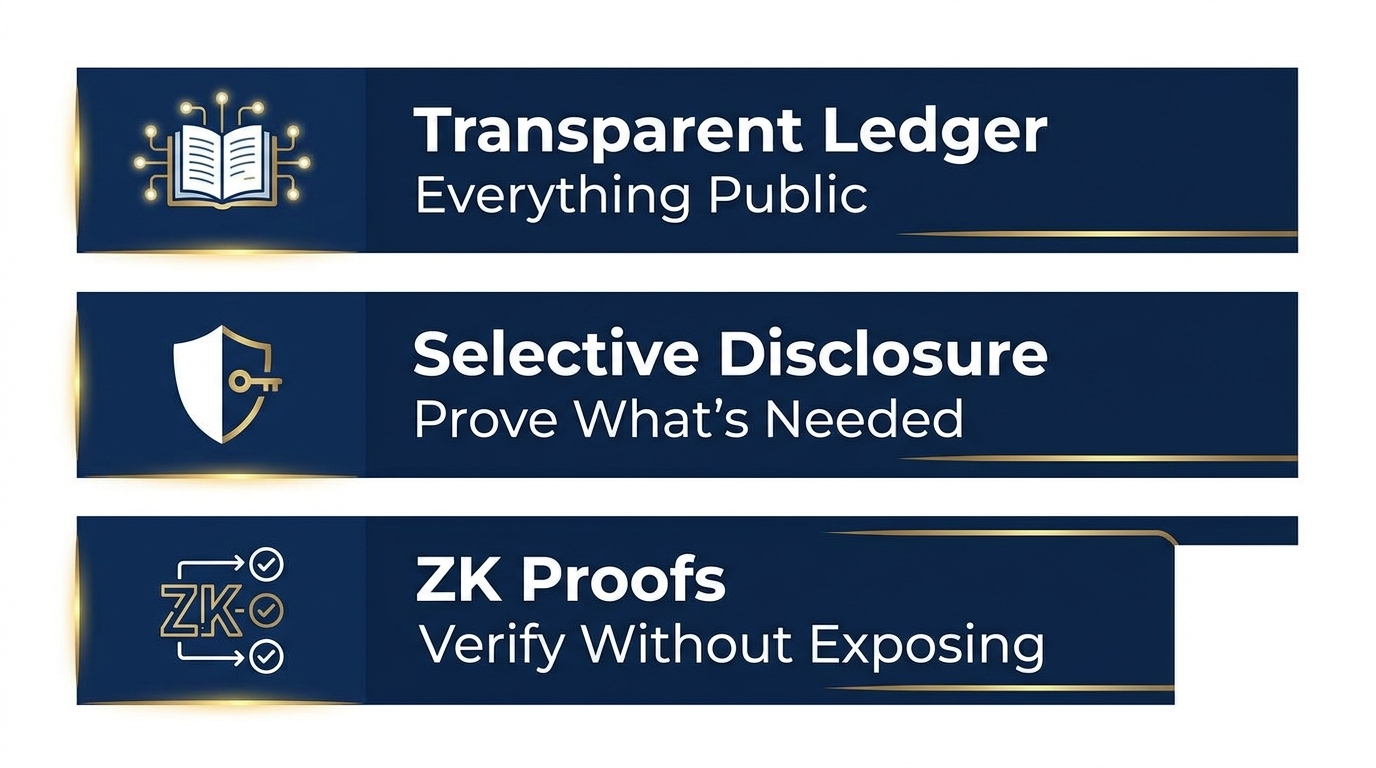
MidnightNetwork was built on a different premise. Privacy should be the default. Disclosure should be opt-in, controlled by the user, and verified through zero-knowledge proofs.
ZK proofs allow a transaction to be confirmed as valid without revealing what it contains. The ledger confirms the math. What you do stays yours.
This isn't about hiding. It's about choosing what to share. Need to prove you're over 18? Show that and nothing else. Need to verify funds for a trade? Prove the balance without exposing your entire wallet history. Need to comply with regulations? Share exactly what's required—no more, no less.
The infrastructure is already in place. Google Cloud and MoneyGram are running nodes. KAPEX allows millions of existing Kotlin developers to build without learning a new language. The ecosystem is being built for real adoption, not just speculation.
NIGHT powers all of it. Transactions, governance, access to privacy features—everything flows through the token. It's not a speculative asset. It's operational infrastructure for a network solving a problem most chains have accepted as permanent.
Midnight isn't replacing the transparent ledger. It's finishing what started in 2009.
What's your take—privacy as default or transparency at all costs?