I have been closely following the evolution of infrastructure narratives in this cycle, and there is something very concrete happening with the @SignOfficial .
We are not just talking about another attestation protocol; we are talking about the backbone of what I call "programmable trust."
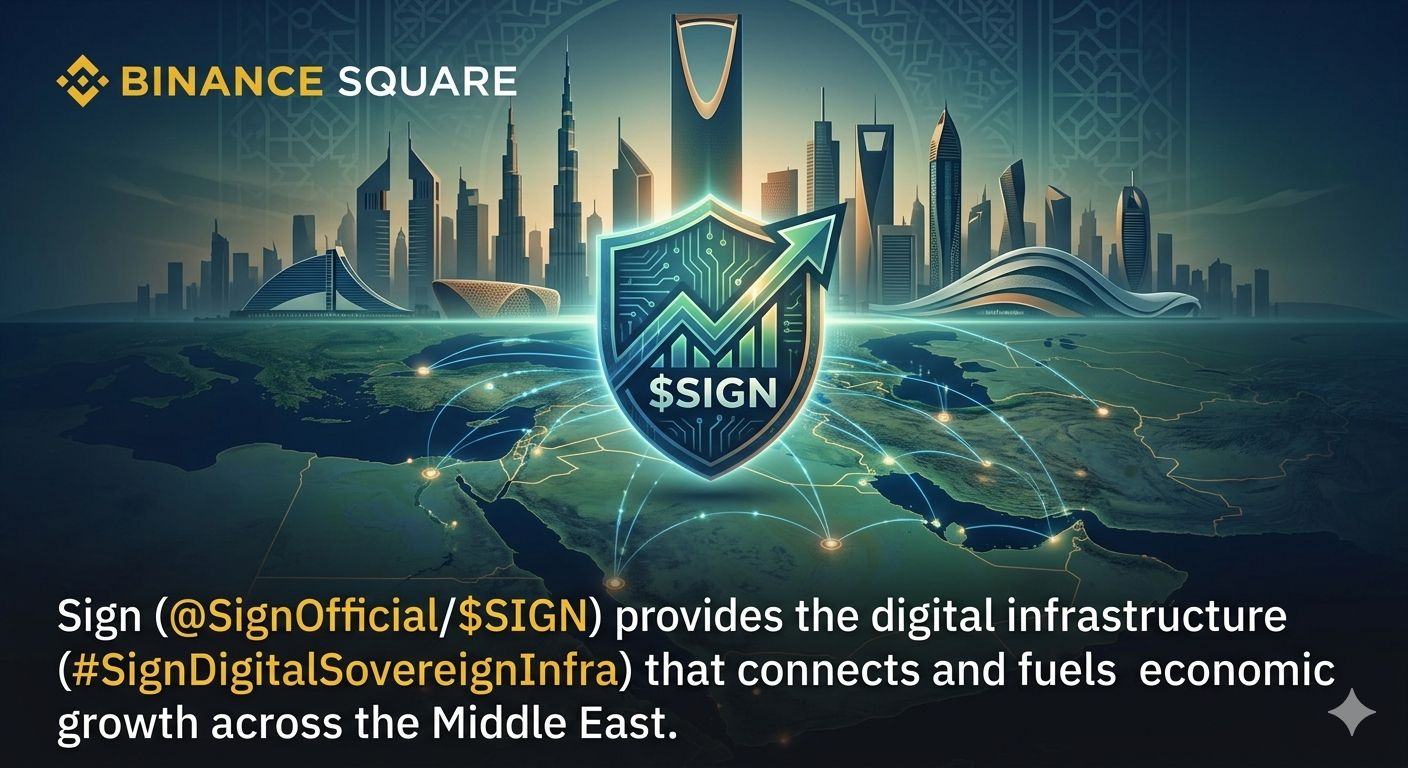
When we look at the massive economic growth occurring in the Middle East — with tech hubs emerging in record time — the big question is always the same: how to ensure data sovereignty in a hyperconnected economy?
Why does infrastructure matter now?
The concept of #SignDigitalSovereignInfra SIGN fits here like a glove. For economies like those of the United Arab Emirates or Saudi Arabia to continue to expand, they need systems where data verification (whether of identity, contracts, or real assets) is instantaneous and tamper-proof. This is where $SIGN comes into play.
In my view, what makes Sign robust is its ability to allow users and institutions to maintain full control over their digital proofs. It's not just about 'being on the blockchain', but about creating a layer of sovereignty that supports cross-border trade and the tokenization of real-world assets (RWAs).
The Role of $SIGN in the Ecosystem
I see $SIGN as the essential fuel for this machine. Without a solid attestation infrastructure, Web3 in the Middle East would be just a set of isolated silos. With Sign, we have a connective fabric that enables:
Credential verification without friction.
Security at scale for government and private applications.
A solid foundation for digital economic growth without relying on foreign centralized entities.
I am quite excited to see how this infrastructure will scale as more local projects adopt the protocol. If trust is the currency of the future, Sign is building the safest bank in the world. 🚀