Stopped scrolling today when I reached one part of @SignOfficial that didn’t feel simple anymore.
At first, $SIGN looks like it’s solving something important — payments that don’t expose everything. Transactions are not public, they sit in a private flow. With things like UTXO structure and zero-knowledge proofs, it becomes harder to trace users or link activity in a direct way. From the outside, it feels like a real step forward from the usual “everything is visible” model.
But then one detail changes the whole perspective.
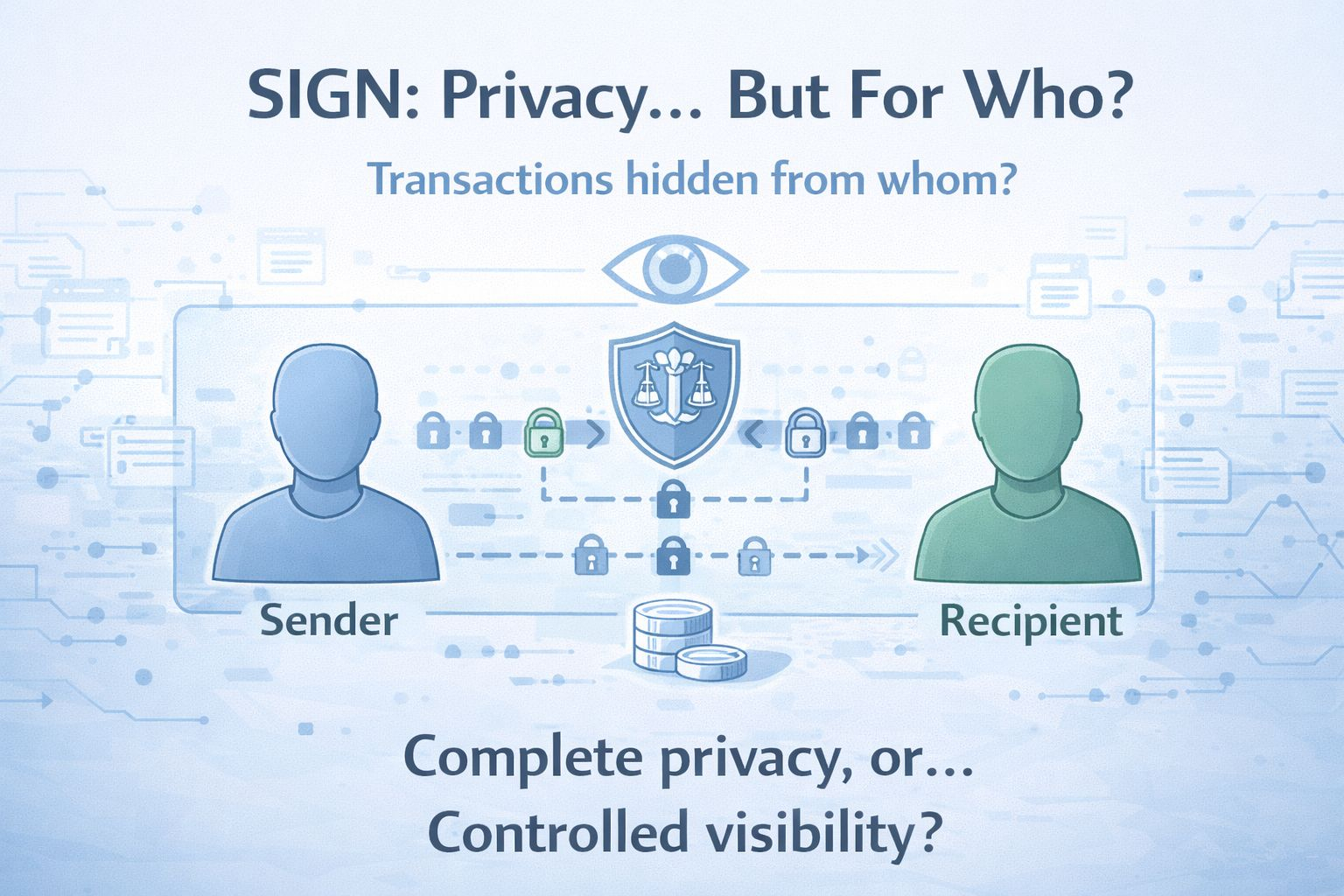
Transactions are not fully invisible. They are visible to the sender, the receiver… and the regulator.
That’s where the meaning of privacy starts to shift. It’s not about hiding everything, it’s about controlling who gets access. Regular users don’t see your data. The network doesn’t expose it. But the authority layer is still part of the system by design.
And honestly, that makes this more interesting, not less. Because it feels closer to reality. In a system like CBDC, full privacy was never likely. What SIGN is doing instead is defining a middle ground — reducing unnecessary exposure, but not removing oversight completely.
So the real question is not “is it private?”
It’s who is it private from?
I don’t think there’s a simple answer yet. But this direction feels more practical than most ideas in crypto. Not perfect privacy, not full transparency… something in between that actually works in real systems.
$SIGN @SignOfficial #SignDigitalSovereignInfra