
Comparing @SignOfficial ($SIGN ) to Web3's 'Microsoft Office' is not bragging, but describing a potential 'protocol-level monopoly'.
Back in the day, Office unified the language of global offices with .doc and .xls; now Sign Protocol intends to unify the trust language of the entire Web3 chain with Schema (verification mode).
1. Don't just look at 'signatures', look at 'format standardization'.
Many people still perceive Sign Protocol at the level of 'electronic signatures'. Brother, that's just its .txt stage.
Office, why is it great? Because it defines the standard for documents. Sign Protocol is now defining the 'standard of trust'.
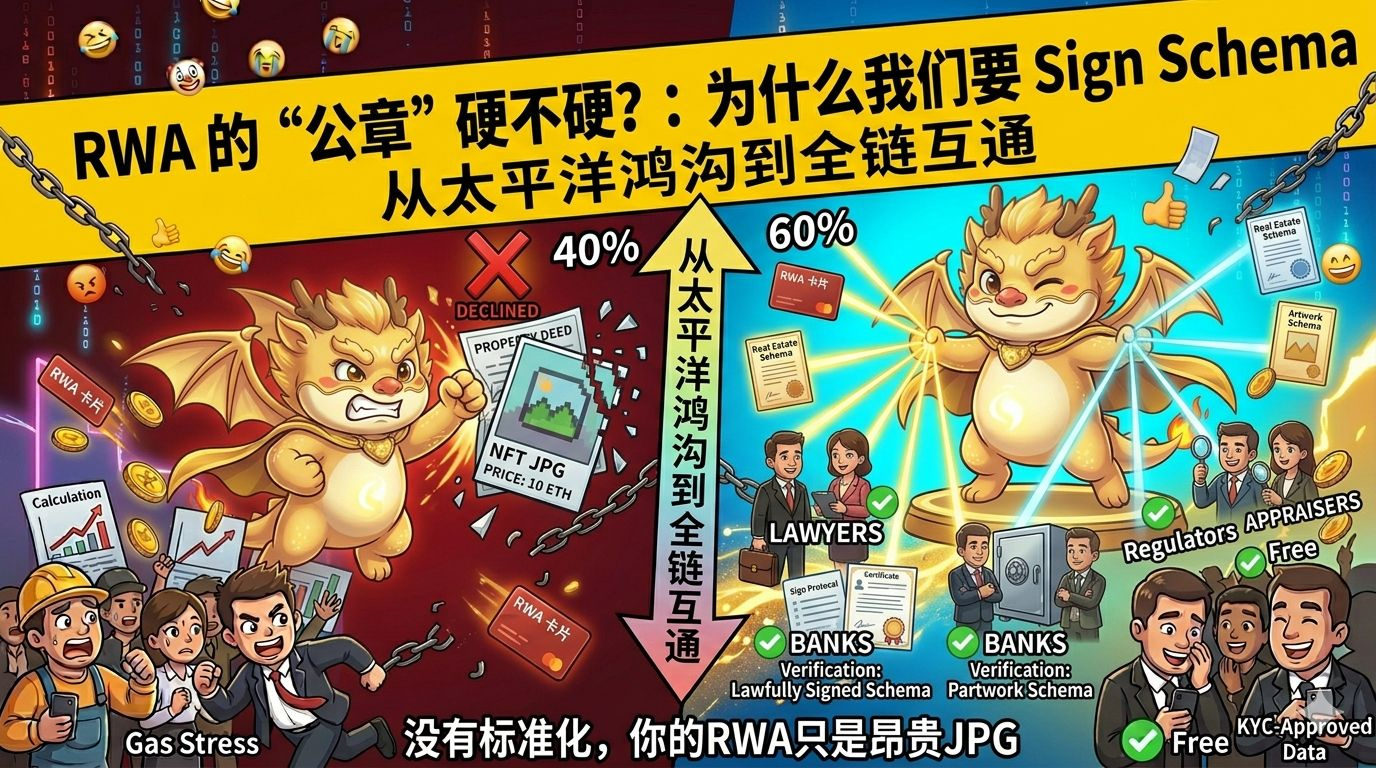
Schema Registry: It specifies, like cell formats in Excel, 'what a proof of employment should include' and 'what a proof of ownership for an RWA asset looks like'.
Full chain interoperability: Just like you can write in Word on a Mac and send it to Windows to open, the Attestation you issue on Ethereum can also be recognized and verified on Solana or Layer2 through the architecture of Sign Protocol.
This status of 'full chain notary' is what gives it the confidence to become infrastructure. In the future, when people interact, they will no longer exchange a bunch of messy screenshots but will present a CID (Content Identifier) that meets Sign standards.
2. Hooks: Equip credentials with 'automation scripts'
If Schema is the table of Excel, then Hooks are like macros or VBA in Excel.
This is the most hardcore aspect of the Sign Protocol architecture. It allows you to insert a piece of logic into the credential.
Scenario A: A lending protocol stipulates that a loan can only be disbursed when the user's 'credit score credential' is above 80 points (automatically verified through Hook).
Scenario B: In a DAO governance vote, only those holding a 'senior developer credential' (Hook intercepts non-professionals) will have their voting weight doubled.
It turns 'dead' proofs into 'living' code. This programmable trust transforms it from a simple tool into the 'logical hub' of the entire Web3 ecosystem.
3. Why is 2026 its year of explosion?
In the infrastructure forecast for 2026, we must recognize two major trends: compliance and mass adoption.
The essential need for RWA:In 2026, the on-chain integration of physical assets will no longer be a slogan, but a trillion-scale migration of existing assets. Who will provide digital endorsement for these off-chain houses, cars, and US treasury bonds? The 'sovereign-level certification' provided by Sign Protocol is the reassurance.
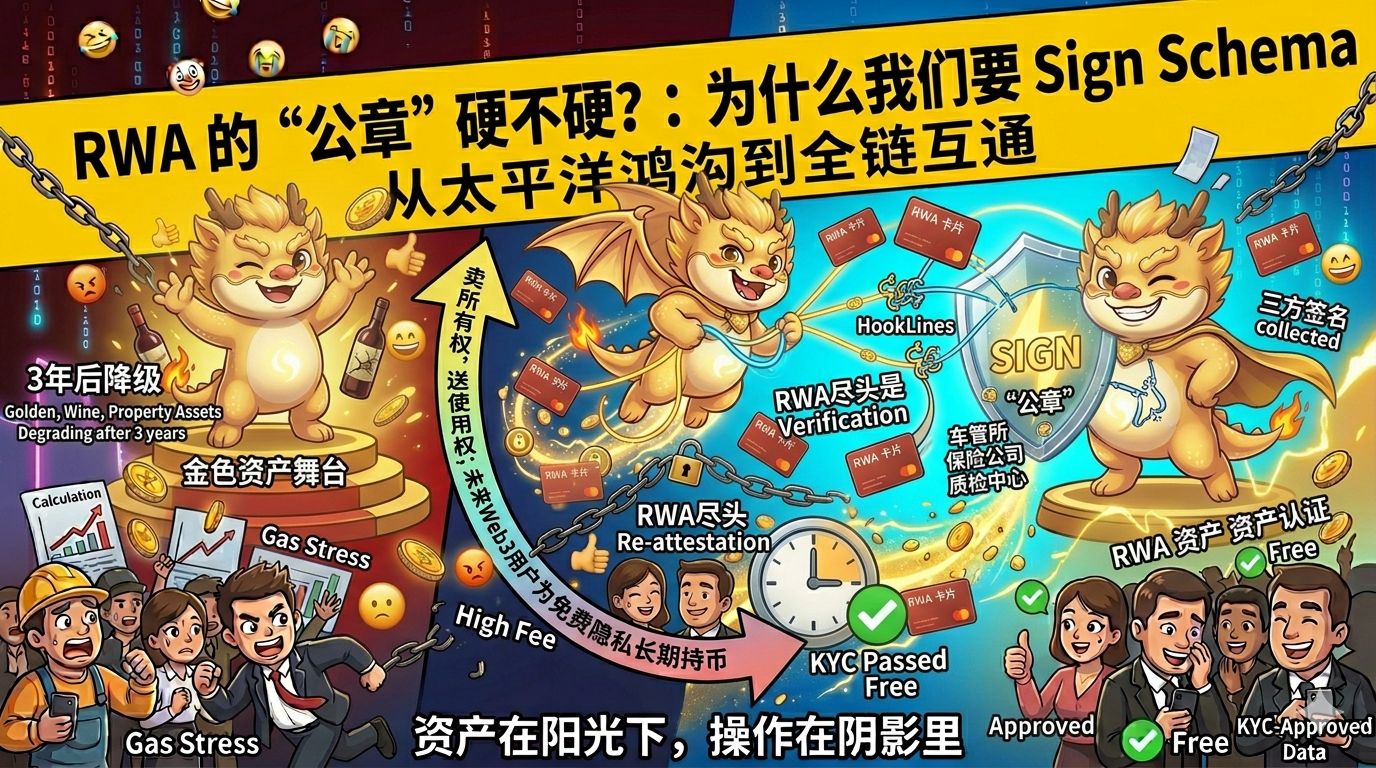
Reconstruction of the identity system: Social protocols (like Farcaster) and professional endorsements require a 'resume' that does not rely on centralized servers. Sign Protocol is becoming that underlying digital file bag.
It is not competing with any public chain; it is issuing 'certificates' to all public chains.
Summary of Pi Xiu
Microsoft Office has solved the standards for information production and distribution, while Sign Protocol is addressing the standards for credit production and distribution.
The current Web3 is still a 'makeshift stage', where everyone distrusts each other. But when all off-chain real data (identity, assets, contracts) are transformed into verifiable on-chain credentials through SIGN, this makeshift stage will officially upgrade from a shotgun to a regular army.
It is Web3's 'full package':
Sign Scan: A search engine for trust (does it look like a file manager?).
Sign Hook: An automation tool for trust.
Sign Schema: The typography standard for trust.
Random musings
Stop fixating on those airdrop rewards, and look at the RWA and social projects that have already adopted the SIGN interface. When a protocol becomes an 'industry standard', its value is no longer a bubble created by speculation but a 'trust tax' collected by the ecosystem.
Just think, if all the official seals of the internet are in your hands, can this business be bad?