
After reading this tweet by Sign founder Xin, I suddenly understood why this project has been on my mind.
He is not talking about technology, but rather about a fact that most people overlook: the government is the gatekeeper of the real world. Identity, assets, public services, all cannot escape the sovereignty framework. In the past decade, crypto has run fast on-chain, but when it hits the real world, it hits a wall — because the wall is built by the government. A completely decentralized system may work within geek circles, but to reach billions of users and trillions of dollars in assets, it cannot bypass sovereign institutions. This is not a compromise, it is reality.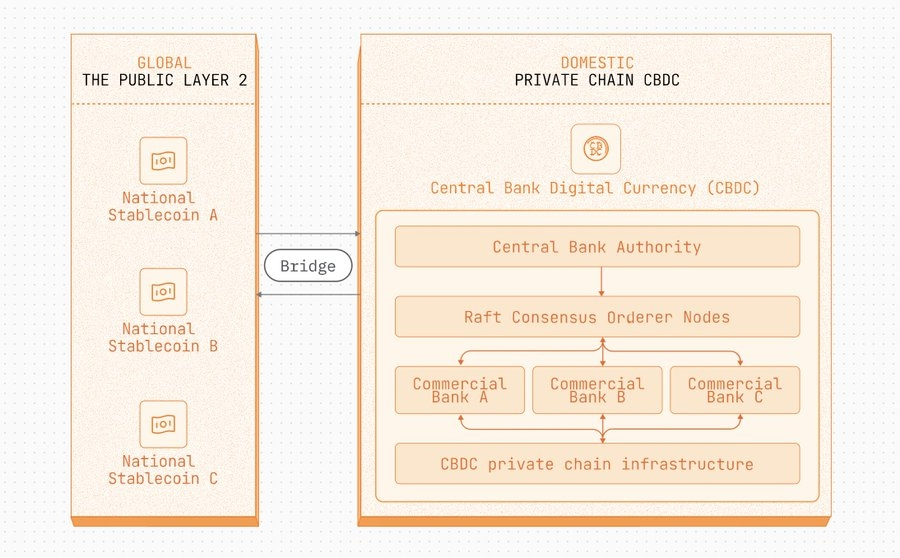
@SignOfficial is exactly helping the government build walls. It is not about confrontation; it is about embedding.
Xin positions Sign as a proprietary technology company for B2G. This term is rare in the cryptocurrency world, but in the traditional world, SpaceX, Anduril, and Palantir have risen this way. By 2025, the U.S. government is expected to sign over $800 billion in solar contracts. Why? Because the government cannot develop cutting-edge technology on its own; it needs someone who can repeatedly prove their reliability. The barriers to B2G are extremely high—the government will not casually hand over systems to a team without a reputation. But once that threshold is crossed, what follows are long-term contracts, high switching costs, and deep integration. This is not a traffic game of ToC; it is the accumulation of trust in ToG. Once deeply embedded, others can't pull out easily.
Sign has already run over 20 national pilot projects in the Middle East and Central Asia. The central bank of Kyrgyzstan is using it for the national digital currency Digital SOM, Sierra Leone's on-chain electronic visa system has gone live, Abu Dhabi's blockchain center has signed strategic cooperation, and Pakistan is promoting a digital identity system. These are not 'proposed collaborations'; they are already operational ground networks. Xin mentioned that by the third quarter of 2026, Sign's digital currency system will begin large-scale deployment, covering millions of users and becoming the core financial infrastructure of the entire economy.
Xin also pointed out a key aspect in his tweet: currency and identity are two foundations. The digital currency system supports CBDC and compliant stablecoins, allowing sovereign currencies to remain controllable in the digital age; the digital identity system turns passports, licenses, and permissions into verifiable on-chain statements, which can be mutually recognized between departments, but data does not need to be stored centrally. With the foundation laid, taxes, welfare, and voting can all be built on top. In the AI era, the government needs real-time data to operate—AI does not work in a vacuum; it relies on data and interfaces. The infrastructure laid by Sign is precisely the foundation for sovereign AI.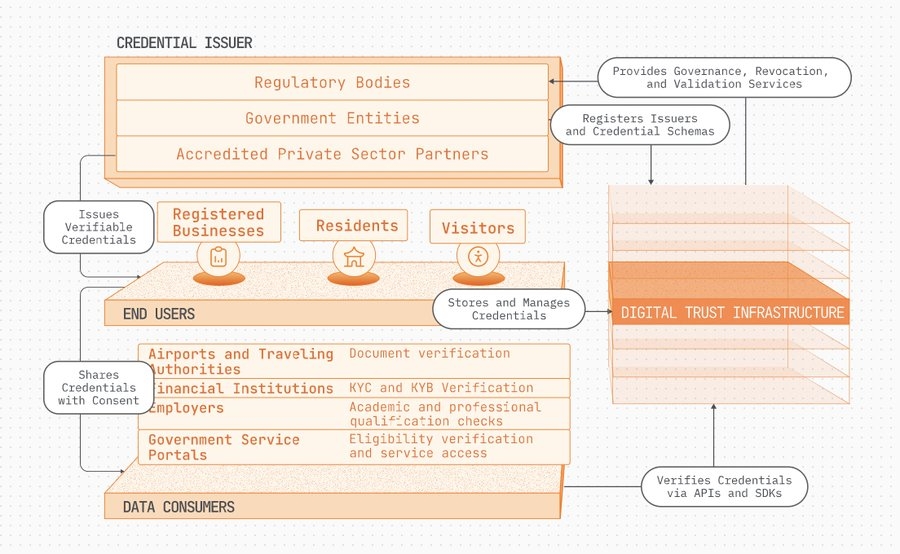
The more chaotic the situation in the Middle East, the more valuable this 'self-determined digital foundation' becomes. When capital flees, what escapes is not money, but trust. When traditional financial channels may be cut off, when banks may close, when identity verification may fail, a system that does not rely on any third party and can be controlled independently becomes a digital lifeboat.
Sign is not betting on market trends; it is betting on a shift in an era. As the world shifts from unipolarity to multipolarity, from a unified clearing network to building their own stations, whoever can help sovereign nations establish infrastructure will be the winner in the next phase. And Sign is becoming that trusted entity.