The price of gold drops 10% to about $4100 as the strength of the dollar increases amid the Iran war
The escalating threats between Washington and Tehran increase pressure on the precious metal and weaken rate cut bets
The precious metal declined by about 5% to below $4300 an ounce
Silver drops 7% near $63 an ounce and the US dollar index rises 0.3%
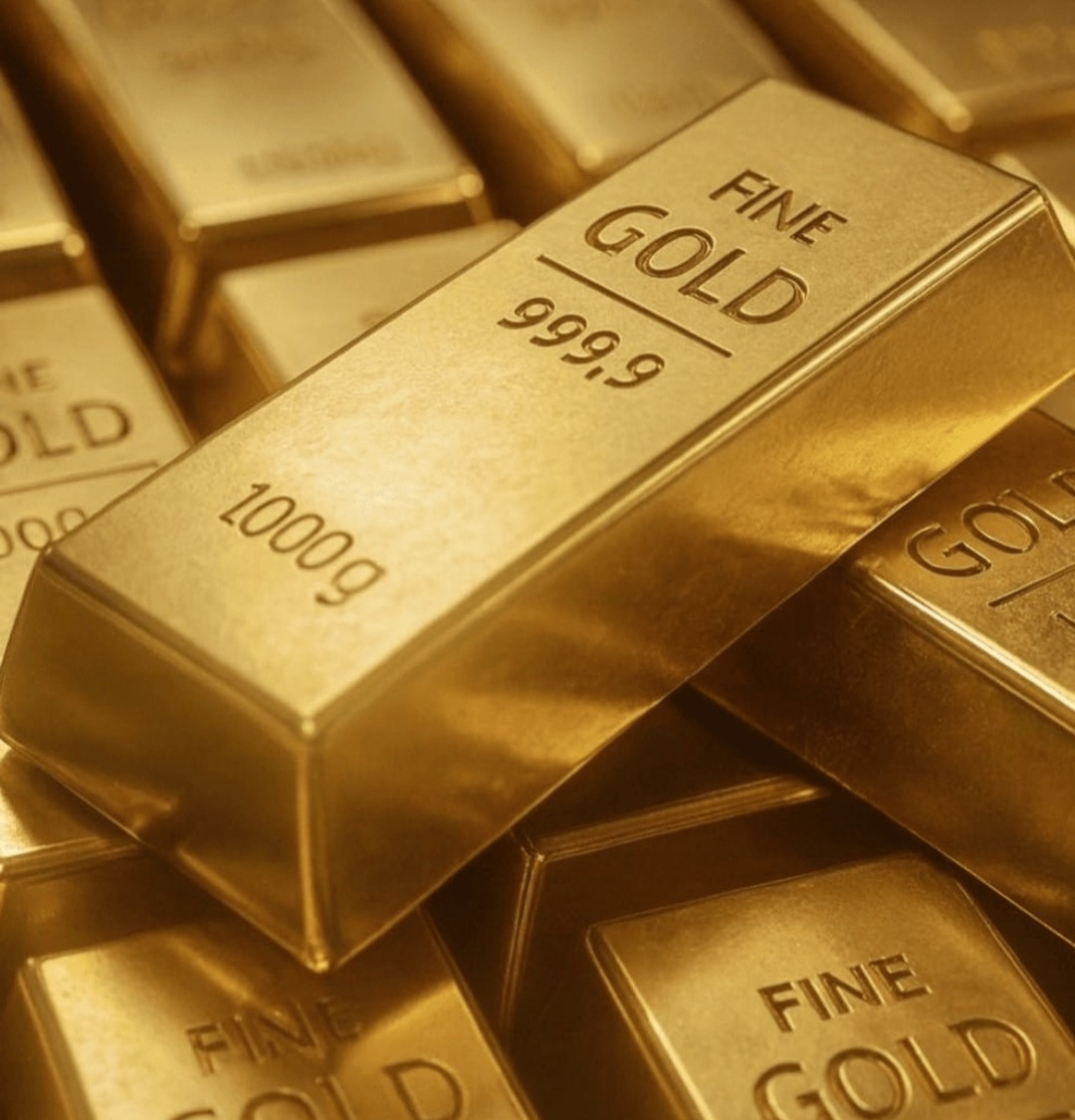
A selected group of gold bars, weighing one kilogram, from the gold bullion company "Conclud ZRT" in Budapest, Hungary - Bloomberg
Gold fell 10% to $4125 per ounce over nine consecutive days due to the war in the Middle East and rising oil prices, increasing inflation risks and expectations of interest rate hikes from the Federal Reserve. Gold recorded its largest weekly drop since 1983, with short-term rebound expectations due to increased buying positions and hedge funds.
Gold erased its gains this year, declining for the ninth consecutive day as the war in the Middle East heightened inflation risk and sparked expectations of interest rate hikes.
The price of the precious metal dropped about 10% to around $4125 per ounce during trading hours in Asia, while the price of an ounce of silver was nearly $62, coinciding with the largest precious metals.
Rising oil prices have increased inflation risks and reduced the likelihood of interest rate cuts in the near term by the U.S. Federal Reserve and other central banks.
This exerts a counter pressure on gold, which does not yield a return, having declined for eight consecutive sessions and just recorded its largest weekly drop since 1983.
War threats are pressuring gold
The volatile opening of gold reflected the broader market performance, as crude oil fell after slight gains initially, and stock markets also exhibited volatility.
In the three weeks since the war began on February 28, the drop in the precious metal has been partly driven by forced sales, as investors sought to cover losses elsewhere in their portfolios. The metal had ended last year at $4319.37 per ounce.
Wayne Gordon, an investment advisor at UBS Wealth Management, said, "The magnitude of the decline in gold prices is not unprecedented, but the pace of this decline has been much faster than many historical cases."
Over the weekend, U.S. President Donald Trump gave Iran a two-day ultimatum to reopen the Strait of Hormuz or face attacks targeting its power stations.
Iran responded that it would "completely" close the strategic waterway and target energy infrastructure, information technology, and desalination if its power facilities were attacked. Trump’s warning came at 7:44 PM New York time on Saturday.
Bessent: Trump will take all steps to achieve declared war objectives against Iran
David Wilson, commodity strategy director at BNP Paribas, said, "Gold's reaction to the current macroeconomic shock has a clear precedent in the market."
He added: "If we look at the three previous economic shock cycles, namely in 2008, 2020, and 2022, we find that gold initially fell as a reaction to the news, as investors typically resorted to selling assets to hold onto U.S. dollars," adding that the three periods were followed by a sustained upward wave.
Technical indicators suggest a short-term rebound
The Relative Strength Index for gold over 14 days, a measure of momentum, continued to decline below the 30-point level, which some traders view as indicating that the metal is in an oversold territory.
U.S. government data published on Friday showed that hedge funds and other large speculators increased their net long positions in gold to the highest level in seven weeks as of March 17.
The drop in gold and silver also coincided with declines in both platinum and palladium. Meanwhile, the Bloomberg Spot Dollar Index maintained its rise.