

Private Cloud vs. Open Standards: The Ultimate Battle for Institutional Blockchain Infrastructure
The news that five US banks have partnered with ZKsync Prividium to develop tokenized deposits has ignited the industry, with ZKsync founder Alex posing a key question at X:
Cari's announcement has sparked a debate about institutional blockchain infrastructure. Most of the discussion has focused on the technical architecture. But first, consider the business cases of proprietary standards versus open standards.
While everyone focused on the technical details, Alex pointed directly to the core of the game: the underlying choice of institutional blockchains will determine who will have the power to speak in the next decade.
I. The “Gentle Trap” of Private Networks: Is the Network You Join Really Yours?
Private networks like Canton and Tempo, while claiming to be "licenseless," actually conceal hidden agendas:
"Government is controlled by a small group, and the voting rights are unbalanced. Joining requires submitting forms that are not subject to transparent review, and the decision-making power is unclear."
With unclear entry barriers and no say in rule-making, the leading players eventually control access and pricing, replicating the old model of SWIFT and Visa: early players lock in advantages, while latecomers passively bear the costs and become chips in the game.
Second, "Everyone wants to build their own SWIFT killer, but nobody wants to join someone else's SWIFT killer."
This reflects the true sentiments of bankers. Institutions all want to be rule-makers, not rule-takers.
If small and medium-sized banks join proprietary networks controlled by giants, their interests are easily eroded and their pricing power is squeezed, and the risks are self-evident.
III. Ethereum: The Only Undetectable "Global Settlement Layer"
Alex provides a solution:
"Ethereum is the only settlement layer that cannot be controlled by a single entity, and no single entity can capture it. It is the only place where participants can permanently trust that the rules will not be tampered with."
Ethereum is not controlled by a single entity; its governance is distributed, its rules are transparent, and it is not subject to the control of any single interest group. For institutions:
- No need to worry about sudden rule changes, you can build your business with peace of mind;
- Participate in the ecosystem on an equal footing, unafraid of being squeezed out by giants;
Trust is based on cryptography and decentralized consensus, rather than the reputation of a single enterprise.
"This is why Ethereum, as a global settlement layer, is the only long-term game-theoretic equilibrium in institutional finance."
IV. zkSync: Enabling the "Institutional-Grade" Capabilities of Ethereum
Ethereum is the ideal underlying layer, while zkSync Prividium is the "institutional layer" adapted to traditional finance.
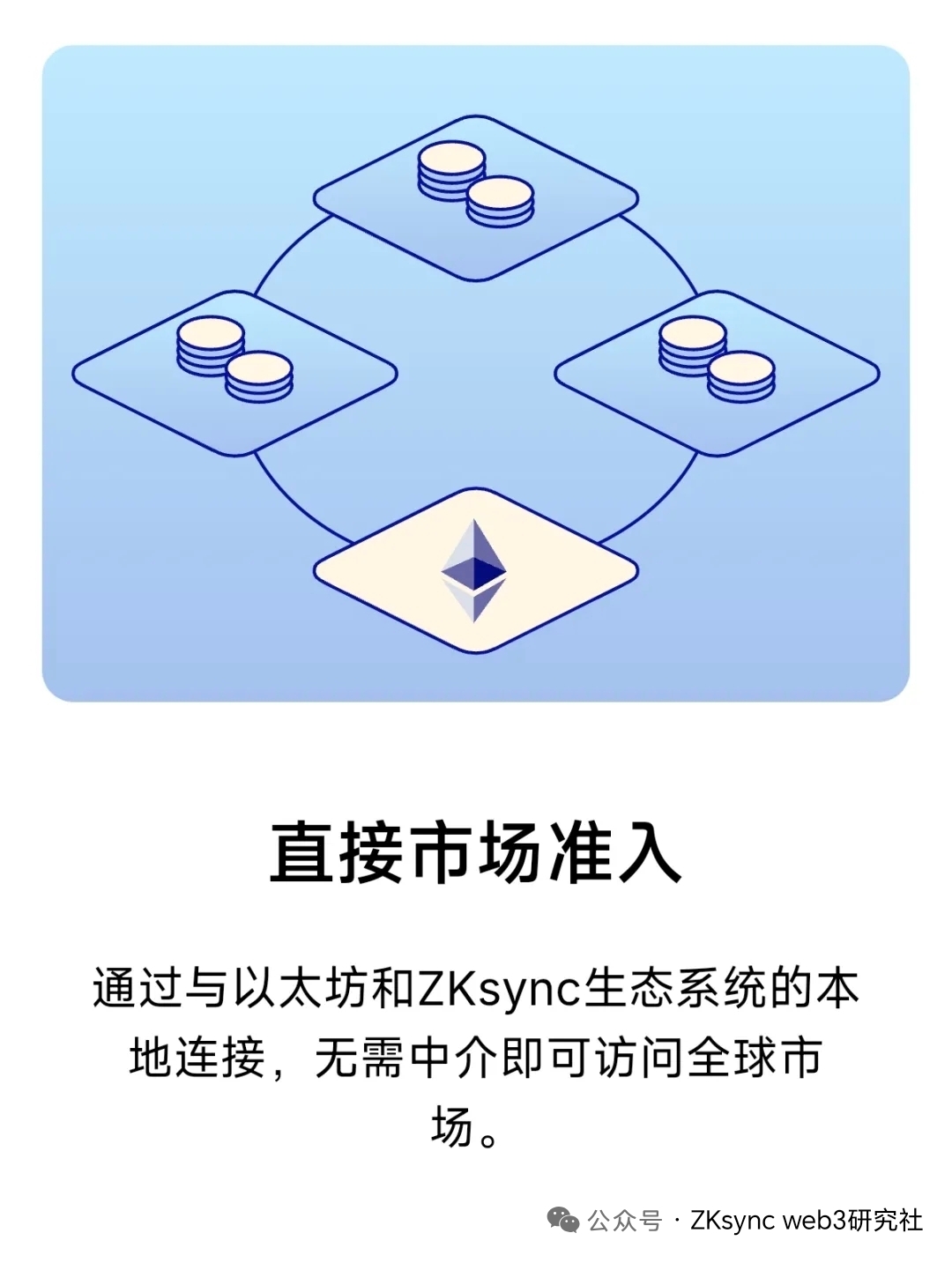
It relies on Ethereum for settlement, taking into account both decentralized trust and the privacy and compliance requirements required by banks. It inherits the underlying security and meets the data management needs of institutions, making it a key bridge for adapting to traditional finance within the Ethereum ecosystem.

In conclusion
The choice of zkSync by the five banks was inevitable.
Private networks are for tenants, while Ethereum is for co-builders. The real "SWIFT killer" is not a closed network, but an open platform that is uncontrollable and perpetually trustworthy.
This is the future of zkSync and Ethereum.
We are committed to using the most professional perspective to break down the true value of Web3 for you and help you avoid every pitfall on your path.
Follow us and witness the next stage of finance together.