
Just after waking up, Kazi rubbed his eyes and opened his phone, first checking the "urgent notice" in the WeChat group— the landlord wanted me to sign an electronic rental agreement again, saying it was "to mitigate risks." I tapped, tapped, tapped, entered my fingerprint, facial recognition, and then a bunch of verification codes. After signing, I let out a long sigh, thinking: finally, it's stable now. What happened next? In the afternoon, I saw the news, a certain platform had a data leak, and the electronic signatures of millions of users were sold in a package. I was instantly panicked: is my signature really to guard against gentlemen or to guard against scoundrels? Not to mention last week when I borrowed 5000 from a friend, he sent me a PDF loan agreement, I signed it and kept a copy, but when it was due, he said, "system bug, signature not archived," which made me so angry I wanted to smash my phone.
I'm the kind of person who likes to complain about the little annoyances in life, but this time it really hit a nerve. In the digital age, we sign all sorts of things every day—food delivery confirmations, app agreements, online shopping returns, and even every transaction on the blockchain requires a signature for confirmation. But traditional signatures are as fragile as paper, Web2 platforms love to steal data, and what about Web3? Gas fees are as high as robbing a bank, and cross-chain transfers easily result in lost credentials. While browsing, I came across a project called Sign, whose founder Yan Xin and his team created the SIGN token, which supposedly takes "signatures" to a whole new level. It's not just empty talk; it actually allows your digital proofs to flow like Bitcoin across chains, with privacy protection, and even a touch of "sovereign-level" reliability.
I was immediately delighted: wouldn't this perfectly solve my awkwardness of signing rental agreements? So I dug a little deeper and discovered this thing was actually quite interesting. $SIGN It's not just a simple meme coin or a small DeFi project; it started in 2021 and has received over $30 million in investment from big names like YZi Labs (formerly Binance Labs) and Sequoia Capital. The SIGN token officially launched in April 2025 and was even airdropped on Binance HODLer. The core consists of two products: Sign Protocol and TokenTable, plus an EthSign DApp. Sounds impressive? Hold on, let me break it down for you in layman's terms. #Sign地缘政治基建
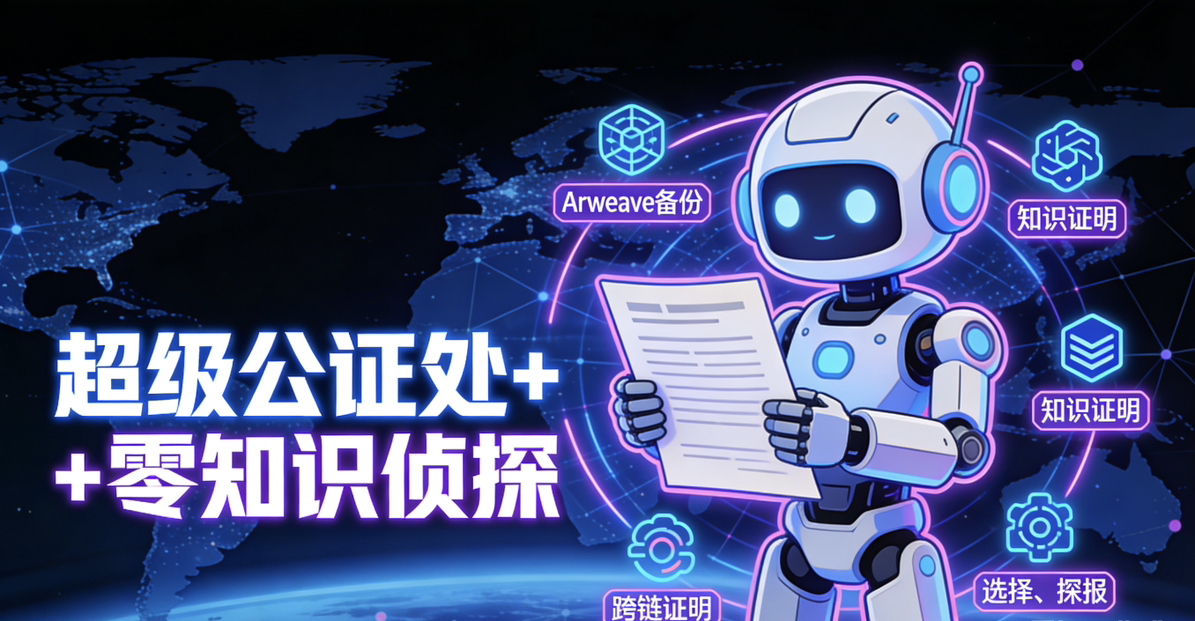
Let's start with Sign Protocol. Essentially, it's the "super notary office + zero-knowledge detective" of the blockchain world. It supports omni-chain, meaning a proof signed on one chain can be seamlessly verified on another, eliminating cross-chain headaches. Technically, it uses schemas to define what you're proving—such as "I own this property certificate," "I am over 18 years old," or "This NFT is not fake"—and then generates attestations. Crucially, it protects privacy: zero-knowledge proofs (ZK) + selective disclosure ensure verifiers only see the necessary information, without revealing your entire family history. Data can be co-located on and off-chain, with Arweave backups to prevent loss, making it as secure as a national archive. Officially, it has helped over 200 projects issue more than 6 million proofs, covering 40 million users and distributing a total of $4 billion in tokens. Imagine a future where governments issue digital ID cards and CBDCs (central bank digital currencies), and companies conduct compliance audits—your credit will no longer be tied to a platform, but will be universally accepted like a passport.
Let's talk about TokenTable again. They jokingly call it the "Goldman Sachs on the blockchain." Traditional token issuance is so chaotic! Airdrops fly everywhere, Vesting (lock-up) expires unattended, and unlocking schedules are as easily changed as an Excel spreadsheet. TokenTable uses smart contracts to handle everything: Merkle tree distribution (efficient and non-duplicative), signature-based retrieval (gas-saving), timed unlocking, and auditable tracking. Projects want to issue tokens to early investors? One click. The community wants to airdrop memes? Transparent and open. Founder Yan Xin said on a podcast that their goal is to upgrade the 2017 pie chart to a 2025 on-chain real-time dashboard, where the whereabouts of every single coin can be clearly traced. Ironically, reading their white paper, it seems like they're just saving the crypto world the trouble of "reconciliation after a scam"! Haha.
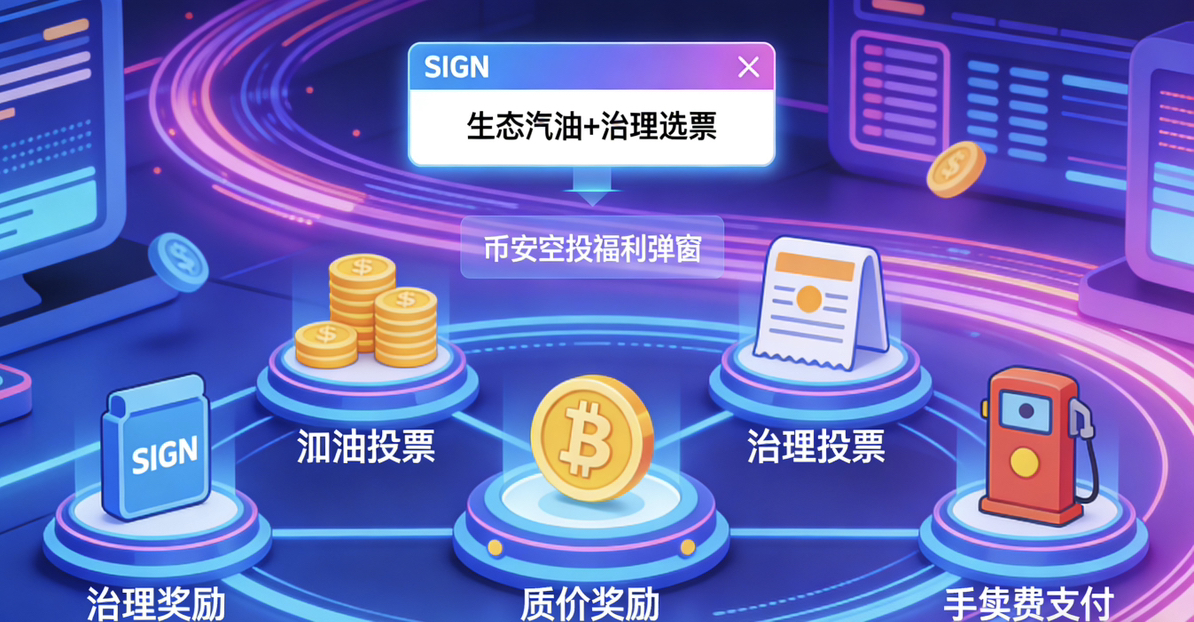
What about the SIGN token itself? The total supply is 10 billion, with 1.64 billion currently in circulation, giving it a market capitalization of approximately $870 million (FDV around $530 million). The price fluctuates around $0.05 per token. Its uses go far beyond speculation: paying protocol fees, participating in governance voting, staking for rewards, and community incentives. Simply put, it's the "gasoline + vote" of the entire ecosystem. After launch, Binance airdropped 200 million tokens, resulting in a fairly dispersed holding structure within the community, which pleased early adopters.
Now, let's talk about the future. Sign's potential is indeed huge. Sign's ambition is to build "S.I.G.N." (Sovereign Infrastructure for Global Nations), which is a national-level "sovereign infrastructure": a new monetary system (CBDC and stablecoins, programmable and compliant), a new identity system (verifiable credentials, privacy-first), and a new capital market (RWA asset tokenization). They have already partnered with the National Bank of Kyrgyzstan on the digital som (CBDC), the Sierra Leonean government on digital IDs and payments, and the Abu Dhabi Blockchain Centre. The goal is to have 300 million users onboard by 2028. Imagine if blockchain truly becomes a "supra-sovereign database," then cross-border business, credit, and even your resume and credit can flow globally without being held back by banks or platforms. DeFi, GameFi, and DAOs will all benefit—identity verification will no longer be a pain point, and developers can easily build dApps. With institutional participation and real-world adoption, if this wave succeeds, SIGN could become an infrastructure-level player, like Ethereum in its early days, winning without effort.
But what about the risks? Dude, I'm not here to offer empty promises. The crypto industry is always a mix of "limitless potential and endless pitfalls." First, regulatory hammers can fall at any time—identity verification and digital credentials involve privacy laws and anti-money laundering, with policies varying drastically from country to country. Sign claims to be sovereign-level, but if a major power deems "blockchain too decentralized," a single ban could wipe it out. Second, the competition is fierce. Worldcoin's iris scanning, Polygon ID, and even traditional electronic signature giants are all vying for market share. Sign's ZK technology is impressive, but its implementation is complex, and if the user experience doesn't keep up (high gas consumption, steep learning curve), ordinary people won't bother using it.
Furthermore, there's the issue of token economics: with a total supply of 10 billion, most of it is still locked, and waves of unlocking will follow, putting significant pressure on prices. Currently, the market capitalization is low, but the FDV is high, indicating a clear risk of dilution. Market volatility is another concern; after its launch in 2025, the price has been a rollercoaster ride, with 24-hour trading volume sometimes reaching $50 million. However, in a bear market, infrastructure projects often suffer even more than Meme. There are also security risks: while ZK is promising, protocol hacks, cross-chain bridge issues, or delays in government-partnered projects could all cause community confidence to collapse. The founding team has strong backgrounds (Yan Xin and his team came from Binance Labs), but if execution doesn't keep pace with ambition, the project could easily transform from a "sovereign infrastructure" into a "sovereign-level PowerPoint presentation."
In summary, after digging into all this, I have many thoughts. Sign isn't one of those get-rich-quick memes; it's more like paving the way for blockchain—solving the pain points of our daily signatures, credit, and trust, making the digital world less chaotic and more reliable in its flow. But when it comes to investing, never go all in. DYOR (do your own research), play around with a small position, and assume all risks. If one day when I'm signing a rental agreement, I can actually use Sign Protocol for one-click verification, I'll probably laugh out loud: finally, I don't have to worry about signatures flying away anymore.
Sigh, life goes on. My phone popped up another "Agreement Update" notification—I sighed, clicked to sign. Perhaps, the next signature will be the blockchain's job to bail me out. What about you? Are you going to keep complaining, or go explore SIGN's potential? See you in the comments, buddy.