
Vitalik Buterin's statement that "the original vision of L2 is no longer applicable" instantly caused a huge uproar in the crypto community. For a time, one-sided interpretations such as "Ethereum abandons Rollup" and "monolithic scaling is the correct answer" flooded the scene, and panic sentiment in the L2 track spread rapidly.
But when one calms down and reads Vitalik's full text, one will find that this is by no means the death knell for L2, but rather the opening declaration of L2 entering a brand new stage. Ethereum has never abandoned L2; on the contrary, a strategic shift that has been brewing for many years has officially landed, and top L2 projects like zkSync are now facing unprecedented historical opportunities.
The misunderstood 'strategic shift': from 'Rollup-centered' to 'L1 + L2 dual-wheel drive.'
To understand the core adjustment of Ethereum's expansion route this time, one must first clarify the underlying historical context. Over the past three years, Ethereum has consistently adhered to the bottom line of decentralization, firmly locking the Gas limit at 30 million to avoid excessive concentration of nodes and weaken network censorship resistance. In contrast, competitors like Solana have achieved 'barbaric growth' by relying on high hardware thresholds, with only 800 validating nodes, far below Ethereum's scale of over one million nodes. This insistence on the 'purity of decentralization' has temporarily placed Ethereum at a disadvantage in short-term throughput competition.
Entering 2025, Ethereum finally presses the acceleration button for expansion: the Gas limit is first doubled to 60 million, and a clear and advanced technical roadmap is announced, with overall progress ahead of industry expectations by a full five years, directly attracting a large number of core development talents back: by the end of 2026, the Gas limit will exceed 100 million.
2027: Shorten block time and implement transaction parallel processing capabilities.
2028: Complete upgrades and optimizations of the state tree structure.
2029: Fully transition to a native zero-knowledge architecture.
The core of this combination is the deep integration of ZKEVM and data availability sampling, allowing Ethereum to approach the performance of top competitors without sacrificing decentralization. This means that Ethereum L1 officially sheds the label of 'performance bottleneck' and transforms into a 'performance engine' that drives the ecosystem.
The value elevation of L2: from a 'pure expansion tool' to a 'customized exclusive service provider.'
When the performance of L1 achieves a qualitative leap, the value positioning of L2 will inevitably undergo reassessment. However, this does not negate L2, but rather represents a complete dimensional transformation—L2 is shifting from 'providing expansion support for Ethereum' to 'offering deep customized services that L1 cannot cover.'
This is precisely the core idea of Vitalik's proposal for the 'L2 decentralized continuous spectrum': not all L2s must sprint toward Stage 2, the ultimate decentralization phase.
Some L2s may retain moderate centralized control in exchange for faster response speed, stronger compliance adaptation capability, and more flexible privacy design, as long as information is disclosed truthfully, the market will naturally make choices.
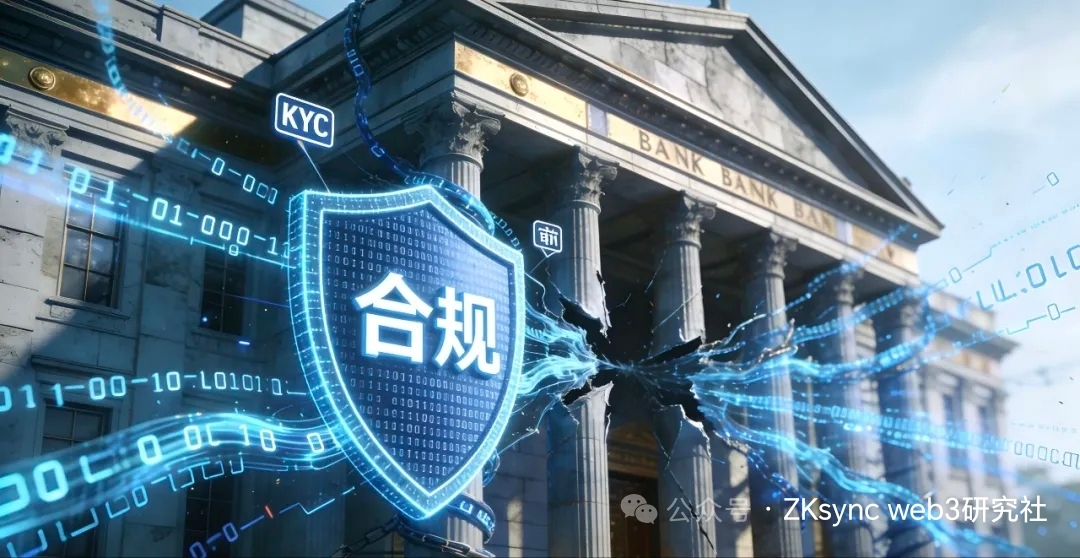
This shift accurately targets the largest blue ocean market in the current cryptocurrency industry—institutional compliance needs. Institutions are eager to rely on Ethereum's top security and massive ecological liquidity while facing rigid constraints such as regulatory compliance, data privacy, and risk control permissions. Fully decentralized L2s cannot quickly adapt to such needs, while L2s with 'customizable compliance layers' become the only optimal solution for institutions.
Currently, leading institutions like Robinhood and Coinbase are building their own Ethereum L2s, while Nasdaq and the Intercontinental Exchange have reached deep cooperation with relevant platforms. Various signals confirm: institutions are voting with their feet, flocking to L2 tracks that can anchor the Ethereum ecosystem and achieve privacy-compliant customization. The zkSync Prividium solution is a bank-grade private chain solution tailored for this blue ocean.
The core positioning of zkSync: three major moats capturing the institutional wave dividend. Enterprise access to the ZKsync elastic network is not simply a technical migration but an essential upgrade of financial collaboration models. The two core advantages reshape core competitiveness: Extracting from an approved ledger completely breaks free from the trust barriers of consortium chains and the pain points of complex system integration, achieving instant and efficient cross-institutional connections, breaking the shackles of traditional trust mechanisms, making institutional collaboration smoother and more efficient.
Combining the advantages of public chains with private compliance: enjoying the decentralized trust of public chains and cross-chain composability, while achieving top privacy protection and compliance control, truly achieving 'safety and efficiency coexist, privacy and openness thrive together.'
ZKsync Connect is redefining the paradigm of institutional financial collaboration: using hardcore technology to eliminate redundant intermediaries, reinforcing security with privacy encryption, and releasing capital efficiency with rapid settlement, allowing finance to return to its liquid essence.
Bilateral flywheel effect: L1 and L2 coexist and win together, rather than a zero-sum game. The expansion of Ethereum L1 and the development of L2 have never been a zero-sum game where one diminishes as the other grows. Instead, they are forming a clear bilateral flywheel effect, promoting a virtuous cycle of the ecosystem: L1 expansion directly reduces the on-chain data availability cost and final settlement cost that L2 relies on, enabling faster withdrawals from L2, smoother cross-chain transactions, and more timely transaction confirmations. L1 focuses on low-risk DeFi businesses and high-value asset settlements, solidifying the ecological safety base. L2 deepens specialized scenarios and institutional customized services, uncovering incremental ecological value. The division of labor between the two is clearer, the ecosystem is healthier, and the logic of value capture is more explicit.
More crucially, the Ethereum Foundation has listed interoperability as a core task for 2026, with tools like the open intention framework, a brand new interoperability layer, and native Rollup pre-compilation being intensively developed. The goal is to tackle the problem of liquidity fragmentation, making cross-L2 transactions as convenient as single-chain transactions.
At that time, L2 will become an ecological growth engine rather than a barrier that divides the ecosystem.
Conclusion: zkSync stands at the center of the flywheel, controlling the end narrative. As of now, Ethereum's market value firmly holds the position of the second-largest blockchain in the world.
Looking back at the emergency roadmap of 'Rollup-centered' five years ago, the current strategic shift is precisely a sign of the maturity of the Ethereum ecosystem—the technical foundation and talent reserves accumulated in the early stages are injecting tremendous power into the new L1+L2 system.
Returning to the core intention of Vitalik's writing: L2 has never failed, it has only returned to a more lasting and ecosystem-appropriate value positioning. Currently, institutions are accelerating layout, the technical route is clearly implemented, and interoperability is being advanced. In every key dimension, zkSync has already completed precise positioning.
$ETH When trillion-level traditional assets begin to migrate on-chain, and every bank and exchange needs a dedicated 'compliant L2,' zkSync's Prividium, elastic network, and Airbender three core advantages will become the first choice for institutions. This is the true end narrative of zkSync.#Zksync