
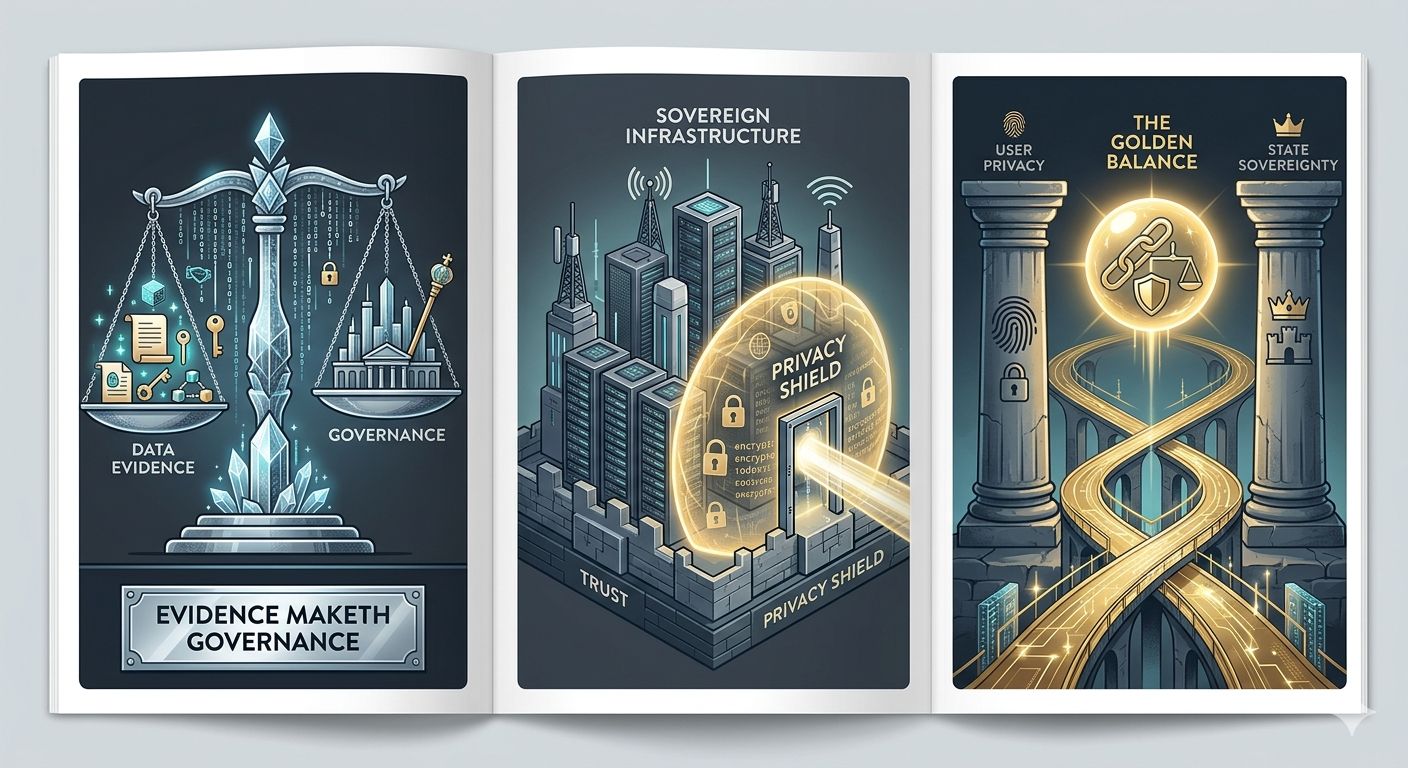
After the Russia-Ukraine conflict, everyone realized: whoever controls the data controls the future. Traditional systems are either monitored by large companies or cut off by foreign entities; public chains are too transparent, and governments dare not use them. Sign's sovereign infrastructure finds a golden balance between privacy and sovereignty—this is referred to in the white paper as 'evidence maketh governance.'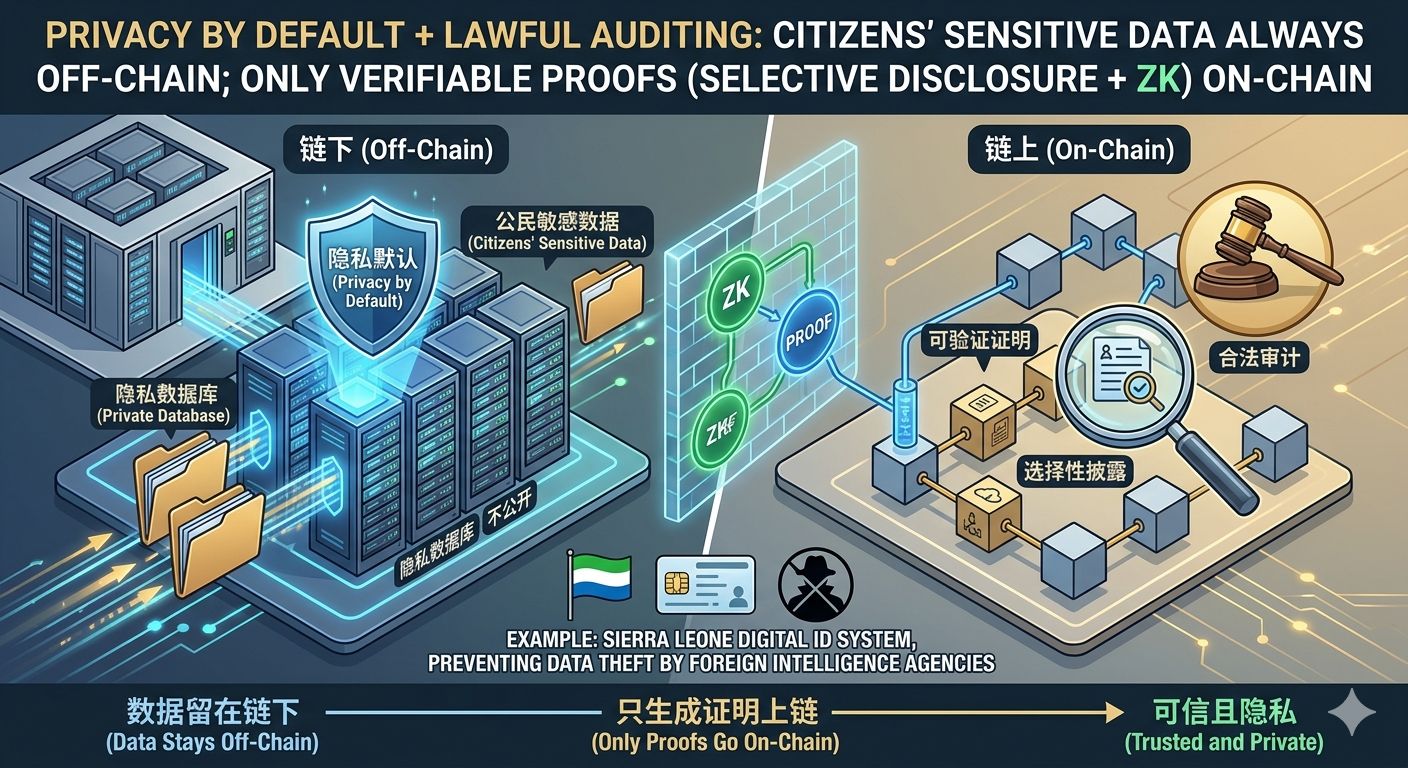
The latest partners on the official website and the MiCA white paper give me hope: Sign uses a hybrid track + evidence layer, allowing the country to maintain absolute control while accessing global DeFi.
The core innovation of this model lies in breaking the binary opposition between 'security' and 'openness.' In the current situation of intensified geopolitical competition, small and medium-sized countries often face a dilemma: excessive reliance on centralized systems can easily lead to being 'choked' by geopolitics, while blindly embracing public chains may touch the red line of sovereignty due to data transparency. Sign's hybrid track design essentially reconstructs the trust foundation of national governance using cryptographic language. It draws on cutting-edge technologies such as zero-knowledge proofs, achieving physical isolation between data 'use' and 'leakage'—meeting global compliance requirements for transparency while technically endowing data sovereignty with immutable hard properties. This governance framework, based on mathematical rigor, is more resilient to risks than mere legal commitments.
It resembles a set of 'defensive infrastructure' tailored for sovereign states. We can understand it as a 'no-fly zone' mechanism in the digital world: the state has absolute control and can audit legally connected third parties at any time; simultaneously, through a privacy protection layer, it ensures that core assets and livelihood data are not spied on by external forces. This design perfectly addresses the pain points of 'weak sovereignty' in public chains and 'easy disconnection' in traditional systems, allowing countries to enjoy the benefits of globalization while safeguarding baseline security, truly achieving 'the power to govern is in my hands, interconnected and communicable.'
How exactly to play? Three super hardcore points:
Privacy by default + legal audit: citizens' sensitive data remains off-chain, while only verifiable proofs go on-chain (selective disclosure + ZK). Sierra Leone has used it to build a digital ID system to prevent data from being stolen by foreign intelligence agencies;
Emergency sovereignty switch: the country holds the private key, upgrade rights, and pause button. When conflict arises, switch to private track with one click, benefits distribution and cross-border payments continue as usual—unlike SWIFT that can be cut off at any time;
RWA sovereign capital: tokenization of gold, energy, and land, attracting global capital while maintaining local compliance. The Abu Dhabi Blockchain Center is transforming public records with it, providing 24/7 transparency while retaining sovereignty.
$SIGN here is 'sovereignty fuel': to pay attestation fees, stake governance, and ecological rewards. Current price is $0.045, MC 75 million, surged over 100% in March due to the 'digital lifeboat' narrative, backed by institutions and real-world application, far exceeding most memes.
As a long-term holder, my biggest insight after reading the white paper is: Sign is not challenging the existing order, but providing small and medium-sized countries with a 'middle card' in a multipolar world. I used to worry about data sovereignty being squeezed by the US and China, but now seeing Kyrgyzstan's CBDC come into play, I truly feel that blockchain has finally served the country.
If you are a policymaker facing geopolitical risks, which system would you prioritize protecting with Sign? A. Digital identity B. CBDC payments C. RWA reserves. Cast your vote and provide a detailed comment on your country's pain points, and I will discuss feasible solutions one by one!