

In recent days, most people in the circle are still fixated on the ups and downs of K-lines, or are obsessed with the short-term games of MEME.
But I have been pondering a bigger question: in the upcoming era of high-pressure regulation and geopolitical rifts, what is the true hard currency?
Last night, I saw Reuters report that the risk of deposit outflow in the Gulf region could be as high as $307 billion. Looking at the SIGN I hold, I suddenly have a strong feeling: we may have all underestimated the ambitions of this project. It is not just creating a simple verification protocol, but building the last digital ark for this chaotic world.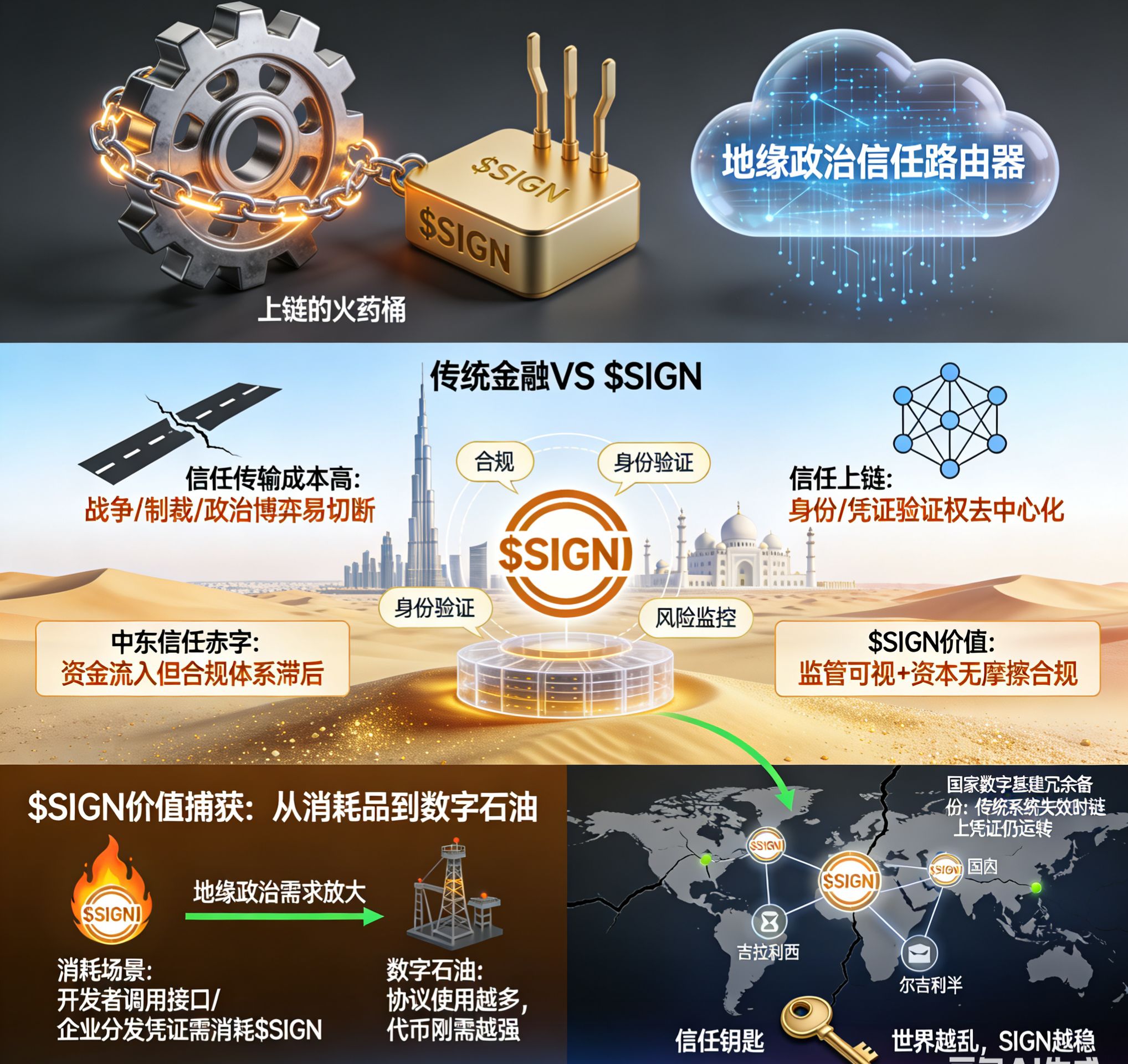
Not all infrastructure is sovereign-level; many people simply categorize Sign Protocol as decentralized identity or credential verification. If we only look at the technical side, this understanding is not incorrect, but it is too superficial.
After deeply studying its recent strategic layout, I found that @SignOfficial 's smartest move is upgrading itself from a Web3 tool to digital infrastructure for sovereign nations. This is not just a technical narrative, but also a geopolitical narrative.
Let's recall the biggest issue exposed in the past few years, whether it was the SWIFT sanctions during the Russia-Ukraine conflict or the risks of traditional banking system runs caused by the current turmoil in the Middle East. It is that the cost of transmitting trust is too high.
The traditional financial system is like a series of fragile roads that can be cut off at any time in the event of war, sanctions, or political games. And @SignOfficial What we are doing is reclaiming the authority of identity and credential verification from centralized institutions and placing it on the blockchain.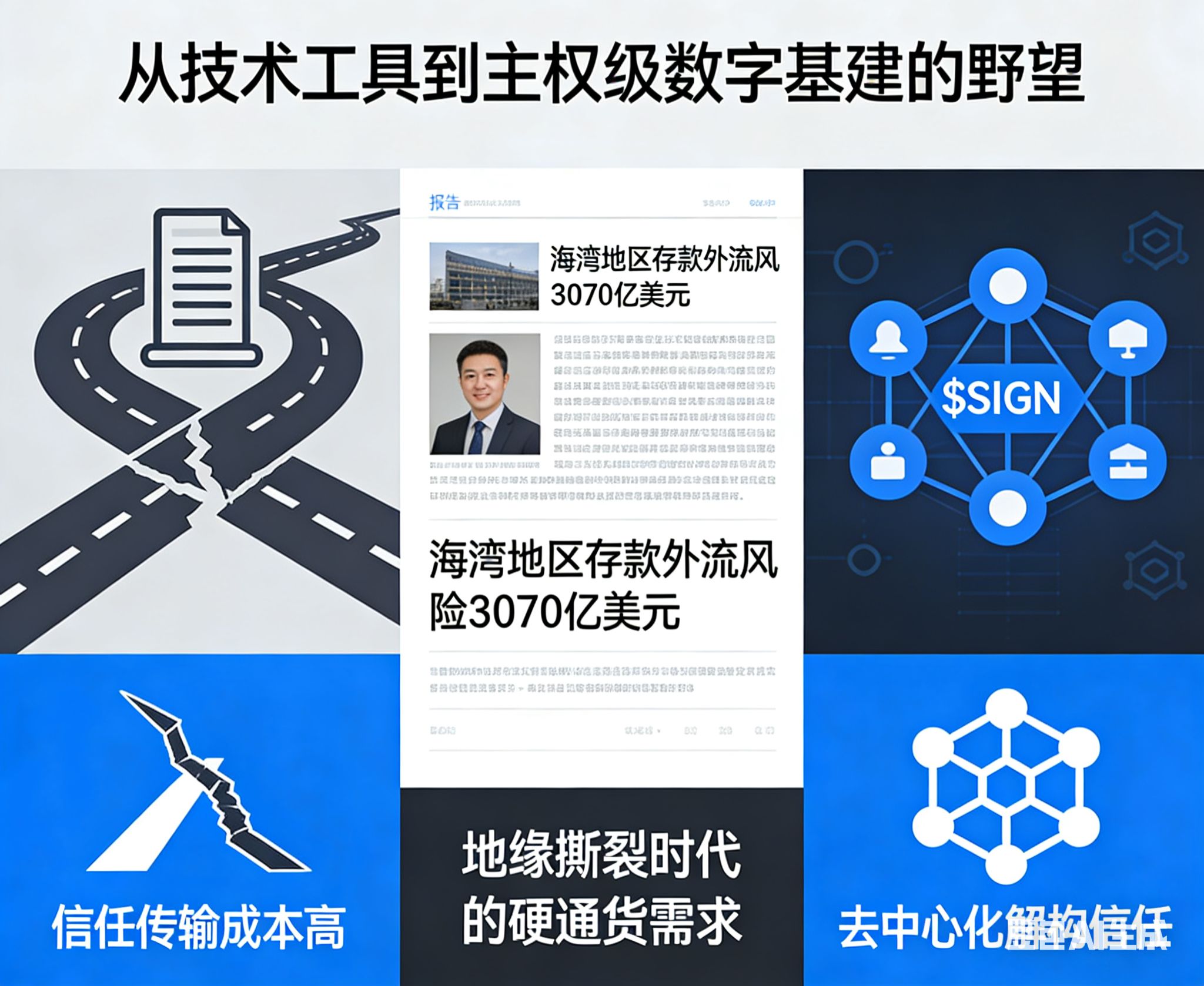
Why do I have confidence in its development in the Middle East? Because there is a huge trust deficit here.
Currently, Dubai and Abu Dhabi, although seemingly frantically absorbing global risk-averse funds, face an awkward reality: funds have come in, but the compliance and identity verification system has not kept pace. Although the UAE has issued so many crypto licenses, regulators face a dilemma—there are too many enterprises and too fast-moving capital, making real-time risk tracking impossible.
This gives rise to an extremely necessary scenario: regulators need visible risk monitoring, while capital requires frictionless compliance proof.
Thus, the value of SIGN can be infinitely magnified here. It is not just about doing KYC; it provides a trust router. Just like CertiK's Skynet Enterprise platform in ADGM allows regulators to clearly see the security ratings of enterprises, SIGN actually plays a middleware role—making regulatory compliance visible and verifiable while protecting user privacy.
In the Middle East, where decisions are made by sheikhs and capital, technical TPS is not attractive; infrastructure that can help regulators alleviate risk control anxiety is the real hard currency, and this is precisely the core competitiveness of @SignOfficial .
From consumables to digital oil, I will guide you to reevaluate and sort out the value of SIGN.
Setting aside grand narratives, let's take a look at the economic model. I firmly believe that if a token does not have a real consumption scenario, it is swimming naked.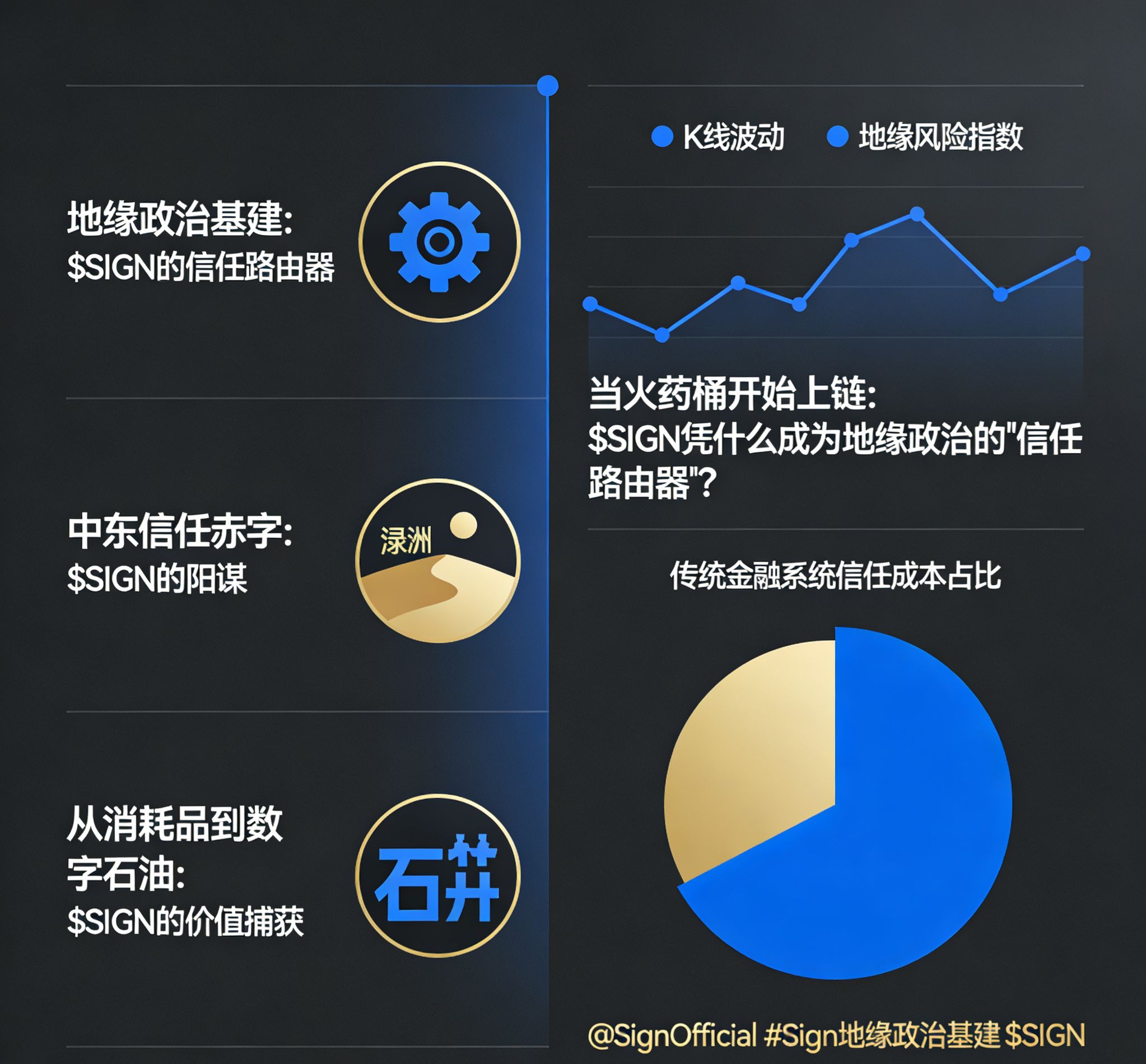
$SIGN 's value logic is actually very classical and solid: it is a universal settlement currency for 'proof as a service.' Whether it is developers calling interfaces or enterprises distributing digital credentials, $SIGN must be consumed. This consumption-driven demand means that the more people use the protocol, the stronger the essential demand for the token.
In the current situation, this demand is being amplified by geopolitical factors.
When funds flow out of Switzerland and traditional banks in the Gulf, they need a borderless asset rights confirmation tool. $SIGN is not just for speculation; it is your ticket to proving your worth in this digital sovereignty system. Once you turn your assets into RWA, who will prove that this asset belongs to you?
Who will prove that this credential has not been tampered with? This is where $SIGN comes into play.
what's more frightening is its 'moat effect.' As Sign establishes itself in countries like Kyrgyzstan and Sierra Leone, it is no longer that party seeking cooperation everywhere. It has become a redundant backup for national digital systems—when traditional systems are attacked or fail, the on-chain credential system based on Sign can continue to operate.
This positioning as a digital lifeboat is tailor-made for the uncertain Middle East.
So, the more chaotic the world, the more stable SIGN becomes.
We habitually think that infrastructure projects grow slowly and are not as stimulating as MEMEs. But have we ever considered that when macro liquidity tightens and the regulatory iron fist falls, what kind of assets can survive? They are projects with real revenue, national-level application scenarios, and strong compliance attributes.
SIGN is on the most difficult but most stable path – it attempts to become a bridge between the wildly growing Web3 and the rule-abiding Old Money.
In the geopolitical melting pot of the Middle East, the value of Sign is not reflected in how high it can go, but in the extent to which it becomes the underlying logic of digital survival in this region.
When Dubai is building a future-oriented financial special zone and the Arab League is promoting a unified digital transformation portal, what they need is a trust base like $SIGN that can resist censorship and meet compliance requirements.
Looking back at that statement: when everything can be verified, SIGN is the only gateway to a decentralized integrity society.
In such a powder-keg era, I choose to heavily invest in this certainty.
Because I am not focusing on the next hot spot, but on the essential key of trust in the global digital order reconstruction process over the next decade.
What do you think? Feel free to share your thoughts on #Sign in the comments section.