
Introduction
The evolution of the Internet has not been limited to just information sharing. Today's digital world is centered around a big question - “who can be trusted?” In traditional systems, this role is played by middlemen, but Web3 is bringing a new approach where trust is verified, not assumed. At the center of this shift is the SIGN Protocol, which is converting trust into a programmable and verifiable layer.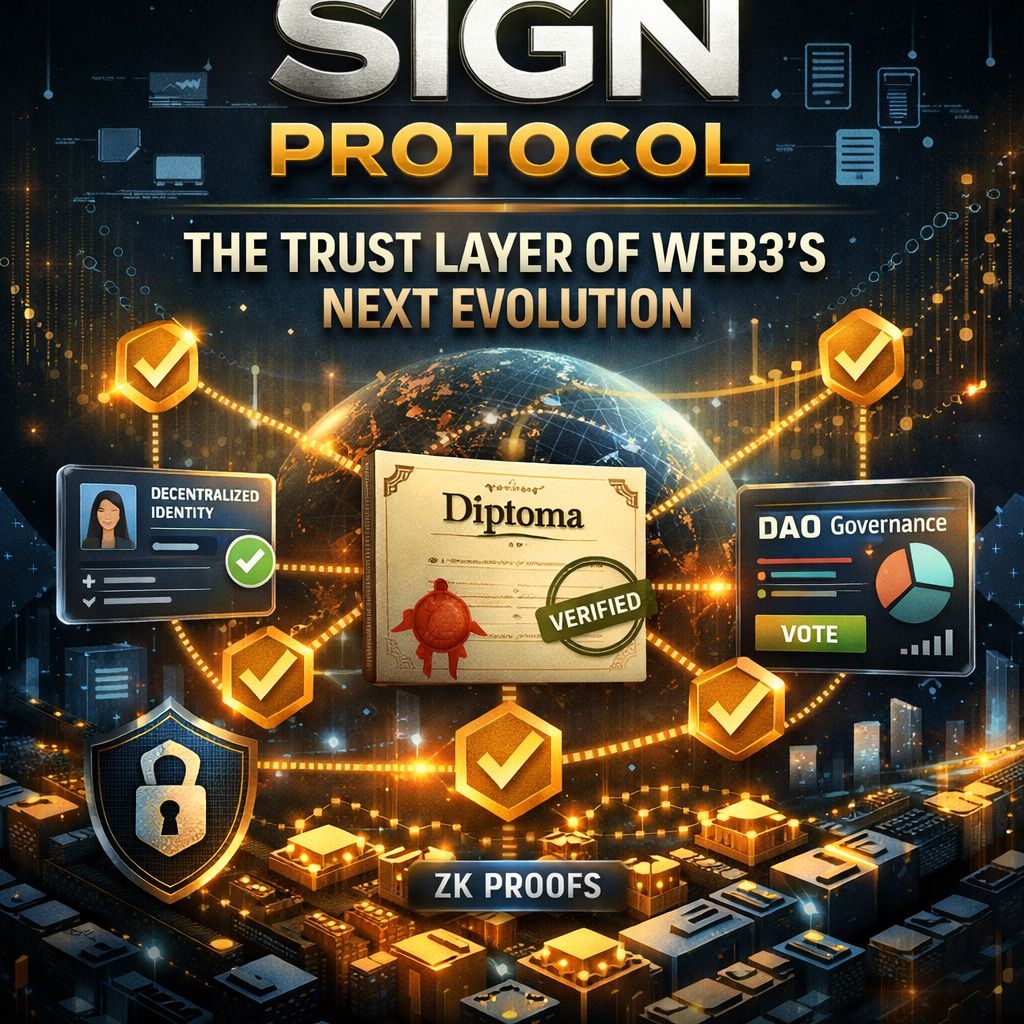
What is the SIGN Protocol
The SIGN Protocol is a decentralized attestation infrastructure that provides the capability to cryptographically verify any claim. Here, “attestation” means a digitally signed proof that confirms the validity of information. This system uses blockchain-backed verification, making data transparent and trustworthy without relying on blind faith.
How it works (Inside the System)
The architecture of SIGN Protocol is structured and modular
Schemas define what the data format will be
Attestations represent verified claims
The indexing layer ensures that this data is easily accessible
Each attestation is linked to a signer. This means trust does not come from the system but from the identity and credibility of the attester, which is proven through cryptographic signatures. This model does not eliminate trust but makes it measurable and portable.
Why SIGN is Different
SIGN Protocol is not just a verification tool, but a trust infrastructure layer
Users can share only the required data through selective disclosure
The system is multi-chain compatible, ensuring scalability
Advanced cryptographic methods are being explored to enhance privacy
And the developer-friendly design makes it ready for real-world integration
Here, the focus is not just on storing data, but on creating verifiable truth.
Real World Impact
The use of SIGN Protocol can go far beyond Web3
Decentralized identity where users own their data
Education and credentials verification without forgery
On-chain reputation systems that build digital credibility
Fair distribution in airdrops and reward systems
And DAO governance where decisions are transparent and auditable
All these use cases solve a common problem - making trust scalable.
Future Outlook
As digital ecosystems become increasingly complex, the importance of trust infrastructure will grow. SIGN Protocol signals a future where attestations can become the building blocks of the internet. Such models are being explored in enterprises, compliance systems, and even public infrastructure. If adoption accelerates, SIGN could become the 'trust layer' of Web3.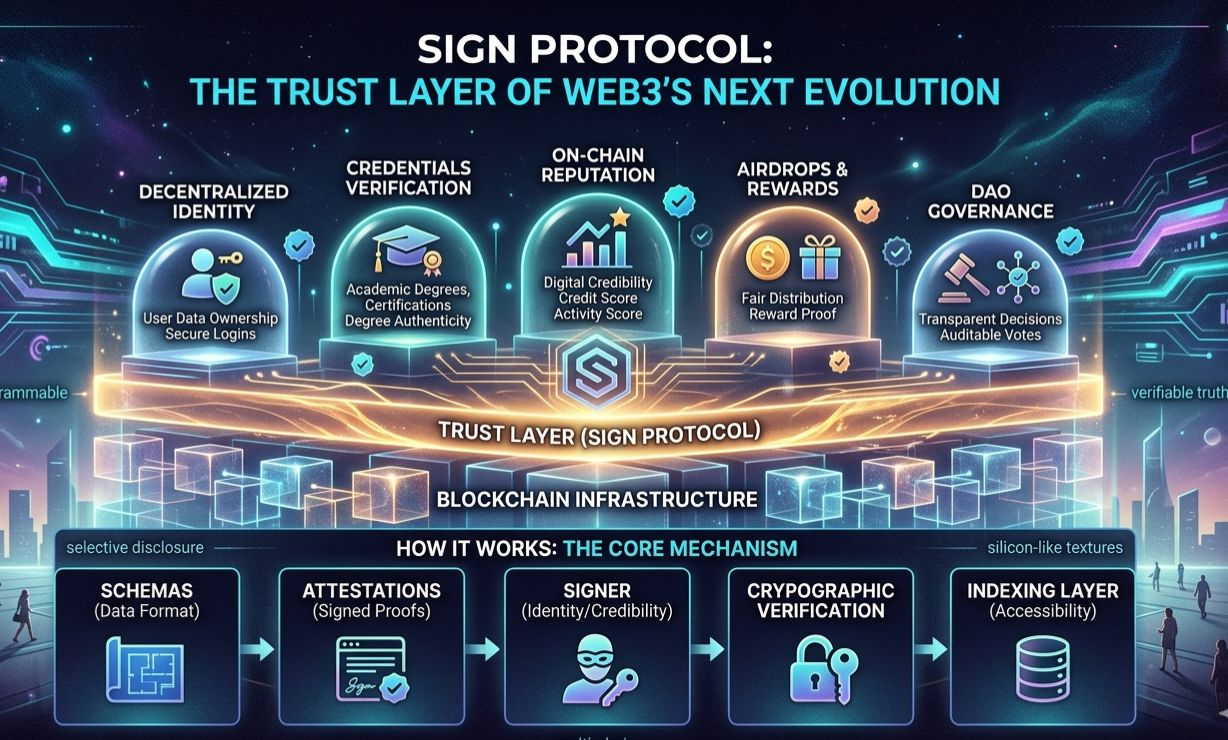
Conclusion
SIGN Protocol represents a silent revolution. It is not flashy, but foundational. It is leading us towards a digital world where trust is not a decision of an authority, but a result of proof. And when trust becomes programmable, the possibilities become infinite.
Disclaimer
This article is for educational purposes only. The views expressed herein are based on research and understanding. Always conduct your own research before investing in crypto or any digital asset.

Article
SIGN PROTOCOL: THE TRUST LAYER OF WEB3’S NEXT EVOLUTION.
Disclaimer: Includes third-party opinions. No financial advice. May include sponsored content. See T&Cs.