Have you ever noticed how often you have to prove yourself? Not just once, but again and again. Every form you fill out, every document you upload, every interview where you explain your experience—it all comes back to the same thing: trying to be believed. It’s tiring, and if you really think about it, it doesn’t make much sense. If something is true, why does it need to be constantly rechecked?
We live in a world where information moves instantly, but trust still moves slowly. You can send a message across the planet in seconds, yet proving your identity, your education, or your skills can take days—or even weeks. That gap between speed and trust is where most of today’s problems quietly exist. And this is exactly the gap that the global infrastructure for credential verification and token distribution is trying to close.
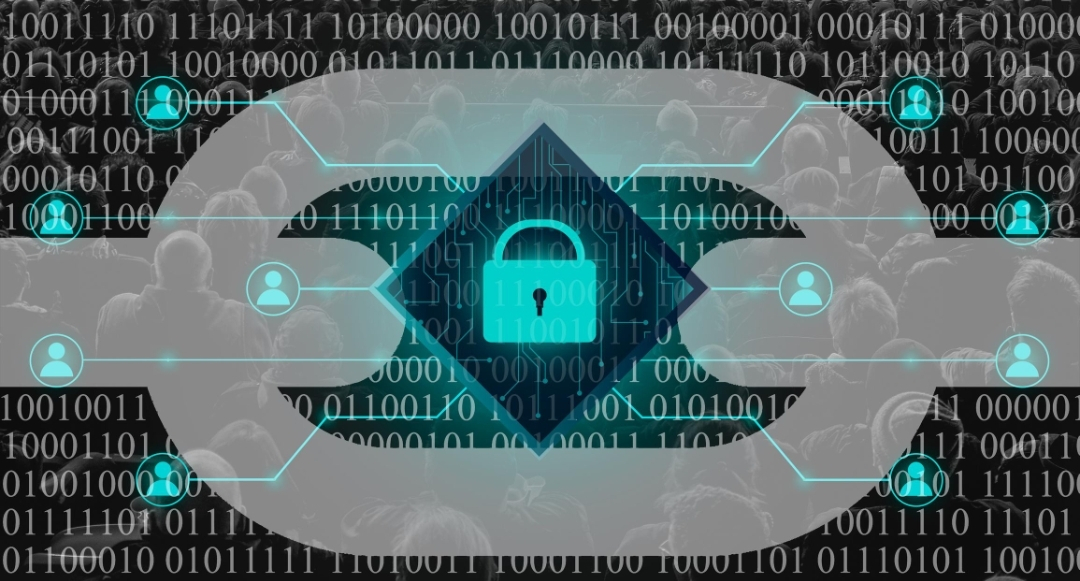
At its simplest, this system is a better way of answering three basic questions: who you are, what you’ve done, and what you deserve because of it. Instead of relying on different organizations to verify your information every single time, it allows your truth to travel with you—securely, reliably, and instantly. Not as a file that can be edited or faked, but as something that can prove itself without needing constant confirmation.
Think about your certificates or achievements for a moment. Right now, they are just static documents. They sit in folders, waiting to be shared, checked, and sometimes doubted. In this new system, those same credentials become active and intelligent. They can verify themselves, they cannot be forged, and they don’t need to be revalidated every time you use them. It’s almost like your achievements finally have a voice of their own, quietly saying, “I’m real, and I can prove it.”
Then there’s the idea of tokens, which often sounds more complicated than it really is. You can think of tokens as digital rewards or units of value. What makes them powerful here is not just that they exist, but how they are distributed. Instead of people deciding who deserves recognition based on assumptions or incomplete information, tokens can be given based on verified truth—real skills, real work, real contributions. That shift may seem small, but it changes how fairness works in a digital environment.
Another important part of this system is identity. Right now, your identity is scattered across different platforms—some with social media, some with banks, some with apps you barely remember signing up for. You don’t fully control it; you just access pieces of it. This new approach brings your identity together in a way that you control. You decide what to share, when to share it, and with whom. That alone is a quiet but powerful change.
To make this more real, imagine applying for a job. Normally, you send your CV, wait for someone to review it, and hope they trust what you’ve written. With this system, you share a verified profile instead. Your skills, your experience, your achievements—they are already confirmed. There’s no back-and-forth, no long verification process, and no lingering doubt. It’s not just faster; it feels more honest.
There’s a simple story that reflects this shift. A young developer named Ali spent years building his skills, but every opportunity felt like starting over. He had to explain himself repeatedly, prove his work, and wait for people to trust him. When he moved into a system where his work and credentials were verified once and recognized everywhere, everything changed. He didn’t suddenly become more skilled—he just stopped being invisible. The system finally caught up with his reality.
What many people don’t realize is that this isn’t really about technology at all. It’s about removing doubt from everyday interactions. So much of life today is slowed down by uncertainty—questioning whether something is real, whether someone is trustworthy, whether information can be relied on. This infrastructure doesn’t just speed things up; it replaces that uncertainty with quiet confidence.
Of course, no system is perfect. Questions about privacy, fairness, and access are important and cannot be ignored. A system that holds so much truth must be built carefully, with people at the center of it. Otherwise, the same tool that creates trust could also create control. That balance will define how successful—and how ethical—this future becomes.
What makes all of this important is how close it is to everyday life. This isn’t something distant or abstract. It affects how you get a job, how you prove your skills, how you receive rewards, and how you build your reputation. It’s about making those processes smoother, more transparent, and less dependent on guesswork.
Looking ahead, the biggest change might be something you don’t even notice at first. You won’t have to convince people of your value as often. Your work and your achievements will already carry weight because they are backed by proof, not just claims. Trust will no longer feel like a barrier—it will feel like a given.
In the end, this entire system comes down to something very simple and very human. People want to be seen clearly, trusted fairly, and recognized honestly. Technology is just the tool that makes that possible. And if it works the way it’s meant to, the future won’t be about proving who you are over and over again—it will be about being understood the first time.