
1. Even if you are on the cloud, you are just a tenant who can be cleared at any time.
If you go to those holographic cafes in Riyadh now or take a look at the streets of Bishkek, you can hear people everywhere talking about some 'digital leap.' To be honest, after hearing that term so many times, I always feel like there's a plastic taste in my throat.
Let's talk about something that will keep you awake.
It is now March 20, 2026, and humanity has almost moved to live in the cloud. But I advise you to wake up; this cloud has a landlord. The balance in your phone, the sentiments you express in the square, even that digital identity you are proud of, are actually just a temporary workspace rented to you by the landlord. If the landlord is unhappy, or if a server in some country across the ocean loses power, your digital assets can turn into illegal structures in a minute. This absurdity feels like you spent a lifetime saving to renovate a house, only to find out that the property certificate has the property manager's name on it.
This fear of being cleared out at any time is what they often refer to as digital sovereignty. I have been paying attention to Sign Protocol for quite a while, and what these people are doing is very simple: they do not want to build new skyscrapers; they want to take back that property certificate from the property manager through CBDC technology and write your own name on it.
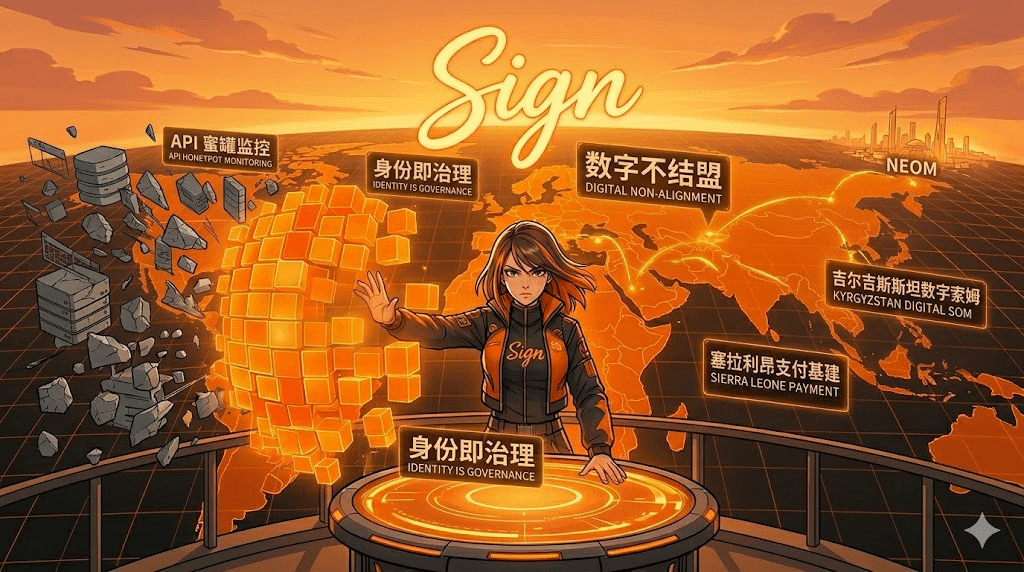
2. The snow in Bishkek and the name written on the chain.
Let's talk about something concrete that has actually happened.
At the end of 2025, the helm of Sign, Yan Xin, did something quite hardcore in Kyrgyzstan. He signed an agreement about the digital som with the head of the local national bank. This matter spread quite mysteriously in the circle, but the reasoning is quite simple.
For countries like Kyrgyzstan or Sierra Leone, if their money and identification have to run on someone else's foundation, can that country still be called a sovereign nation? That's called digital tenant farming. If the tap water in your home is controlled from your neighbor's bedroom, you have to ask others even to wash your face; can life be comfortable like that?
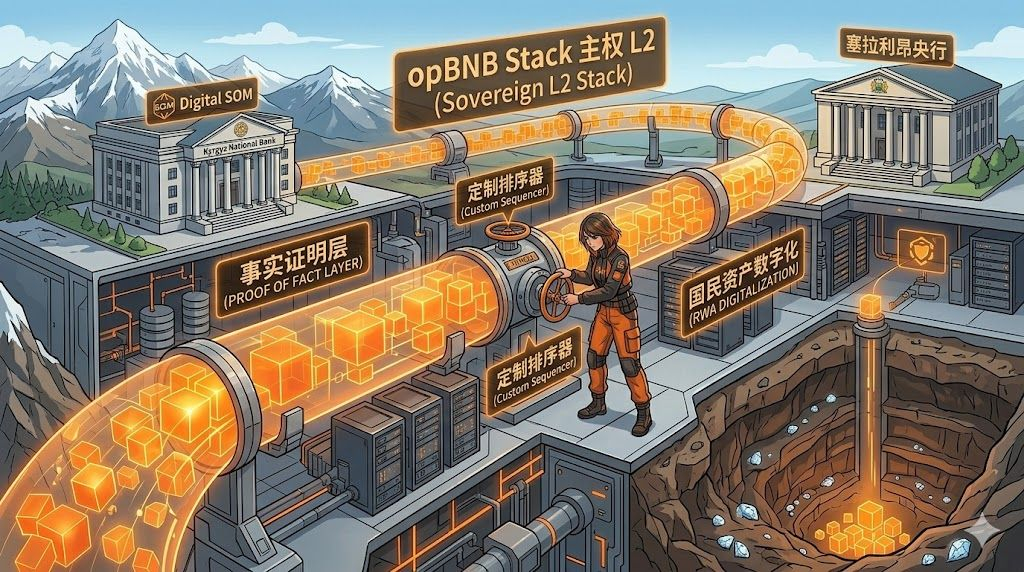
So I specifically went to check their Twitter and visited the homepage of @SignOfficial at Binance Square. What they offer, called Sovereign Stack, simply means digging a deep well for these countries in the digital world. This is no longer borrowing someone else's water; this is your own well. Even if the neighbors are unhappy, you can still drink water. This is why we are keeping an eye on $SIGN; it's not air; it is the firewood that must be burned to keep this well running.
3. Don't dive into the honeypot; that's not home.
There is a term in cybersecurity called a honeypot, which is like putting a jar of sweet syrup to lure greedy ants into jumping in.
The current databases of those big platforms are essentially the biggest honeypots. They collect the privacy of the whole world, tempting all those who want to peek and control. Each of us is like an ant crawling on the edge of a honeypot, seeking the convenience of transfers and the ease of logging in, yet forgetting that our lifeline has long been handed over.
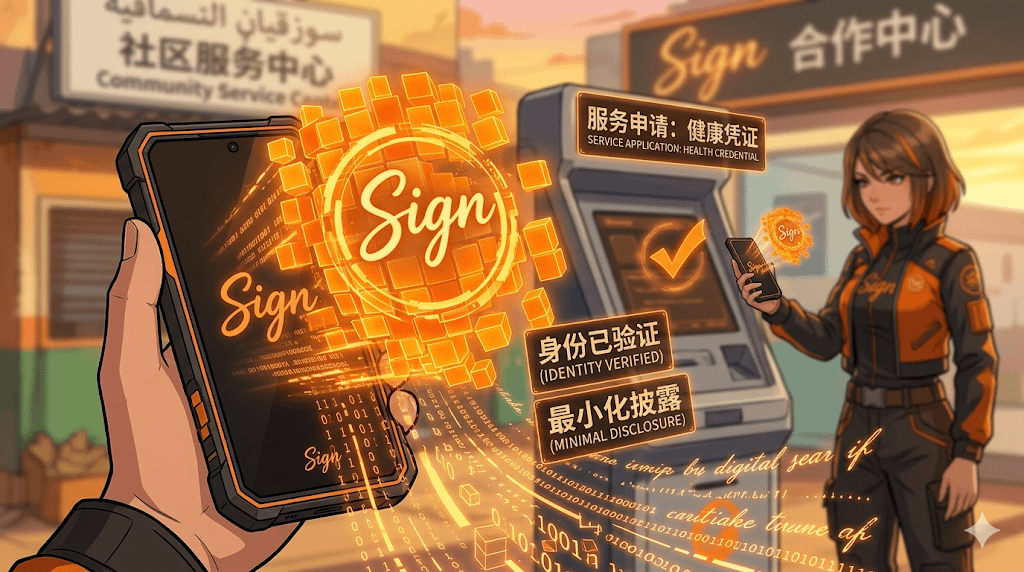
Sign researcher Harry Song talked to me, and he said the identity system is actually a permission of power. In the old-fashioned world, if you wanted to prove you are you, you had to ask someone for proof. But in the digital proof logic promoted by Sign, this process has changed.
It's like entering a high-end club, where the security does not need to check your bank statements; he just needs to scan the encrypted digital stamp provided by Sign in your hand. This stamp only tells him one thing: this guy is qualified to enter. As for where you live, that’s none of his business. This power to retain privacy is the dignity that $SIGN attempts to re-establish on the ruins of the digital world.
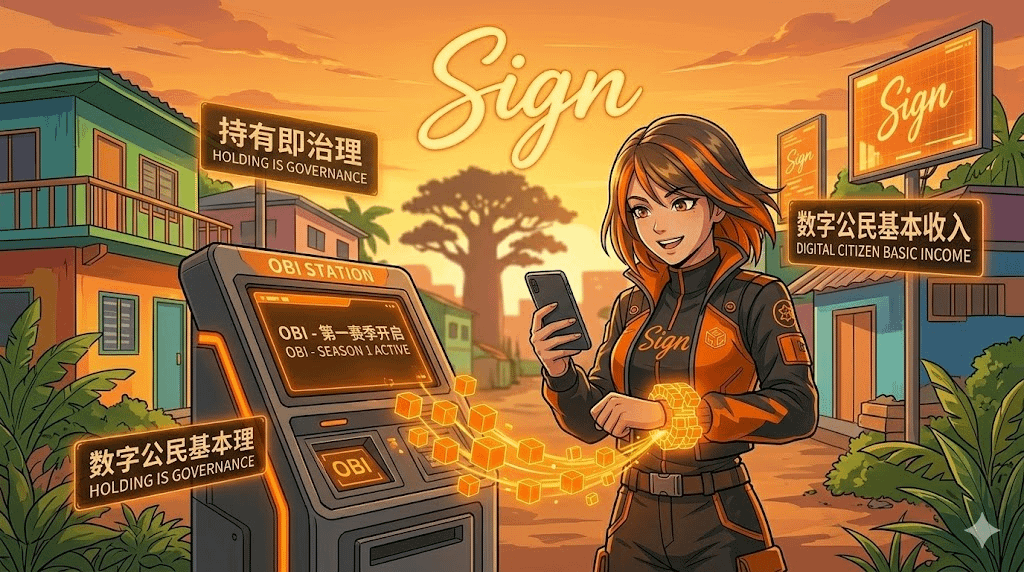
4. OBI: This is not welfare; this is an evacuation fee.
Let's talk about money; the OBI plan has officially launched.
The Sign Foundation generously issued 100 million $SIGN. I have a habit of wanting to check the accounts when I see money being given away. The accounts are correct, fully collateralized, not that kind of empty check.
The interesting part of this is that it is not a random act of charity but a digital social contract. The logic provided by Sign is very straightforward: if you want to receive this dividend, you must first learn to move out of the honeypot.
They require you to keep $SIGN in a self-custodial wallet. What is self-custody? It means the keys are held in your own hands. This is more like a form of compulsory education: if you can't even hold your private key, what are you talking about digital sovereignty? That's just begging in the cloud.
As long as someone needs to verify identity or transfer real assets like property or bonds, also known as RWA, $SIGN is quietly burning in the background. It captures the most scarce resource of this era: the authenticity of facts.
5. Tightening screws on infrastructure, why BNB Chain?
Many people ask me why Sign goes to such lengths to tinker with its own tech stack. Can't we just use the ready-made frameworks available on the market?
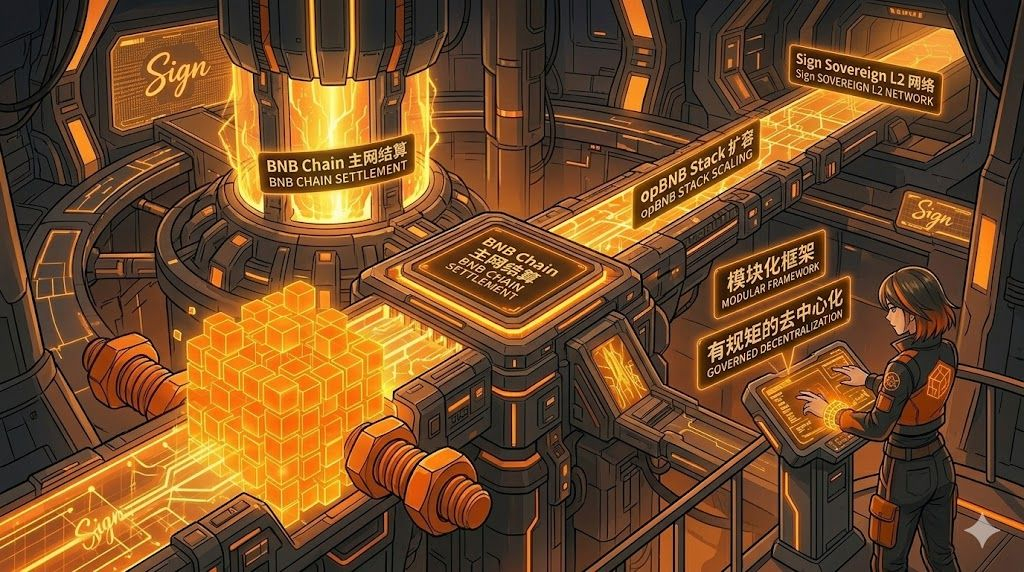
This brings us to a kind of screw-tightening force. If you want to build a national-level financial security system, the generic solutions simply won't hold up. Sign chose BNB Chain with the opBNB Stack and added a customized scheduling platform on top.
The most wonderful thing about this is that it allows the government to enjoy the transparency of blockchain while retaining the power to intercept bad actors. This is called decentralized governance with rules. It is not meant to overturn the table but to let blockchain technology run effectively and safely within the framework of national law.
6. Under the lights of sovereignty, be a sober bearer of credentials.
Having been in this circle for a long time, I have long been allergic to those colorful architectural diagrams. I only care about certainty.
In the twilight of Riyadh or beside the mines of Sierra Leone, the orange and black visual system of Sign Protocol is becoming a reality. @SignOfficial is doing something to return the monopolized verification rights back to the nation, back to each one of you who is willing to take control of your own destiny.
$SIGN, what is it exactly?
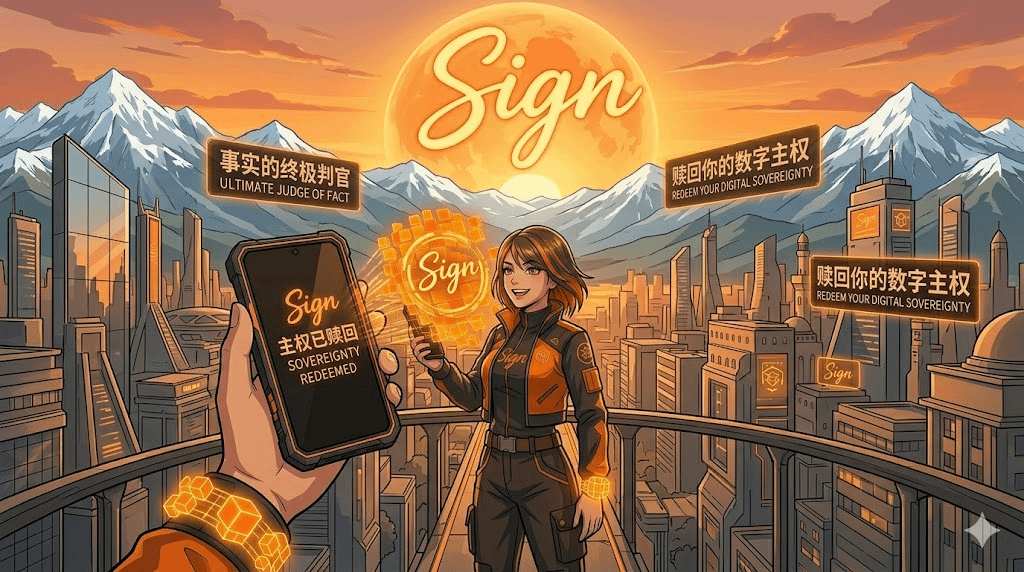
It is a ticket that allows you to transition from a digital tenant to a digital landlord. Only when you realize that you no longer need to beg some API far away for verification, do you truly step onto your own land.
This is called See the Sign.
The glowing logo is right there; it is not meant for you to worship; it is a reminder: your name must be signed by yourself. Don't leave your lifeline in someone else's honeypot, go claim your OBI, go get your private key. In this spring of 2026, being a sober bearer of credentials is much more sophisticated than being a fanatical speculator.
$SIGN #Sign地缘政治基建 #DigitalSovereign @SignOfficial #CBDC #OBI #RWA