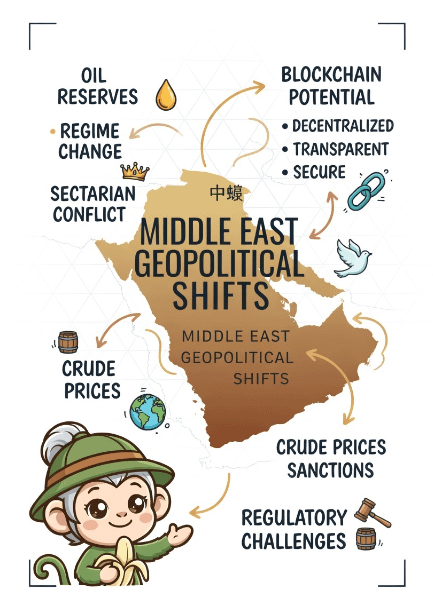
The recent shift in the Middle East is quite crucial. Arab countries are beginning to align with the United States and Israel on security issues, essentially indicating one thing: the trust structure in the region is further collapsing. Especially after frequent attacks on energy facilities, it has become quite unlikely for all parties to maintain balance using past methods.
In this context, looking at $SIGN again makes the logic a bit clearer. Many people still see SIGN as a storytelling project, but if the situation continues to be tense, what is truly scarce is not resources, but the ability of 'trusted collaboration.'
In situations like the current one, the competition among countries is intensifying, with opaque information and high cooperation costs. Many cross-regional communications and agreements are actually stuck at the 'trust' stage. If in the future, some processes can be moved onto the chain, such as identity verification, data rights confirmation, or even certain protocol executions, systems that do not rely on a single endorsement may be more readily accepted.
So right now I look at $SIGN not as a short-term market target, but more as observing a direction: when geopolitical conflicts intensify, can blockchain potentially take on part of the infrastructure role? If this logic holds, then the value of SIGN won't just be determined by market sentiment.
Of course, at this stage, it is still early, to put it bluntly, it’s about seeing real-world applications. Whether there are real scenarios integrated, and whether there is continuous usage, these are the keys to determining the upper limit. But one thing is certain, in environments like the Middle East, if there is a real need for a neutral, verifiable system, then things like $SIGN could potentially be utilized.
Short-term may not be particularly bright, but once such projects start to be put into actual use, the pace may completely change. I will continue to monitor it and won’t jump to conclusions easily, but I also won’t ignore its potential.