Sometimes I feel that the cryptocurrency industry is quite interesting. Everyone is discussing new narratives, new concepts, and new tracks every day, but some very fundamental issues have always existed; it's just that no one wants to discuss them head-on. The most typical one is: **Should blockchain make all data public?** This question sounds trivial, but if you think seriously about it, you'll find that for the vast majority of public chains, the default answer is 'must be public,' and the more transparent, the better.
The question is, is this logic really correct? In the early stages, transparency indeed brought trust because people no longer needed to rely on centralized institutions. However, as the blockchain begins to carry more and more real funds and real businesses, this design of 'default openness' starts to become a bit awkward. You can casually check the historical transactions of an address, analyze the flow of funds, and even infer who the people behind it are through behavioral patterns. This is technically cool, but in the real world, it's actually a bit absurd.
In plain terms, the state of many chains now is: **security is present, but privacy is almost nonexistent.** Privacy isn’t a luxury; it’s a fundamental need. You can accept that a banking system isn’t completely transparent, but it’s hard to accept that a bank makes all user data public online. Similarly, if blockchain is truly to move towards large-scale applications, this “full transparency” structure will eventually hit a bottleneck.
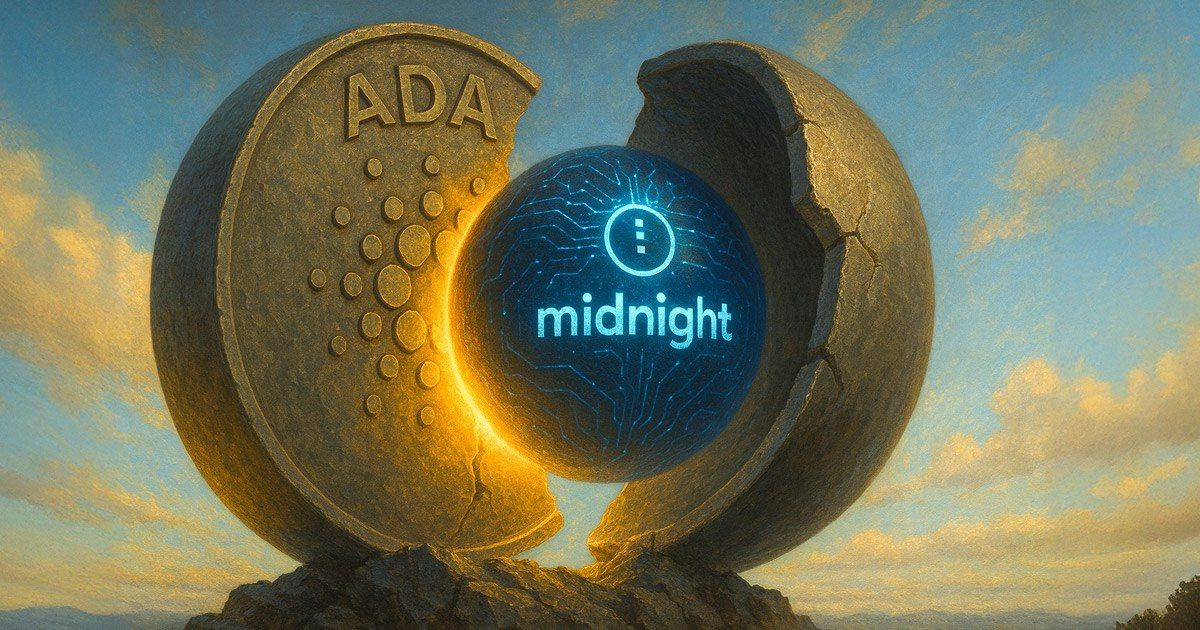
It is precisely because of this background that I started to reevaluate the direction of night. Many people instinctively classify the Midnight Network as a “privacy chain,” and then stop there. But I believe what it truly aims to solve is not just as simple as “anonymous transactions,” but a more fundamental question: **Can data be both trustworthy and not publicly disclosed?** This sounds like a tongue twister, but it is essentially unpacking an old problem—the conflict between transparency and privacy.
Midnight uses zero-knowledge proofs, a term everyone has heard too much, but the key isn’t the technology itself, but how it is applied. It doesn’t make you “disappear,” but allows what you do on the chain to still be verified, while keeping the details hidden. For example, whether a transaction is legitimate can be confirmed, but the transaction amount and path don’t necessarily have to be public. This design, to be honest, resembles the logic of the real world more than a purely idealized on-chain model.
Looking deeper, many current issues can actually be boiled down to one point: **the blockchain was designed more for the “observer” rather than the “user.”** Transparency makes observation easier, but the user experience has actually worsened. This is especially true for users with large amounts of capital and complex businesses, as being fully exposed is a risk in itself. This is why many institutions are still on the sidelines rather than jumping in directly.
The structure of night actually thinks about this problem in reverse. It doesn’t first ask “what can the chain do,” but rather asks “what do users not want to expose.” Under this premise, it then designs the verification mechanism, rather than assuming everything must be public. I believe this approach is where its true value lies, rather than just simply “adding privacy features.”
Another point that many people easily overlook is that this design is actually compatible with future regulatory environments. Fully anonymous systems are naturally disliked by regulators, but if you can prove certain information when necessary instead of making everything public, this model of “selective disclosure” is more likely to be accepted. In other words, it’s not fighting against reality, but trying to integrate into reality.
If we look at the entire industry on a longer timeline, there are actually many similar situations: some problems everyone knows exist, but since they temporarily don’t affect profits, no one is in a hurry to solve them. When one day this problem starts to impact growth, it will suddenly become a “core contradiction.” Privacy is likely one of those delayed variables.
My current view is quite simple: night may not necessarily become the only answer, but the issue it is addressing cannot be ignored. You can overlook it in the short term, but you must face it in the long run. When the market really starts to value this, many designs that currently seem “taken for granted” may be overturned.
So rather than saying that Midnight is a privacy project, it is more accurate to say that it is trying to fix a foundational setting that the industry has accepted by default, but which is actually unreasonable. Such projects often aren’t very lively in the early stages, but once the environment changes, their position will be very different.