
The Nord Stream pipeline was destroyed, SWIFT was weaponized, and digital infrastructure in the Middle East has collapsed — under geopolitical competition, global infrastructure is falling into a 'hegemonic trap.' However, Sign has broken through against the trend, landing over 200 projects in a year and generating 15 million in revenue, presenting a solution to the world with sovereign infrastructure. After in-depth dialogues with leaders from various countries, we have come to see a truth: the rise of Sign has never been merely a technical breakthrough, but rather a new possibility for global cooperation in a turbulent era.
A year of frenzy: 'Is it difficult for sovereign infrastructure to land?' Sign has slapped the industry hard with 15 million in revenue and over 200 projects.
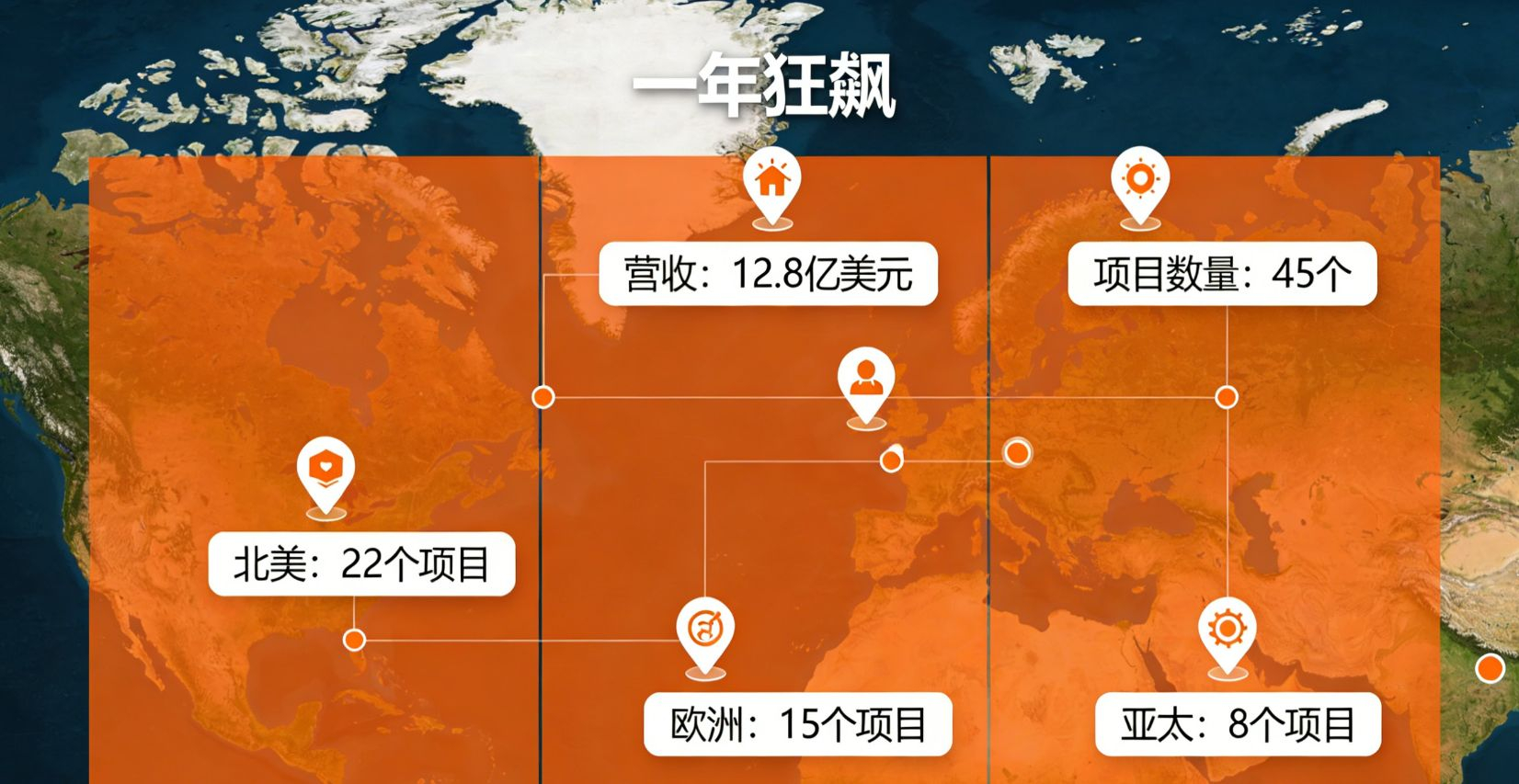
Looking back on the past year, Sign has broken the curse of "sovereign infrastructure being hard to land" with tangible progress, achieving a leap from "concept" to "benchmark"; every step has been on the forefront of the times.
In terms of ecological layout, Sign has completed the transformation from a single protocol to a diversified ecosystem, with product footprints across multiple countries and regions, including the UAE, Thailand, and Sierra Leone, and plans to further cover emerging digital governance highlands such as Barbados and Singapore, truly achieving "rooting" rather than "castles in the air." Core data shines brightly: the number of Sign Protocol certificate templates has achieved exponential growth, the TokenTable platform has cumulatively distributed over $4 billion, covering over 40 million on-chain wallet addresses, with more than 200 actual service projects, encompassing multiple mainstream ecosystems such as Starknet and ZetaChain, forming a strong network effect. Even more surprisingly, this rising Sign, not only does not depend on any great power, but also rejected acquisition offers from American tech giants — its confidence comes from the trust of over 20 countries, and even more so from solid technological strength.
In terms of commercial value, Sign has also carved out a differentiated path, becoming one of the few participants in the identity and token infrastructure sector with a practical revenue model, achieving annual revenue of $15 million, and gaining recognition and support from top-tier capitals such as Sequoia Capital and YZi Labs, proving the commercial viability of sovereign infrastructure and thoroughly breaking the inherent perception of "non-profit" and "non-profitability."
What deserves more attention is that Sign's technological iteration has never stopped, continuously breaking through industry bottlenecks from underlying architecture to application scenarios, laying a solid foundation for subsequent breakthroughs in sovereign infrastructure, and showing the world new possibilities for digital infrastructure.
Key Breakthrough: The world's first dual-stack infrastructure! Sign's three major breakthroughs directly rewrite the rules of the national sovereignty game.
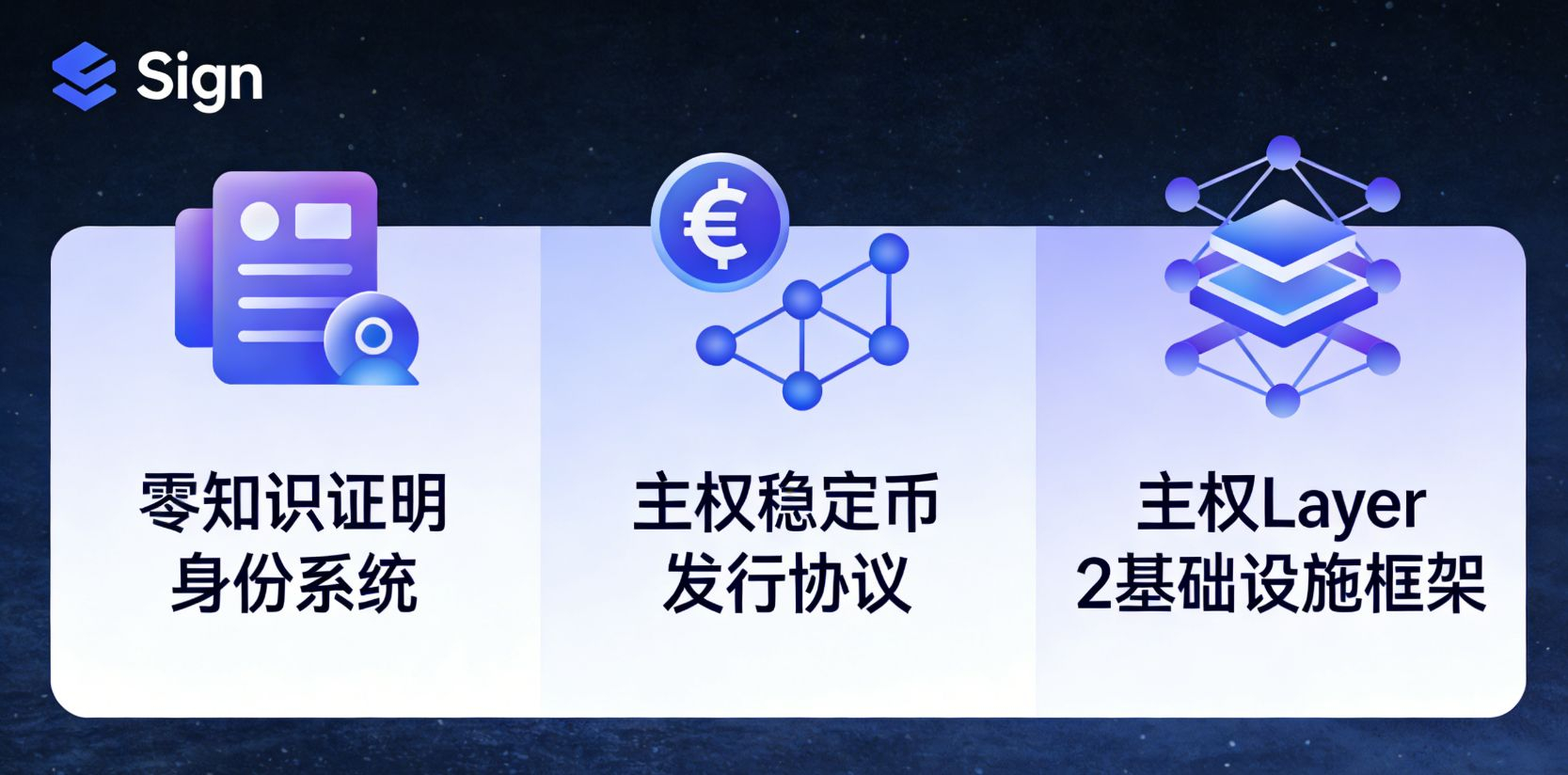
If the progress of the past year is Sign's "growth confidence," then the breakthrough achievements in the field of sovereign infrastructure are its "core trump card" for a global presence. While others rely on hegemonic control to build infrastructure, Sign empowers infrastructure through technology — not seizing control or creating monopolies, but becoming a "lifeline" for over 20 countries. Unlike traditional infrastructure's "physical connection," Sign, with digital technology at its core, has created the world's first dual-stack infrastructure integrating "verifiable identity + payment protocol," carving out a unique "Sign paradigm" and achieving historic breakthroughs in three major areas.
Firstly, the Zero-Knowledge Proof Identity System (ZK-ID) solves the dilemma of privacy and compliance. Based on deep cooperation with the Abu Dhabi Blockchain Center in the UAE, Sign has achieved zero-knowledge verification of government-certified data and on-chain identities, allowing users to prove sensitive information such as nationality and credit scores to any institution without leaking privacy, thoroughly breaking the "data monopoly" dilemma of traditional KYC models, enabling digital identities to be both secure and compliant, and providing a new solution for national digital governance construction.
Secondly, the Sovereign Stablecoin Issuance Protocol (SSP) strengthens the national financial security defense line. The CBDC bridging solution developed in cooperation with the Saudi Central Bank allows national fiat currencies to issue compliant stablecoins through the Sign protocol, showcasing immense value during the recent capital flight from the Middle East — Iranian residents completed a $120 million cross-chain asset migration through SignPass NFT, successfully avoiding the risk of currency devaluation and providing a "safe haven" for asset security in turbulent regions.
Thirdly, the Sovereign Layer 2 Infrastructure Framework lowers the deployment threshold for nations. Sign has launched the Sovereign Layer 2 Stack (S.I.G.N) based on the BNB Chain, positioning it as a sovereign infrastructure solution for national-level deployments. Countries can quickly launch stablecoins and digital services without building their own validator networks, and can also independently control Layer 2 sequencers to meet compliance and governance needs, fitting various RWA scenarios such as tokenized government bonds and land registration, making sovereign infrastructure no longer exclusive to "great powers."
In addition, Sign's on-chain dispute resolution engine (ODE) has handled 37 cross-border trade disputes between Saudi Arabia and the UAE. Its "multi-node consensus arbitration" model has been listed by the International Chamber of Commerce (ICC) as a pilot solution for digital trade arbitration; the "war emergency wallet" launched in collaboration with the Qatar Investment Authority, Abu Dhabi Sovereign Fund, and other institutions supports 20 fiat currencies for inflows and outflows, processing over $800 million in risk-hedging funds daily. Amid capital flight from the Middle East and paralysis of digital infrastructure, this "war emergency wallet" serves as a "safe haven" for local people's assets — this is not just a gimmick, but a genuine lifesaving capability, safeguarding the core interests of the country and its people with technological strength.
Geopolitical Value: In turbulent times, why can Sign become the "safety barrier" for over 20 countries?
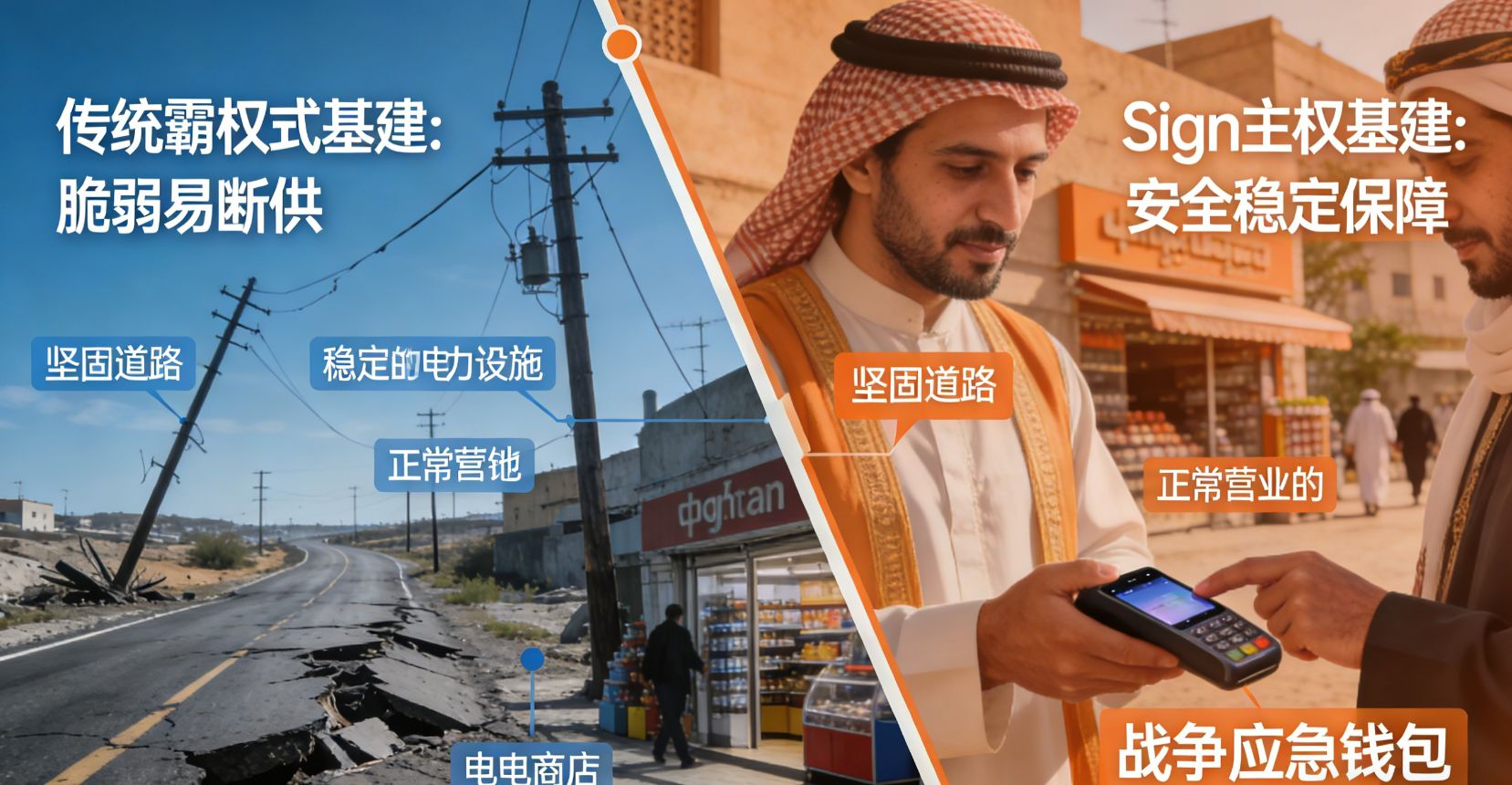
Currently, the global geopolitical landscape remains turbulent, with the spillover effects of conflicts continually expanding. Key infrastructure has become the "new battlefield" for great power competition — the destruction of the Nord Stream pipeline, the weaponization of the SWIFT system, and attacks on data centers of American tech giants in the Middle East highlight the vulnerabilities and geopolitical risks of traditional infrastructure. In this context, Sign's layout of sovereign infrastructure is not only an opportunity for its own development but also provides a new path for global infrastructure that is "de-hegemonized" and "decentralized," with its strategic value increasingly highlighted.
In the past, global key infrastructure was mostly controlled by a few countries, forming a "hegemonic infrastructure" pattern. Some countries weaponized infrastructure, coercing others through control of key nodes, exacerbating the vulnerability and inequality of global infrastructure. Sign's core value lies in "sovereign equality" — it does not depend on any country or force but provides standardized, programmable, and cross-chain deployable trust layer protocols for all countries, enabling each country to independently control its own digital infrastructure and achieve "my infrastructure, I decide." Smaller countries that once had to rely on larger ones can now grasp their own digital infrastructure discourse power through Sign, thoroughly breaking the "monopoly of great powers."
For regions like the Gulf, where geopolitical conflicts are frequent, Sign's value is even more prominent. Previously, the Middle East's digital infrastructure was overly reliant on foreign enterprises, and the layout of tech giants like Amazon and Google was severely damaged by conflicts, leading to a complete interruption of local banking payments, enterprise services, and civilian digital applications, exposing the fatal flaw of "external dependence." The localized deployment of Sign can help these countries build self-controlled computing power and digital systems, freeing them from dependence on foreign enterprises and solidifying the security defense line for infrastructure. As the UAE (National Newspaper) stated, this localized sovereign infrastructure is the most reliable "safety barrier" in times of geopolitical turmoil.
From a global perspective, Sign is driving the decentralized reshaping of the global AI infrastructure landscape, breaking the previously highly concentrated computing power layout model of tech giants, and promoting the industry's transformation towards decentralized, multi-regional redundant layouts. As "security and resilience" have become the core considerations for infrastructure, Sign integrates security, compliance, and sovereign equality into infrastructure design, making it no longer a "tool for games" but a "bond for cooperation," which is the most urgent need globally in turbulent times.
Leader Insights: Dialogue with global decision-makers to understand the era significance of Sign.
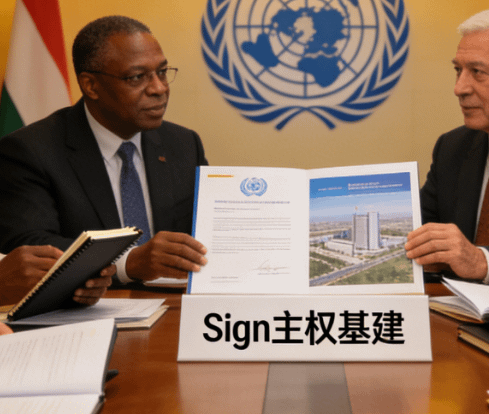
Through in-depth communication with leaders from various countries, we have heard the most authentic voices and gained a deeper understanding of the era value of Sign's sovereign infrastructure. These decision-makers from different regions and backgrounds around the world unanimously see Sign as an important force to break through development dilemmas and respond to geopolitical risks.
Relevant officials from the UAE stated: "After the attack on the Amazon data center, Sign's technology is our only confidence in breaking away from external dependence." As an important partner of Sign, the UAE is leveraging Sign's zero-knowledge proof identity system and sovereign stablecoin solution to achieve self-controlled digital identity and financial assets, advancing AI transformation, achieving economic diversification, and building a self-controlled digital infrastructure system.
A Saudi Central Bank official stated: "Financial security is the core of national sovereignty, and Sign's CBDC bridging solution is a powerful tool for us to cope with currency devaluation and capital flight." This solution allows national fiat currencies to issue compliant stablecoins through the Sign protocol, ensuring asset safety while promoting the facilitation of cross-border trade, showcasing immense value during the capital flight from the Middle East.
Serbian President Vucic pointed to the Hungary-Serbia railway as an example, highlighting the core of digital infrastructure: "Whether physical or digital infrastructure, self-control is the premise. Sign enables small and medium-sized countries to have a voice in the global infrastructure game, no longer marginalized." This aligns perfectly with Sign's advocacy for sovereign equality and self-control, fitting the development goals of many small and medium-sized countries.
Professor Samihah from Egypt University of Technology made a profound judgment: "The Middle East is transitioning from an oil hub to a computing power hub, and Sign is rewriting the rules of the digital infrastructure game — sovereign infrastructure is not exclusive to great powers. Whoever masters self-controlled digital infrastructure wields the initiative for development."
These insights not only highlight the urgent need for sovereign infrastructure among world leaders but also confirm Sign's development direction — it is not pursuing technological monopoly but empowering every country to have self-controlled infrastructure, achieving safe development and win-win cooperation in a complex geopolitical landscape.
Conclusion: Sign is not limited to infrastructure; it is also a new hope for global cooperation in turbulent times.
In the past year, Sign has achieved a breakthrough leap in sovereign infrastructure with rapid progress; in a complex geopolitical environment, it has strengthened the "digital barrier" of national sovereignty with technological strength; dialogues with leaders from various countries have made it clear about its era mission — not to become another "hegemonic tool" but to become a "bridge" connecting countries and promoting cooperation.
When global infrastructure is caught in a "game dilemma," and countries are seeking paths for independent development, the rise of Sign undoubtedly provides a brand new possibility for the world. It tells us that the essence of infrastructure is not a projection of power, but a sharing of value; it is not a tool for confrontation, but a bond for cooperation.
In the future, as Sign roots itself in more countries and the concept of sovereign infrastructure continues to spread, it is believed that it will continue to break down geopolitical barriers, restructure the global infrastructure order, and enable every country to achieve common development based on self-control. And this is the most compelling value of Sign, as well as the core code that has allowed it to rise against the trend in turbulent times and become the focus of the world — the rise of Sign is not a victory for a single enterprise but a victory for all countries yearning for independent development.
#sign地缘政治基建 @SignOfficial $SIGN
