
Former Director of the Office of the Comptroller of the Currency leads the way, how Prividium enables regulated bank liabilities to flow on-chain 24/7
While Wall Street is still debating the compliance of stablecoins, a deeper transformation has quietly begun.
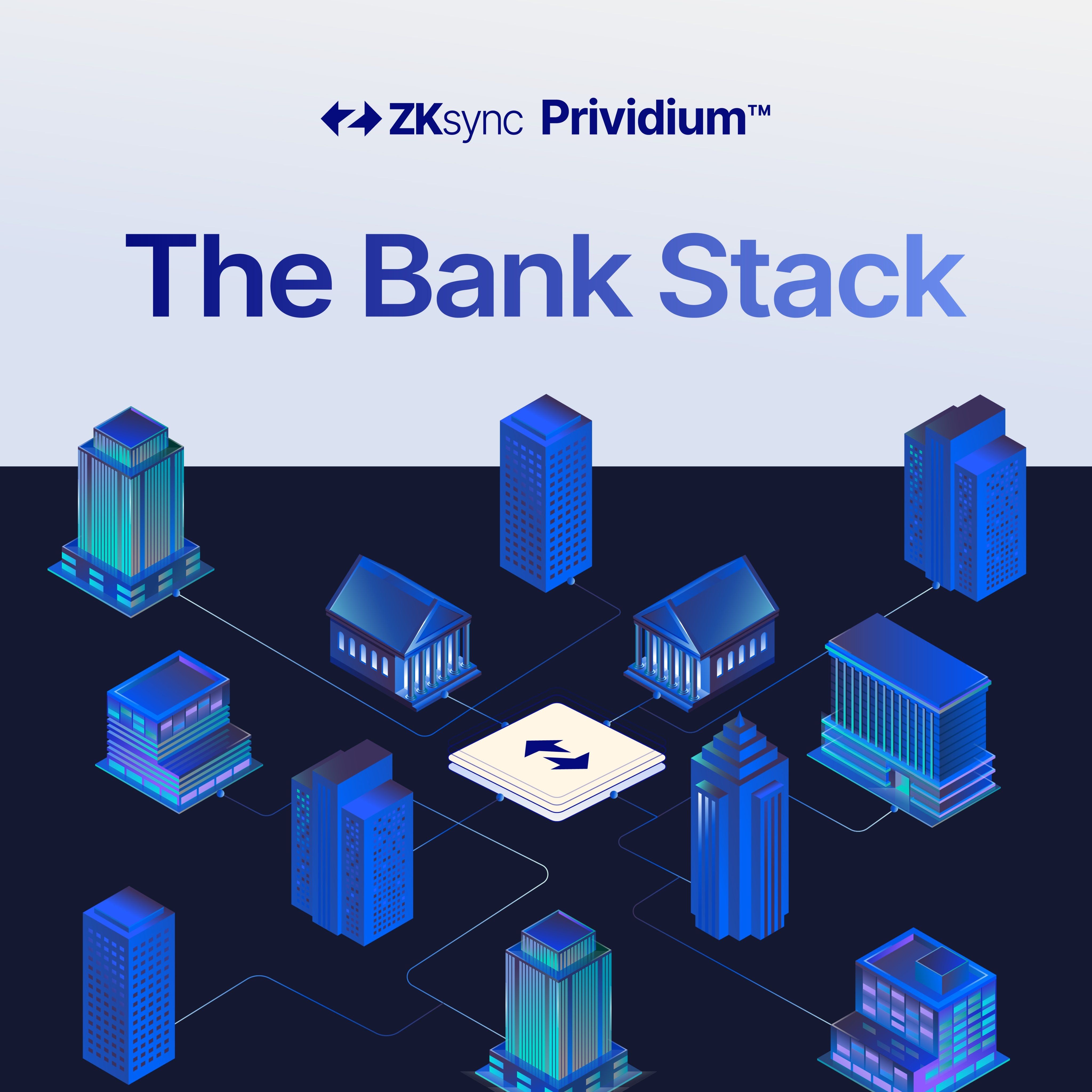
Five regional banks in the United States—M&T Bank, Huntington Bank, KeyCorp, First Horizon Bank, and Old National Bank—are building a tokenized deposit network powered by ZKsync's Prividium through the Cari network led by former Comptroller of the Currency, Keith N. Ludwig.
This is not a simple technical experiment. This is a genuine handshake between traditional finance and decentralized infrastructure.
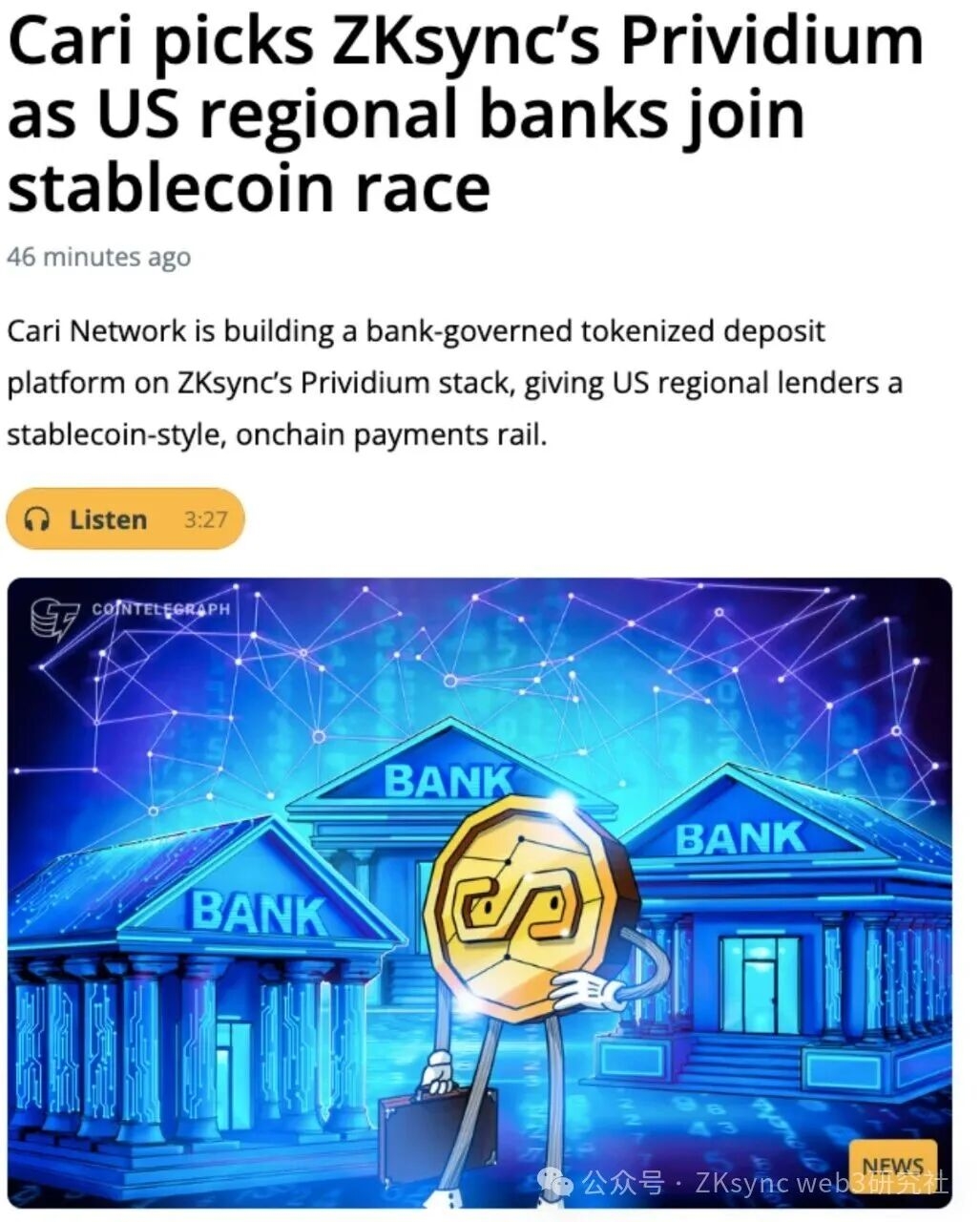
🔍 The bank's dilemma: to ensure privacy compliance while achieving interoperability
In recent years, banks have been exploring stablecoins, trying to keep up with the always-on demand for capital flow. However, stablecoins have always been viewed as payment tools rather than banking tools, even within the framework of the GENIUS Act.
Why? Because stablecoins face three insurmountable chasms:
- Does not support credit creation through fractional reserve lending—this is the core engine of bank profitability.
- There is a risk of counterparty failure of the issuer—once the issuer encounters problems, holders may lose everything.
- Under Basel III, the treatment of the balance sheet is entirely different from that of deposits—the regulatory capital requirements are worlds apart
Thus, banks find themselves in a dilemma: to achieve the speed and transparency of blockchain, they must sacrifice privacy and institutional control; to protect customer data and business secrets, they can only retreat to closed traditional systems, severing ties with the liquidity of Web3.
Until now, this gap has finally been filled.
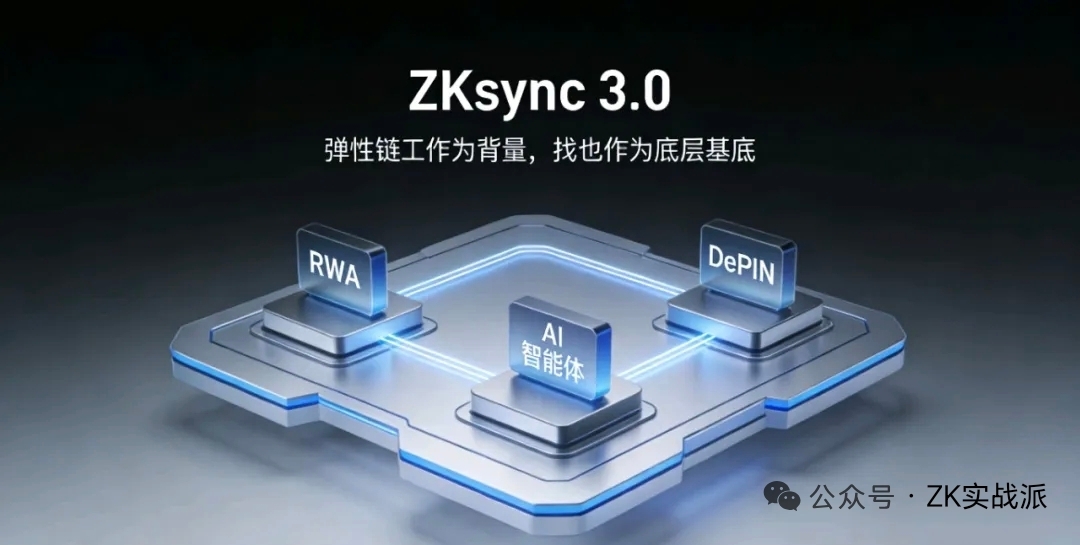
🛡️ Prividium: 'Open Secret' under Zero-Knowledge Proofs
The infrastructure chosen by the Cari Network is ZKsync's Prividium. It relies on Ethereum, providing a permissioned environment with complete data privacy, regulatory auditability, and interoperability with a broader digital asset ecosystem—all without sacrificing institutional control.
You can think of it as a 'glass vault':
Outsiders can see that the vault meets all regulatory standards (publicly verifiable), but cannot see what is inside (data privacy). When regulators need to audit, banks can present zero-knowledge proofs to demonstrate compliance without revealing the details of any transaction.
This is the design philosophy of Prividium: to protect privacy where it matters and maintain connectivity where it is important.
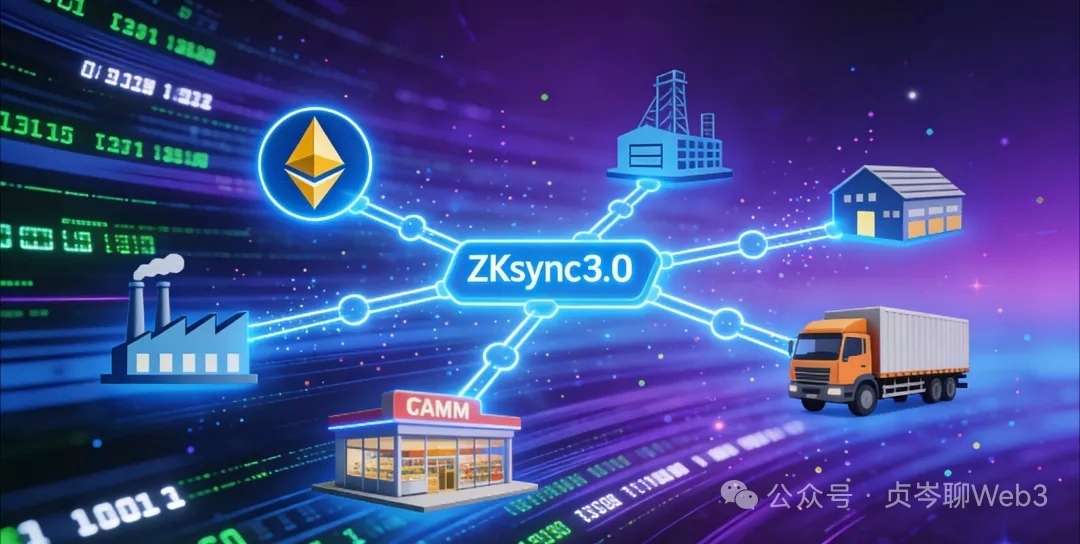
💰 Tokenized deposits: 'On-chain cash' insured by FDIC
Through this infrastructure, five banks are designing a system that can issue, transfer, and redeem tokenized deposits 24/7. These tokenized deposits are not stablecoins; they are regulated bank liabilities, retained on the balance sheet, enjoy FDIC insurance, and operate within the existing regulatory framework.
What does this mean?
- For banks: The ability to create money just like issuing traditional deposits while gaining the instantaneous settlement capabilities of blockchain
- For corporate clients: A digital cash tool that is both secure (insured) and flexible (available 24/7)
- For the entire financial system: This is the first step in combining the credit foundation of traditional currency with the efficiency of crypto networks.
🤝 Stablecoins and tokenized deposits: Not replacements, but complements.
Some may ask: With tokenized deposits, is there still a need for stablecoins?
The answer is: Both will play complementary roles.
- Tokenized deposits: Used to protect and grow the balance sheet in a fully private, bank-controlled environment, are the 'core assets' within the bank.
- Stablecoins: Acting as a bridge when funds need to flow beyond the tracks of these banks, connecting to a broader DeFi world and cross-border payment scenarios.
The Cari Network and its five design partner banks represent the first batch adopting this hybrid model of infrastructure. They are ushering in a new era of 24/7 digital currency liquidity—in this era, regulated bank currencies can flow seamlessly on public blockchains without sacrificing any privacy or compliance.
🚀 Why does this matter for the future value of ZKsync?
Vitalik once said that ZKsync has done a lot of 'underappreciated but valuable work for Ethereum.' Today, we see this value being validated by mainstream finance.
Prividium is not just a technical product; it is a paradigm of a compliant privacy layer on Ethereum. As more banks and institutions require a dual structure that can protect business secrets while accessing global liquidity, ZKsync, with its leading zero-knowledge proof technology and resilient network architecture, is becoming the default choice connecting TradFi and DeFi.
The actions of these five banks may just be the beginning. Once the network effects of tokenized deposits take shape, the underlying logic of payment and settlement will be rewritten—and ZKsync stands at the center of this historical turning point.
We are committed to breaking down the true value of Web3 with the most professional perspective, avoiding every pitfall on the road ahead. Follow us and witness the next step in finance together.

Follow us to gain insights into the future.
Here is the lighthouse in the deep waters of blockchain, a haven and lookout in the Web3 wave.
We provide more than just information; we build understanding. Here, you will gain:
· In-depth Analysis: Going beyond the surface of news to dissect the core technology and ecological trends
· Pitfall Guide: Identifying risks with professional experience to protect assets and attention.
· Exclusive Perspective: As a deep participant in the zkSync ecosystem, sharing frontline insights and builder thoughts
· Value Network: Connecting developers, thinkers, and long-termists who are truly focused.
Every technological leap breeds new opportunities. Rather than fragmenting in the torrent of information, it is better to anchor direction here and advance together with a group of peers.
Scan to follow and join us.
Participate in building, not just observing.