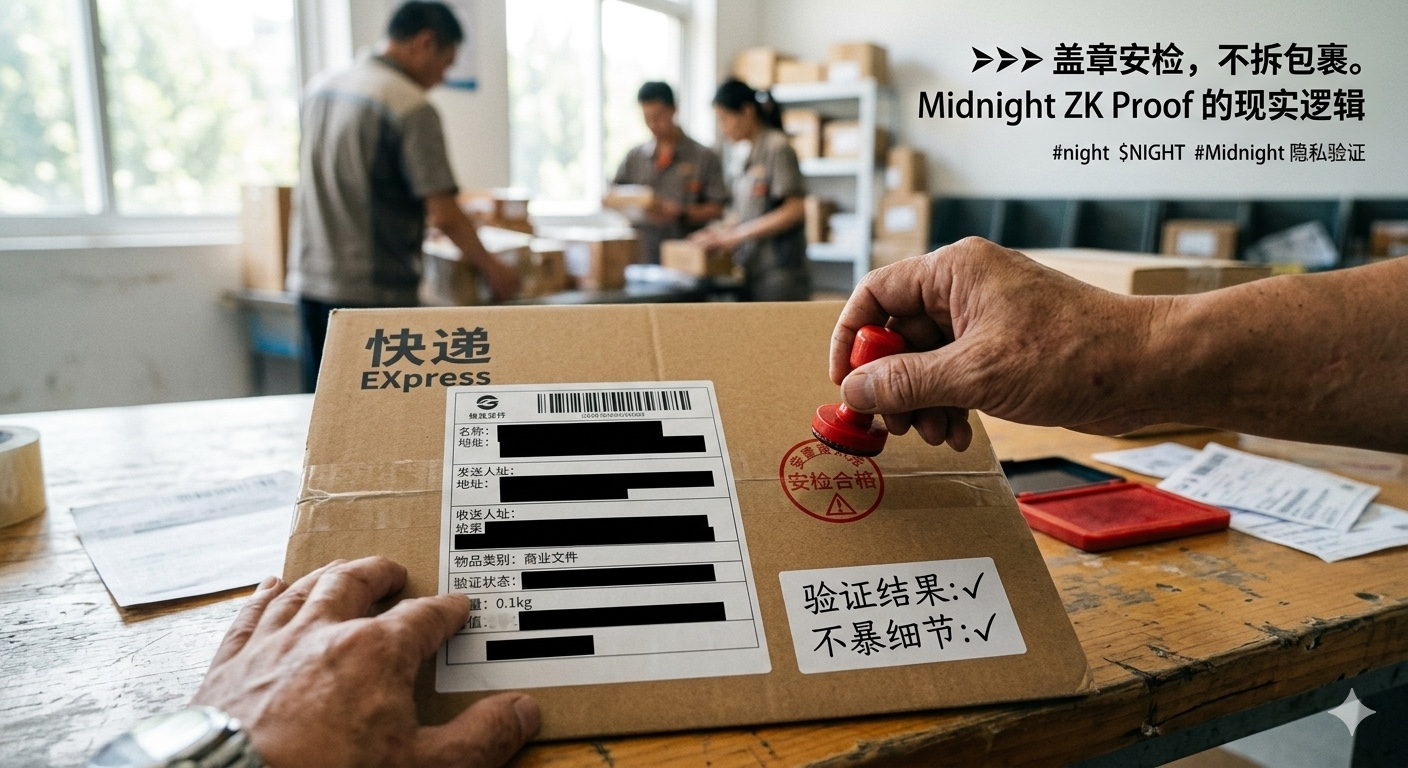
A couple of days ago, I went to send a same-city express delivery, which was a business contract with a confidentiality agreement. When filling out the form, the newbie at that location insisted that I write on the cover what specific documents were inside and which two companies signed it, saying it was company policy to clearly specify the item details.
I was quite speechless at the time, arguing with him. I said if you scan it with the device to confirm that this thing is not a prohibited item and can pass the security check, that’s fine; what’s written inside about business secrets has nothing to do with your delivery.
Later, a new delivery person came, took a glance, stamped it with a safety seal, and sealed it up.
This reminds me of the current public chain ecosystem.
The chains we are currently using are like that stubborn new courier. If you want to run a commercial application on the chain, it requires you to lay everything out in the open—transfer amounts, addresses of both parties, interaction logic.
$NIGHT is located in @MidnightNetwork . The 'dual public-private state ledger' proposed in the white paper is essentially doing what that old courier does.
It breaks down the state on the chain. The public track handles things that require consensus across the entire network, such as whether a transaction is legal and whether the signature is correct; the private track handles the specific data content, which is completed through ZK proof.
In simple terms, the network only needs to verify that your 'package' is compliant; it does not need to open it to see how much money is inside or who transferred it to whom.
However, implementing this mechanism is not without its challenges.
The white paper mentions that those private state data exist on the user's local device, and only a ZK proof is stored on the chain. This indeed protects absolute privacy, but it also means that the responsibility for data security is entirely pushed onto the users.
If a local hard drive of an enterprise node fails and the data is lost, the proof on the chain cannot help you recover the original files. This absolute data sovereignty sounds ideal, but in reality, many users can't even remember their wallet recovery phrases, let alone manage a local private database properly.
Separating the validation of legitimacy and exposure of privacy is logically completely valid and is also a necessary path for traditional fiat currency to enter the market.
That old courier understands this principle, so he only stamps the security check without looking at the content. As for whether Midnight can balance the developer experience and user threshold without completely shifting the responsibility of data loss onto the users, it is hard to say right now; we need to wait and see how the mainnet performs for a while.#night