
The announcement on March 17, 2026, was not a suggestion, but an Interpretation at the Commission Level. Under the leadership of Paul Atkins (who has replaced the era of "regulation by enforcement"), the SEC has adopted the doctrine of "minimum effective impact."
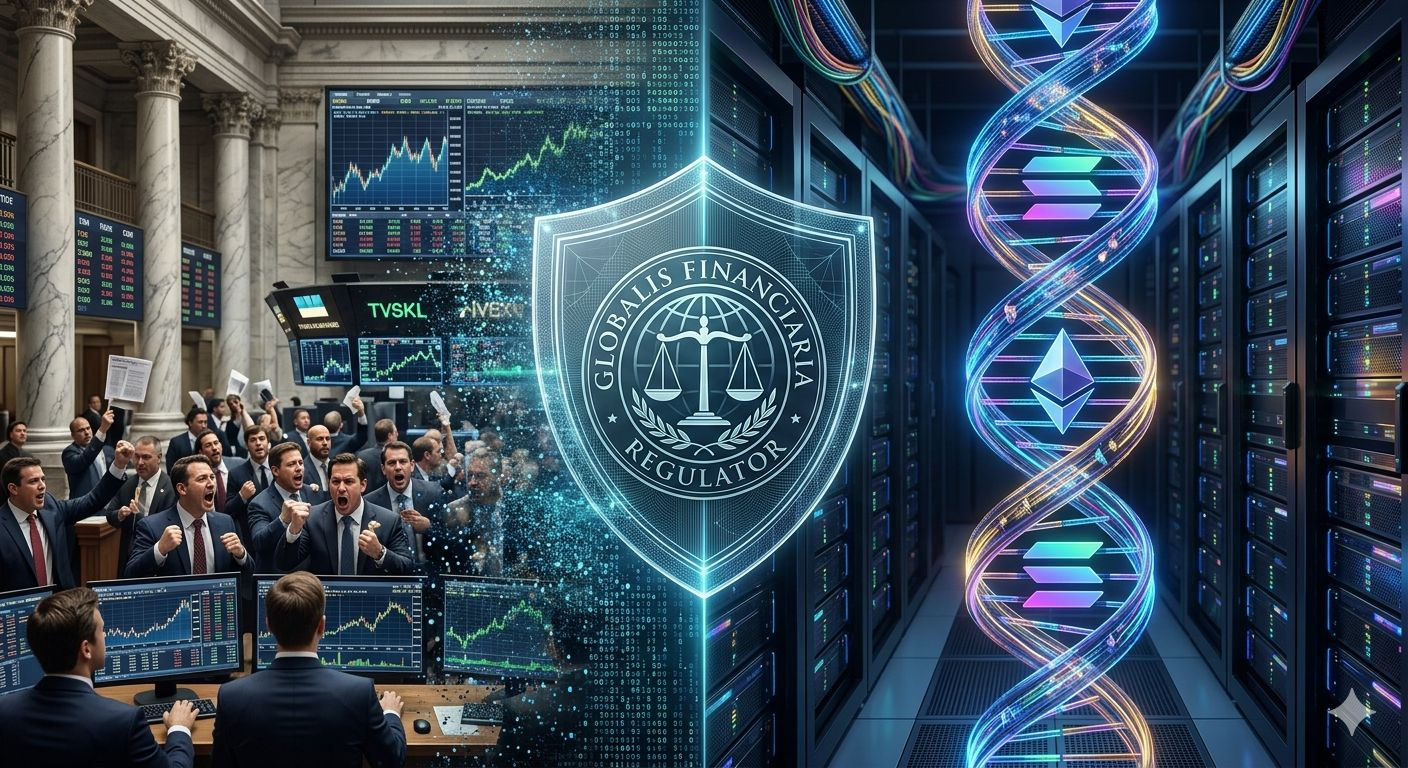
The key lies in the "Innovation Exemption": a grace period of 36 to 48 months where projects can operate in a safe zone while achieving sufficient decentralization. This is the rebirth of Hester Peirce's Safe Harbor concept, but with institutional steroids.
The "Commoditization" of Security
The classification of Ethereum (ETH) and Solana (SOL) as commodities by the CFTC and SEC has a direct technical consequence on the structure of nodes and staking:
Native Staking in ETFs: The launch of ETHB by BlackRock (March 2026) marks the first vehicle where the yield from staking (~3.1% annually) is integrated into the Net Asset Value (NAV). This eliminates the capital inefficiency of the old "pure spot" ETFs.
Institutional Validation: Since staking is not considered an "investment contract", banks like JPMorgan and Goldman Sachs can now run their own validators without the risk of being labeled as "unregistered broker-dealers". This creates a layer of security hardened by regulated capital.
Functional Decentralization: The SEC now defines "decentralization" not by the number of wallets, but by control of the software. If the original team does not have a "master key" for updates (admin keys), the asset automatically moves from the category of Security to Digital Tool.
The Path to the Future: The Great Convergence (2026-2030)
What’s coming is the Tokenization of Real World Assets (RWA) at an industrial scale. With clarity on Stablecoins (now under the GENIUS Act), the digital dollar becomes the lubricant for a machinery where:
Real Estate and Private Credit: They will be fragmented into DeFi protocols with on-chain compliance. The smart contract will automatically verify if the buyer meets SEC rules without the need for a human intermediary.
End of the 4-Year Cycle: As Grayscale points out, the massive influx of institutional capital through ETFs with yield (staking) and RWAs is smoothing out extreme volatility. Bitcoin is no longer just a speculative asset, but a technical store of value integrated into corporate balance sheets.
"Regulation is no longer the brake, but the accelerator. We have moved from building in the shadows to designing the infrastructure of global capital on public and verifiable rails."
#SECClarifiesCryptoClassification #BTC走势分析 #solana #Ethereum