
This conclusion sounds a bit strange at first.
But as long as you stay on the chain for a while, you will find that this is not an exaggeration at all.
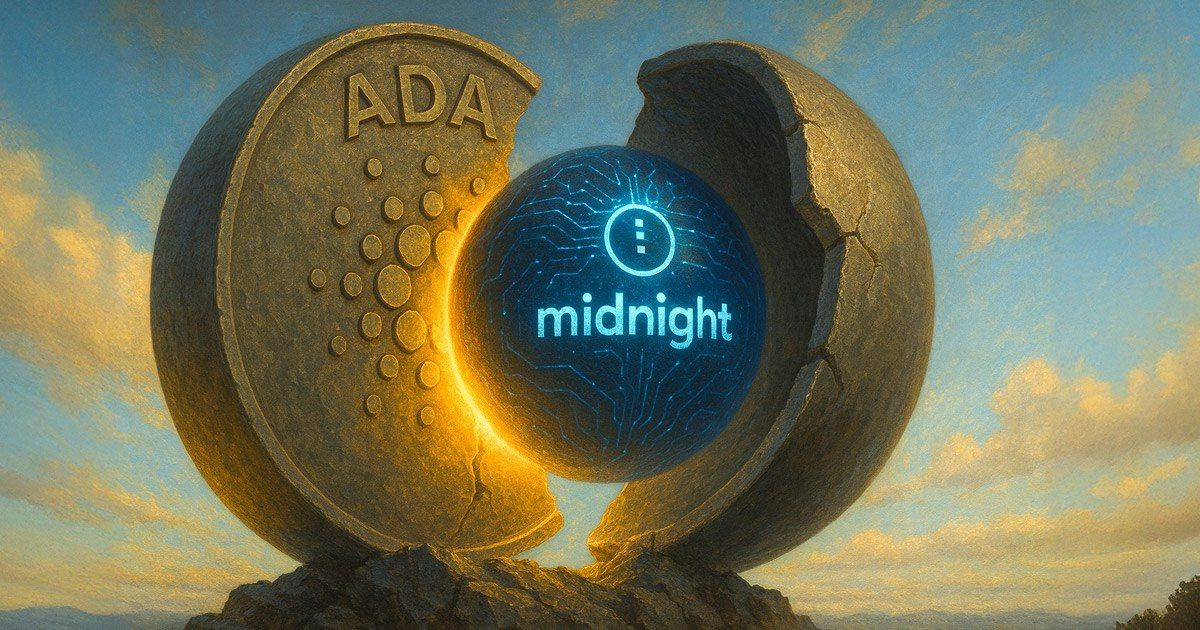
Blockchain has a hidden rule: wealth is public
In the traditional financial system, your assets are private.
The bank knows
Regulators can check
But ordinary people cannot see
But on most public chains, the situation is completely reversed.
As long as others know your address, you are basically 'half-naked'.
Your:
• Holdings
• Transaction records
• Transaction frequency
can all be analyzed.
What's even more outrageous is that there are now a bunch of tools specifically for this purpose.
This leads to a real-world problem: the richer you are, the easier it is to be targeted.
If you are just a small user, the problem is actually not big.
But if you are:
Large holders
Project party
Fund
Traders
Then the situation is completely different.
Others can see through on-chain data:
• Judging your positions
• Speculate your strategy
• Even tracking your fund movements
This is almost unimaginable in the traditional financial world.
So a lot of 'smart money' is actually already thinking of ways to hide.
If you observe carefully, you will find some funds doing these things:
• Frequently changing addresses
• Use mixing tools
• Disperse paths through multi-layer transfers
Essentially, these behaviors are all solving one problem:
How to protect privacy in a transparent system.
But these methods are either complicated, high-risk, or have a poor experience.
This is also why I started to take a serious look at Midnight Network.
From what I understand, what this project is trying to do is actually very straightforward:
No need to take a detour, solve the privacy issue directly at the base layer.
It's not about letting users figure out how to hide themselves, but about having the network itself support privacy.
The core is still that set of zero-knowledge proof logic:
You can prove a transaction is correct
But without exposing details
This actually changes a very key thing: risk structure.
On traditional public chains:
Transparency = Trust
But it also means:
Transparency = Exposure
And in Midnight's thinking:
Trust comes from verification
And not public data
These two are completely different logics.
To put it bluntly, it's about changing from 'seeing data' to 'seeing proof'.
In the past, you trusted a transaction because you could see all the details.
Now you trust a transaction because it can be verified as correct.
It's like:
You don't need to see others' account balances.
Can also confirm he can pay
This kind of change is actually quite important.
Let's talk more about tokens, I think it's quite interesting.
The core asset of this network is $NIGHT, mainly responsible for governance and value bearing.
But the one actually executing private transactions and computations is DUST.
Simply put:
You hold NIGHT
The system generates 'usage limits' for you.
Then you use this limit to perform on-chain operations.
This design has a very practical benefit
If all operations have to directly consume market tokens, a problem will arise:
When the market fluctuates, costs become chaotic.
And this model of 'resources + assets' separation allows:
Using costs is more stable
User experience is more controllable
For complex operations like privacy computing, this point is actually quite crucial.
I increasingly feel that privacy is not a feature, but a survival need.
Many people still treat privacy as an 'optional item'.
But if the scale of on-chain users continues to expand, this problem will become increasingly obvious:
A system without privacy is hard to sustain large-scale value in the long term.
Because:
No one wants to expose themselves all the time.
Finally, let me make a simple judgment.
If you are just a small fund user, you may not feel this problem.
But if you start managing larger scale assets on-chain, you will quickly realize:
Transparency itself is also a kind of risk.
And Midnight Network is essentially addressing this risk.
It doesn't make the blockchain 'opaque',
But it allows you to decide:
When to be transparent and when not to be.
This matter sounds fundamental, but it's actually quite scarce.