
Crypto moves in waves. If you spend enough time watching the market, you start to notice how certain ideas suddenly capture attention and shape an entire cycle. A few years ago it was DeFi. Then NFTs took over the conversation. After that came scaling solutions and modular blockchains.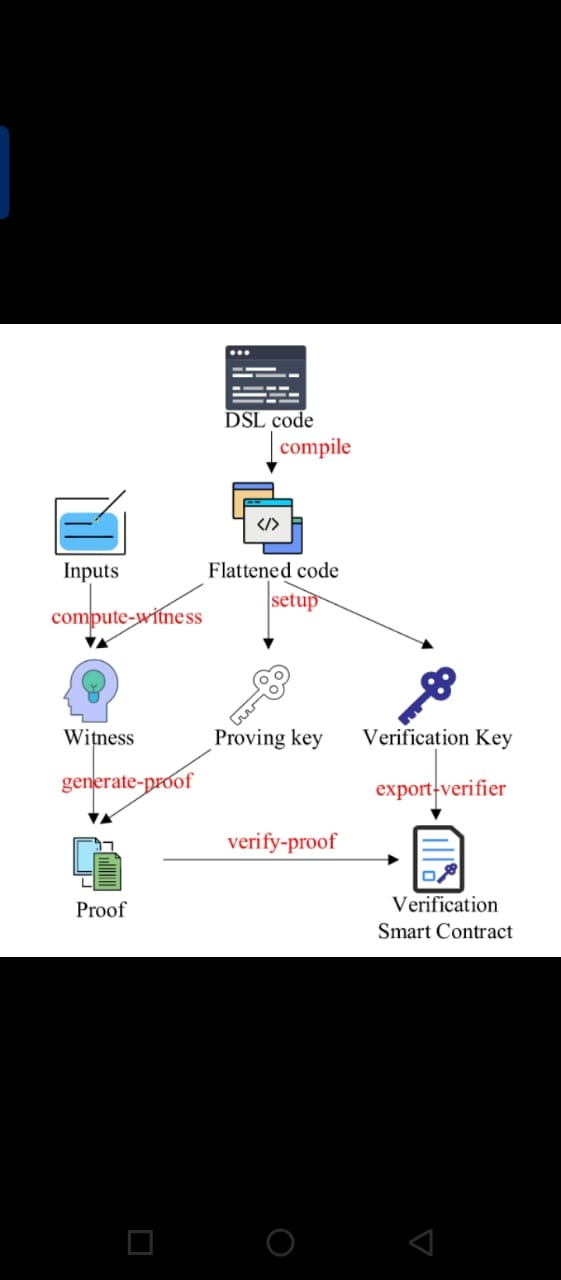
Lately, I have been noticing another theme quietly building momentum — privacy infrastructure. And one project that keeps appearing in discussions among developers, analysts, and long-term crypto observers is Midnight Network.
At first glance, Midnight might look like just another privacy-focused blockchain. Crypto has seen many of those before, and most of them never managed to move beyond a niche audience. But the more I study Midnight, the more it feels like the project is trying to solve a deeper structural problem inside blockchain itself.
One of the biggest contradictions in crypto is that blockchains are incredibly transparent. That transparency was originally celebrated because it allowed anyone to verify transactions. But over time, it created an uncomfortable reality. Every wallet balance, every transaction history, and sometimes even business logic inside smart contracts becomes publicly visible.
For individuals this might not matter much. But when businesses or institutions start thinking about using blockchain infrastructure, the situation changes completely. Companies rarely want their financial flows, strategies, or internal operations exposed to the entire internet.
This is where Midnight becomes interesting. Instead of forcing everything to be public or everything to be hidden, the network uses zero-knowledge proof technology to introduce something called selective privacy. In simple terms, it allows information to remain private while still proving that certain conditions are true.
For example, a financial platform could verify that a user passed compliance checks without revealing the person’s identity. A healthcare provider could confirm that a patient is eligible for treatment without exposing medical records on a public ledger. The data stays protected, but the proof remains verifiable.
When I think about the future of blockchain adoption, this idea feels important. Real-world systems often need a balance between privacy and verification, and Midnight is designed around exactly that balance.
Another reason analysts are paying attention to Midnight is the regulatory environment. Over the past few years, privacy coins have faced increasing scrutiny. Networks that hide all transaction data completely often struggle to gain acceptance from regulators and institutions. Midnight approaches the issue differently.
Instead of total anonymity, it introduces what many people describe as rational privacy. The idea is simple: sensitive data stays private by default, but certain proofs can be revealed when necessary. This creates a system where privacy and compliance do not have to be enemies.
From my perspective, this design feels much more aligned with how real financial systems operate. Transparency exists where it is required, but sensitive information is not exposed unnecessarily.
There is also another factor that keeps Midnight on analysts’ radar — the ecosystem behind it. Midnight is being developed by Input Output Global, the research and engineering company known for building the Cardano blockchain. That connection gives the project a level of credibility and technical depth that many new crypto experiments simply do not have.
Instead of starting from scratch, Midnight emerges from an environment that already has a strong research culture, a large developer community, and years of infrastructure development behind it.
Then there is the token design, which I personally find quite fascinating. Most blockchains rely on a single token to do everything. The same asset handles transaction fees, security incentives, governance, and speculation. Over time this creates tension inside the system. If the token price rises too much, transaction costs become painful. If the price drops, network security can weaken.
Midnight approaches this differently with a dual-component model involving NIGHT and DUST. NIGHT acts as the main network asset tied to governance and participation in the ecosystem. DUST, on the other hand, functions as the resource used for private computation and transactions.
This separation might sound technical, but the idea behind it is quite practical. By separating network usage from speculative pressure on the main token, the system may avoid some of the economic friction that many blockchains struggle with.
Of course, every ambitious design looks impressive on paper. Crypto history is full of projects that promised elegant solutions but struggled once real users arrived. For Midnight, the real test will come when developers start building applications and when those applications interact with real users.
That is the moment when theory meets reality.
Still, I can understand why analysts are watching this project closely. Midnight sits at the intersection of several forces shaping the next phase of crypto: privacy technology, regulatory pressure, and enterprise-grade blockchain infrastructure. When those trends converge, narratives can form quickly.
In my view, the real question is not whether privacy matters. It clearly does. The question is whether Midnight’s approach can deliver privacy without sacrificing usability and trust.
If it manages to do that, the project could easily evolve from an interesting experiment into one of the most talked-about infrastructure narratives in crypto. And in a market that constantly searches for the next meaningful story, that possibility alone is enough to keep many analysts paying close attention.@MidnightNetwork #MidnightNetwork $NIGHT
