

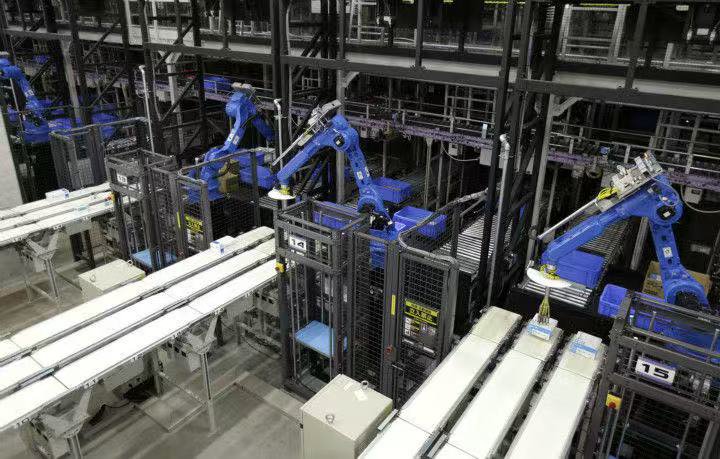
As a cryptocurrency trader currently in Tokyo (govin.eth), I feel that the robot industry will really explode in 2026 as I browse the news every day. Japan has always been a global powerhouse in robotics (with the highest industrial robot density in the world), but different brands' data do not interconnect, tasks cannot be collaborated across manufacturers, and trust issues have always been a chokehold. Fabric Protocol ($ROBO ) directly solves all of this with a decentralized solution: OM1 open-source robot OS + on-chain identity verification + ROBO token economic model, allowing each robot to truly "autonomously earn money"!
Core mechanism deep dive (packed with valuable content):
Token System: A decentralized task scheduling system that supports intelligent matching, execution, and settlement across bots. Developers who contribute modules can also receive permanent revenue sharing, completely solving the pain points of centralized traditional bots.
On-chain authentication: Each robot receives a unique Fabric on-chain ID, preventing counterfeiting and enabling full-chain traceability. Cross-vendor collaboration between industrial and service robots is no longer a dream!
ROBO tokens serve four purposes in one: task fuel payment, staking bond guarantee, governance voting, and task settlement rewards, forming a perfect closed-loop economic model.
Latest data:
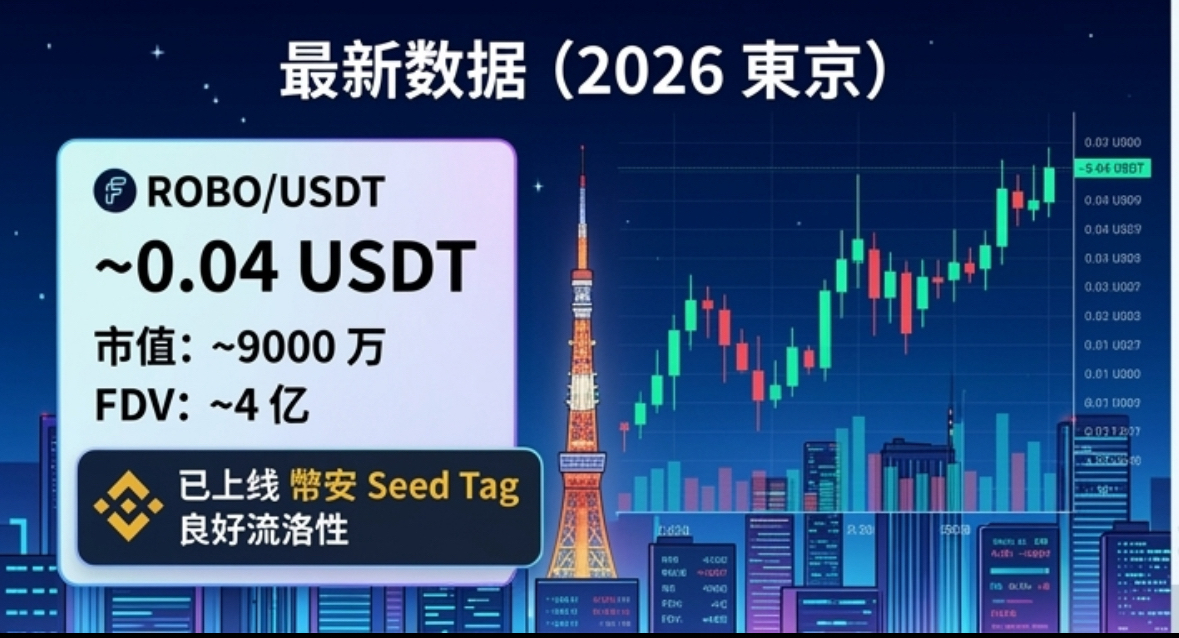
As of 10 PM Beijing time, the current price is approximately 0.04 USDT, with a market capitalization of approximately 90 million, FDV of approximately 400 million, and ATH reaching 0.061. It is listed on Binance Seed Tag. Liquidity is good, and I have completed the small transaction task (≥10 USD).
Competitive comparison:
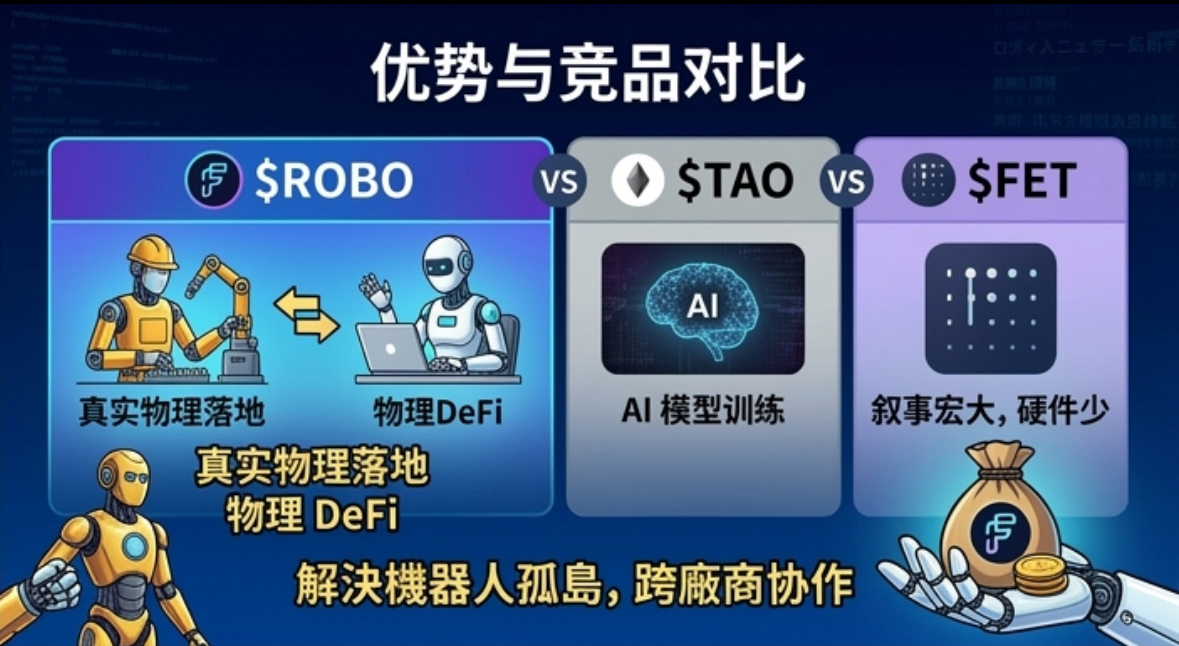
• vs $TAO (Bittensor): TAO focuses on decentralized AI model training, but its robot hardware deployment is weak; ROBO directly binds to physical robots and real-world task settlement, which better addresses the pain points of Japanese manufacturing.
• vs $FET (ASI Alliance): FET focuses on AI agents, with a grand narrative but limited hardware verification; ROBO uses on-chain ID + OM1 system to realize "physical world DeFi," and its application in Japan's aging service robot scenario is far superior.
• Result: ROBO FDV is more reasonable (currently low), has strong Japanese industry backing, and is implemented faster, making it the best value for money!
Trading/Opinion:
Previously, I purely played the meme game, chasing trends and jumping on and off – exciting, but also risky. Now, switching to a real infrastructure project like ROBO feels completely different – it's not just a narrative, but driven by both the Japanese robotics industry and global AI implementation. Short term (3-6 months): High FDV unlocking pressure may lead to continued fluctuations within the 0.035-0.06 range, suitable for swing trading; Medium term (end of 2026): With the OM1 mainnet launch and actual integration by Japanese companies, it's expected to double or triple; Long term (2027+): The decentralized robotics economy will explode, and $ROBO is highly likely to become the industry standard "fuel," with a market capitalization exceeding $100 million not a dream. Of course, everything is based on data; I'm only testing the waters with a small position, keeping it below 5% of my total assets.
Are you also following the robotics or AI sector in Tokyo/Japan? Will the machine-driven economy fully take off in 2027? Can Fabric Protocol become the next infrastructure kingpin? Feel free to share your trading insights or observations about robotics in Japan in the comments section, let's discuss them in depth!
Risk warning:
The crypto market is experiencing extreme volatility, with high FDV projects facing significant selling pressure after unlocking. Japanese policies or global regulations may also impact the speed of implementation. Investing involves risk; this is not investment advice. Please dy your money and manage your funds carefully.
#ROBO $ROBO @Fabric Foundation
Competitive comparison:
• vs $TAO (Bittensor): TAO focuses on decentralized AI model training, but its robot hardware deployment is weak; ROBO directly binds to physical robots and real-world task settlement, which better addresses the pain points of Japanese manufacturing.
• vs $FET (ASI Alliance): FET focuses on AI agents, with a grand narrative but limited hardware verification; ROBO uses on-chain ID + OM1 system to realize "physical world DeFi," and its application in Japan's aging service robot scenario is far superior.
• Result: ROBO FDV is more reasonable (currently low), has strong Japanese industry backing, and is implemented faster, making it the best value for money!
Trading/Opinion:
Previously, I purely played the meme game, chasing trends and jumping on and off – exciting, but also risky. Now, switching to a real infrastructure project like ROBO feels completely different – it's not just a narrative, but driven by both the Japanese robotics industry and global AI implementation. Short term (3-6 months): High FDV unlocking pressure may lead to continued fluctuations within the 0.035-0.06 range, suitable for swing trading; Medium term (end of 2026): With the OM1 mainnet launch and actual integration by Japanese companies, it's expected to double or triple; Long term (2027+): The decentralized robotics economy will explode, and $ROBO is highly likely to become the industry standard "fuel," with a market capitalization exceeding $100 million not a dream. Of course, everything is based on data; I'm only testing the waters with a small position, keeping it below 5% of my total assets.
Are you also following the robotics or AI sector in Tokyo/Japan? Will the machine-driven economy fully take off in 2027? Can Fabric Protocol become the next infrastructure kingpin? Feel free to share your trading insights or observations about robotics in Japan in the comments section, let's discuss them in depth!
Risk warning:
The crypto market is experiencing extreme volatility, with high FDV projects facing significant selling pressure after unlocking. Japanese policies or global regulations may also impact the speed of implementation. Investing involves risk; this is not investment advice. Please dy your money and manage your funds carefully.
#ROBO $ROBO @Fabric Foundation
