


The crypto industry thrives on noise—daily market pumps, influencer hype, and the never-ending chase for the “next big thing.” Yet history has shown us that the true winners are rarely the loudest players. They are the silent builders of infrastructure, the ones designing the rails that everything else depends on. That is exactly why WCT coin demands attention: not as a speculative bet, but as the backbone of wallet connectivity in the new internet of value.
🌐 The Hidden Currency of Connectivity
The shift from Web2 to Web3 is not just about decentralization; it is about seamless user experience. Billions of people may eventually use blockchain without even realizing it, just as today’s internet users rarely think about TCP/IP. But to reach that level of invisibility, crypto needs a unifying layer of interaction—and this is where WCT plays its role.
Every decentralized app requires one thing before anything else: a wallet connection. Without it, value cannot move, smart contracts cannot execute, and communities cannot thrive. WCT coin transforms this seemingly small function into a universal standard, ensuring wallets and dApps “speak the same language” across chains, ecosystems, and use cases.
⚡ Why WCT Is Different from Typical Tokens
Many projects chase short-term hype. WCT instead offers functional demand—its worth grows in proportion to how widely it is used in real activity. Think of it less as a speculative token and more as a toll for crossing bridges between worlds.
This makes WCT less vulnerable to the cycles of hype and crash that plague the industry. Its trajectory is tied to adoption curves: the more people transact, stake, or trade, the more indispensable WCT becomes.
🚀 WCT in the Age of Multichain Expansion
The industry is entering an era where no single chain dominates. Ethereum, Solana, BNB Chain, Layer 2s, and even emerging rollups are competing for liquidity and developers. But without cross-chain standards, users are left juggling multiple wallets and interfaces.
WCT simplifies this chaos. By acting as the connective tissue, it ensures a user on one chain can interact with another seamlessly. It doesn’t just support multichain—it normalizes it.
This positions WCT as a coin aligned with the inevitable reality of blockchain: interoperability is not optional, it is survival.
📊 WCT as the “Infrastructure Investment” of Web3
In every tech revolution, infrastructure plays have outperformed flashy consumer products in the long run. The internet rewarded cloud providers, not chat apps. Smartphones enriched chipmakers, not short-lived mobile games.
WCT sits firmly in this category. By focusing on standardization of wallet connections, it captures value at the foundation of Web3 adoption. As more wallets integrate, as more dApps launch, as more users enter, WCT silently accrues relevance.
This is why it can be considered the infrastructure investment of crypto’s next cycle.
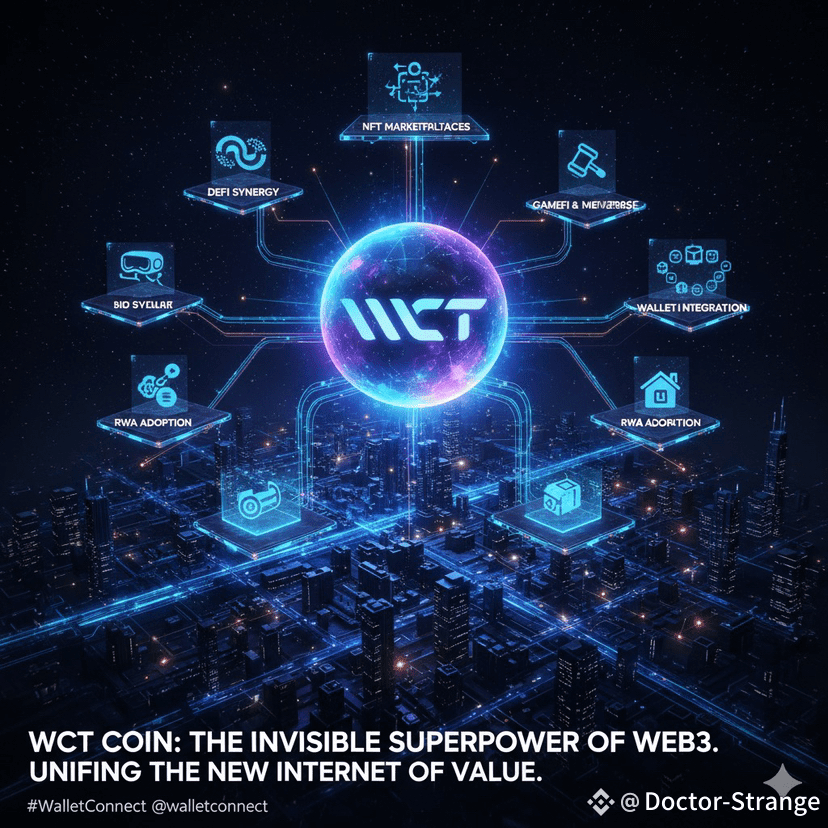
🧩 Breaking Down WCT’s Growth Drivers
Wallet Integration → As major wallets adopt WCT, its usage base multiplies exponentially.
DeFi Synergy → Cross-chain lending, staking, and swaps require universal connectivity.
NFT Marketplaces → Frictionless wallet access is crucial for digital ownership at scale.
GameFi & Metaverse → Seamless login + transaction flows define player experience.
RWA Adoption → As tokenized assets explode, wallet standards like WCT become mission-critical.
Each of these represents practical demand rather than speculative hype.
🌍 Why the World Needs WCT
Imagine onboarding millions of first-time users into Web3. Do you explain to them which chain to choose, which RPC endpoint to configure, or which bridge to trust? Of course not. You need invisible infrastructure that abstracts away complexity.
WCT delivers exactly that. It is the silent enabler of mass adoption, making blockchain usable for normal people who don’t want to be engineers just to buy an NFT or join a DAO.
🔑 The Unseen Advantage
The beauty of WCT is that its success is non-negotiable for crypto adoption. Without reliable wallet connectivity, the industry fragments into silos. With WCT, it unifies into an ecosystem where users don’t even think about the technical plumbing.
This makes WCT less of an option and more of a requirement. Just as the internet needed protocols, crypto needs WCT.
🕰️ Long-Term Outlook
In the short term, WCT may remain underrated compared to meme coins and hype narratives. But in the long term, its trajectory is tied to the very growth of Web3 itself.
Every bull run brings speculative winners. But every cycle also leaves behind a handful of foundational assets that become indispensable. WCT is positioning itself in that category.
The real opportunity lies not in chasing what’s popular today, but in recognizing what will quietly power everything tomorrow.
⚡ Final Thoughts: The Invisible Superpower
Crypto is full of loud promises, but the strongest forces are often invisible. WCT coin is that invisible superpower—the quiet architect building the bridges that will carry billions into the decentralized economy.
It may not dominate the headlines today, but make no mistake: when the dust settles, WCT will stand as the standard that made Web3 possible.
And those who recognized its potential early will not just be participants in the next wave of adoption—they will be its beneficiaries.
WCT Coin: The Silent Giant That Could Redefine the Future of Web3”
The crypto industry has always had a love affair with noise. From the mania of ICOs to the chaos of meme coin seasons, attention often gravitates toward what glitters the most. Yet, when we step back from the frenzy, a consistent truth emerges: the real long-term winners are not the loudest projects but the ones that quietly lay the foundations of the ecosystem. In the 2020s, as Web3 expands beyond speculation into infrastructure, one such foundation-builder is WCT coin. Far from just another token chasing short-term hype, WCT positions itself as a core enabler of connectivity across the blockchain universe. This article unpacks why WCT could become one of the most indispensable forces shaping crypto’s next decade.
🌐 The Age of Connectivity in Web3
Web3 promises an internet where ownership, identity, and value flow seamlessly. But the reality today is far from seamless. Users still wrestle with multiple wallets, bridges, chains, and interfaces that create barriers to adoption. Imagine telling an average user they must set up a MetaMask, configure RPCs, switch networks, and bridge tokens just to buy an NFT—that complexity kills mass onboarding.
This is where wallet connectivity protocols step in. And at the center of this evolution lies WCT coin, functioning as the fuel and standard that enables wallets and decentralized applications to communicate in a frictionless, universal manner. Just as the early internet needed protocols like HTTP and TCP/IP, Web3 needs WCT.
⚡ What Makes WCT Different?
Unlike speculative tokens tied to hype cycles, WCT derives its strength from functional necessity. Every decentralized action begins with one thing: connecting a wallet. Without that, no transaction occurs, no smart contract executes, and no ecosystem grows. WCT transforms this simple step into a standardized layer of interoperability, ensuring that no matter what chain or app you use, the process remains smooth.
This positioning grants WCT something rare in crypto: non-discretionary demand. It’s not about whether users want it—it’s about the fact that the system cannot function without it.
🔥 WCT in the Multichain Era
The blockchain landscape is no longer a single-chain playground. Ethereum, Solana, BNB Chain, Polygon, Avalanche, Layer 2s, app-chains, and even emerging zero-knowledge rollups are competing for liquidity and developers. This multichain reality fragments user experiences.
WCT steps in as the unifying layer—the standard that ensures wallets can seamlessly connect across these fragmented ecosystems. Instead of forcing users to adapt to technical friction, WCT abstracts away complexity, normalizing multichain interaction.
This makes WCT a bet not just on one ecosystem, but on the entire Web3 movement.
📊 WCT as Infrastructure: The Most Overlooked Opportunity
If we examine past technological revolutions, infrastructure has consistently outperformed flashy consumer-facing projects.
The internet enriched cloud providers, not most early websites.
Smartphones made chipmakers and operating systems dominant, while individual apps faded.
Payments rewarded Visa and Mastercard more than the merchants themselves.
WCT is the crypto equivalent of these infrastructure plays. By embedding itself at the wallet-connection layer, it doesn’t matter whether the next billion users enter through gaming, DeFi, NFTs, or tokenized assets—WCT will always be part of the transaction flow.
🧩 Core Drivers of WCT’s Growth
Wallet Integration Expansion → As more wallets adopt WCT, its base of activity scales exponentially.
DeFi Synergy → Protocols need reliable, standardized wallet connectivity to ensure frictionless lending, borrowing, and swaps.
NFT & Digital Ownership → Marketplaces depend on simple onboarding for non-technical users.
GameFi & Metaverse → Games require fast, seamless logins and in-game transactions that don’t break immersion.
Real World Assets (RWA) → As tokenized assets gain momentum, wallet connection standards become essential for institutional adoption.
These drivers are not speculative—they are structural necessities for crypto’s growth.
🌍 Why Mass Adoption Needs WCT
Crypto adoption has always been throttled by complexity. While early adopters tolerate clunky UX, the mainstream user expects simplicity. Just as most people don’t know or care how TCP/IP works, the average Web3 user shouldn’t need to configure chains.
WCT enables this invisibility. It allows blockchain to fade into the background, letting users focus on outcomes, not infrastructure. Whether someone is buying digital land in the metaverse or staking tokens in a DAO, WCT ensures the first step—wallet connection—just works.
This invisible reliability is what unlocks mainstream adoption.
🕰️ Long-Term Outlook
Short-term, WCT may not dominate crypto headlines. Meme coins will still capture the spotlight, and hype cycles will continue. But over the long run, infrastructure always outlasts speculation.
As Web3 scales from millions to billions of users, WCT’s role will only deepen. It may never feel “sexy” in the way meme-driven narratives do, but its indispensability makes it far more powerful. Every wallet, every dApp, every interaction is a potential touchpoint for WCT.
That’s the definition of being a silent giant.
⚡ Final Thoughts
Crypto loves speed, but real revolutions are built quietly. WCT coin embodies this principle. It doesn’t need to scream for attention—it is the silent standard that enables the entire system to function. As adoption grows, WCT will be less of an option and more of a requirement.
And when the dust settles, WCT won’t just have been a participant in crypto’s growth story—it will have been the protocol that made Web3 possible.
WCT Coin: The Silent Giant That Could Redefine the Future of Web3”
The crypto industry has always had a love affair with noise. From the mania of ICOs to the chaos of meme coin seasons, attention often gravitates toward what glitters the most. Yet, when we step back from the frenzy, a consistent truth emerges: the real long-term winners are not the loudest projects but the ones that quietly lay the foundations of the ecosystem. In the 2020s, as Web3 expands beyond speculation into infrastructure, one such foundation-builder is WCT coin. Far from just another token chasing short-term hype, WCT positions itself as a core enabler of connectivity across the blockchain universe. This article unpacks why WCT could become one of the most indispensable forces shaping crypto’s next decade.
🌐 The Age of Connectivity in Web3
Web3 promises an internet where ownership, identity, and value flow seamlessly. But the reality today is far from seamless. Users still wrestle with multiple wallets, bridges, chains, and interfaces that create barriers to adoption. Imagine telling an average user they must set up a MetaMask, configure RPCs, switch networks, and bridge tokens just to buy an NFT—that complexity kills mass onboarding.
This is where wallet connectivity protocols step in. And at the center of this evolution lies WCT coin, functioning as the fuel and standard that enables wallets and decentralized applications to communicate in a frictionless, universal manner. Just as the early internet needed protocols like HTTP and TCP/IP, Web3 needs WCT.
⚡ What Makes WCT Different?
Unlike speculative tokens tied to hype cycles, WCT derives its strength from functional necessity. Every decentralized action begins with one thing: connecting a wallet. Without that, no transaction occurs, no smart contract executes, and no ecosystem grows. WCT transforms this simple step into a standardized layer of interoperability, ensuring that no matter what chain or app you use, the process remains smooth.
This positioning grants WCT something rare in crypto: non-discretionary demand. It’s not about whether users want it—it’s about the fact that the system cannot function without it.
🔥 WCT in the Multichain Era
The blockchain landscape is no longer a single-chain playground. Ethereum, Solana, BNB Chain, Polygon, Avalanche, Layer 2s, app-chains, and even emerging zero-knowledge rollups are competing for liquidity and developers. This multichain reality fragments user experiences.
WCT steps in as the unifying layer—the standard that ensures wallets can seamlessly connect across these fragmented ecosystems. Instead of forcing users to adapt to technical friction, WCT abstracts away complexity, normalizing multichain interaction.
This makes WCT a bet not just on one ecosystem, but on the entire Web3 movement.
📊 WCT as Infrastructure: The Most Overlooked Opportunity
If we examine past technological revolutions, infrastructure has consistently outperformed flashy consumer-facing projects.
The internet enriched cloud providers, not most early websites.
Smartphones made chipmakers and operating systems dominant, while individual apps faded.
Payments rewarded Visa and Mastercard more than the merchants themselves.
WCT is the crypto equivalent of these infrastructure plays. By embedding itself at the wallet-connection layer, it doesn’t matter whether the next billion users enter through gaming, DeFi, NFTs, or tokenized assets—WCT will always be part of the transaction flow.
🧩 Core Drivers of WCT’s Growth
Wallet Integration Expansion → As more wallets adopt WCT, its base of activity scales exponentially.
DeFi Synergy → Protocols need reliable, standardized wallet connectivity to ensure frictionless lending, borrowing, and swaps.
NFT & Digital Ownership → Marketplaces depend on simple onboarding for non-technical users.
GameFi & Metaverse → Games require fast, seamless logins and in-game transactions that don’t break immersion.
Real World Assets (RWA) → As tokenized assets gain momentum, wallet connection standards become essential for institutional adoption.
These drivers are not speculative—they are structural necessities for crypto’s growth.
🌍 Why Mass Adoption Needs WCT
Crypto adoption has always been throttled by complexity. While early adopters tolerate clunky UX, the mainstream user expects simplicity. Just as most people don’t know or care how TCP/IP works, the average Web3 user shouldn’t need to configure chains.
WCT enables this invisibility. It allows blockchain to fade into the background, letting users focus on outcomes, not infrastructure. Whether someone is buying digital land in the metaverse or staking tokens in a DAO, WCT ensures the first step—wallet connection—just works.
This invisible reliability is what unlocks mainstream adoption.
🕰️ Long-Term Outlook
Short-term, WCT may not dominate crypto headlines. Meme coins will still capture the spotlight, and hype cycles will continue. But over the long run, infrastructure always outlasts speculation.
As Web3 scales from millions to billions of users, WCT’s role will only deepen. It may never feel “sexy” in the way meme-driven narratives do, but its indispensability makes it far more powerful. Every wallet, every dApp, every interaction is a potential touchpoint for WCT.
That’s the definition of being a silent giant.
⚡ Final Thoughts
Crypto loves speed, but real revolutions are built quietly. WCT coin embodies this principle. It doesn’t need to scream for attention—it is the silent standard that enables the entire system to function. As adoption grows, WCT will be less of an option and more of a requirement.
And when the dust settles, WCT won’t just have been a participant in crypto’s growth story—it will have been the protocol that made Web3 possible.
