


For decades, robots have been designed to follow instructions given by humans, engineers write the code, companies control the systems, and machines simply execute the tasks they are programmed to perform. In many ways, robots have always depended on humans for direction, coordination, and verification. But as robotics technology becomes more advanced, that relationship is beginning to change.
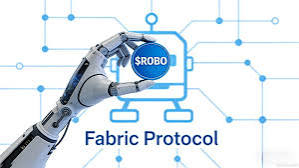
Modern robots are no longer just simple machines repeating fixed routines. They are now becoming autonomous systems capable of making decisions, communicating with other machines, collecting data and performing other complex tasks.
Projects like @Fabric Foundation Foundation are exploring how blockchain can serve as a trust layer for robotics infrastructure, by integrating decentralized verification with machine activity, robotic systems can operate within networks where actions are transparent and verifiable.
Within this ecosystem, $ROBO functions as an economic layer that helps coordinate interactions between machines, systems, and network participants.
The goal is not to remove humans from the equation entirely, instead, it is to create systems where machines can operate with clear, transparent rules that everyone in the network can verify. $ROBO Protocol is already building the infrastructure that's enabling robots trust blockchain more than humans.
Remember, machines do not rely on emotion or reputation, rather they rely on verifiable information. The future is here. #Robo
#RoboticsIndustry #Ernestacademy #TrumpSaysIranWarWillEndVerySoon