From 'useless computational power' to 'decentralized intelligent brain': how Qubic reconstructs the boundaries between blockchain and AI
In the history of blockchain development, there have always been two issues shadowing it: one is the waste of computational power in traditional proof of work (PoW), and the second is the 'impossible triangle' of public chain performance and decentralization. When the industry falls into the dilemma of 'performance compromise for decentralization' or 'computational power waste for security', Qubic, created by Sergey Ivancheglo (known in the community as Come-from-Beyond, CfB), is core to 'useful proof of work (UPoW)', integrating high-speed blockchain performance, decentralized governance, and artificial intelligence training, attempting to find a brand new path.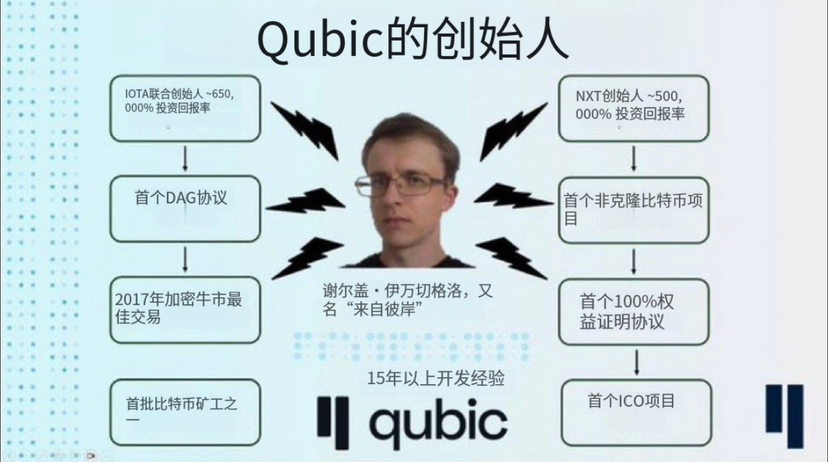
As the creator of NXT (the first pure proof-of-stake public chain) and IOTA (the pioneer of the DAG architecture), CfB's every move carries the ambition to disrupt the industry. In the second quarter of 2022, the Qubic mainnet was launched, this project nearly a decade in the making (initial concepts trace back to 2012), was born with a clear mission: to ensure that blockchain's computational power is no longer solely for accounting and security but becomes a "distributed intelligent brain" driving the evolution of artificial intelligence, while breaking the performance ceiling of public chains. Today, Qubic has become the fastest blockchain ever certified by CertiK, with a peak TPS of 15.52 million, and has proposed the goal of achieving decentralized general artificial intelligence (AGI) by 2027. This not only represents a breakthrough in technology but also redefines the paradigm of blockchain and AI integration.
1. Core Breakthrough: UPoW consensus transforms mining from "energy consumption" to "empowerment."
In traditional PoW public chains, miners' computational power is entirely consumed in solving mathematically meaningless problems, solely to compete for accounting rights, resulting in extremely low energy utilization. Qubic completely reconstructs this mechanism, proposing the useful proof of work (UPoW), shifting the core task of mining from "problem-solving" to "AI training," ensuring that every bit of computational power generates actual value.
Qubic's consensus system is built on "Arbitration-based Computing (QBC)," with its core nodes known as Computors (computational validators), fixed at 676. These nodes are responsible not only for transaction verification and smart contract execution but also for training artificial neural networks (ANNs). Unlike traditional nodes, Computors' admission is not based on computational power or token staking but is dynamically selected through "weekly performance rankings": the network scores nodes based on their AI computing efficiency, transaction processing speed, and network stability. The top-performing 451+ nodes retain their qualifications, while the remaining 225 spots are filled by candidate nodes, and inefficient nodes may even have their rewards confiscated. This mechanism of "survival of the fittest" ensures high network performance while achieving a balanced decentralized governance.
The transaction confirmation process also reflects the core logic of "arbitration": any transaction or smart contract execution result requires consensus from at least 451 Computors to be confirmed finally. This mechanism effectively resists Byzantine fault tolerance issues, ensuring the security of the network. Even more remarkably, Qubic achieves a zero-fee, instant finality transaction experience, ensuring the security and finality of transactions even in offline states. This combination of "security + efficiency + no cost" thoroughly resolves the pain points of traditional public chains of "slow transfers and high fees," clearing obstacles for small payments and IoT transactions.
The revolutionary aspect of UPoW lies in its integration of the "security layer" of blockchain with the "computational layer" of AI. Miners are no longer merely "accountants" but rather "distributed trainers" of AI models—hundreds of thousands of miners worldwide aggregate their computational power to provide energy for Qubic's native AI system, Aigarth, used to build billions of artificial neural networks. This model of "computational reuse" not only solves the energy waste problem of traditional PoW but also provides massive distributed computing power for AI training, forming a positive cycle where "blockchain ensures AI training security, and AI training feeds back blockchain value."
2. Technical Architecture: High-speed core and innovative ecosystem supporting the "on-chain intelligent brain."
If UPoW is the "soul" of Qubic, then its underlying technical architecture is the "body" that supports this soul. To achieve the triple goals of "high-speed transactions + complex AI computing + decentralized governance," Qubic has designed a modular and highly scalable technical system that covers core components such as ledgers, smart contracts, and oracles.
(1) Spectrum Ledger: A transparent and tamper-proof "data cornerstone."
Qubic's decentralized ledger is called Spectrum. It is not a traditional "blockchain," but a ledger system tailored for "arbitration computing." Spectrum records all transactions, smart contract execution records, and AI computing task progress in real-time for each epoch (Epoch, cycle of 7 days). Once the records are completed, the data becomes permanently immutable.
Unlike traditional ledgers, Spectrum's access method is highly decentralized—users can query data through the CLI tool (qubic.li Spectrum Info Tool) on any Computors without relying on a centralized browser. This design ensures the transparency of the ledger while also providing the network with censorship resistance, offering reliable guarantees for the traceability and verification of AI training data.
(2) Smart Contracts: IPO issuance model and "bare-metal execution," reconstructing the on-chain economy.
Qubic's smart contract system is the "source of vitality" for its ecosystem, achieving dual innovation in execution efficiency and economic model. Technically, Qubic's smart contracts are written in C++ and support "bare-metal execution"—the code runs directly on the nodes' hardware without passing through a virtual machine, allowing for an astonishing execution speed, with each contract capable of completing over 55 million transactions per second.
In terms of economic model, Qubic has pioneered the smart contract IPO (initial public offering) model. Unlike the traditional public chain model of "deployment is online," smart contracts on Qubic must pass through "arbitration proposal voting" before being issued in the form of an IPO of 676 shares (corresponding to 676 Computors). Investors can subscribe to contract shares using QUBIC tokens, which are locked in the contract, thereby reducing market circulation; after the contract goes live, shareholders will obtain passive income from the execution commission of the contract until the locked tokens are exhausted.
This model brings threefold value: firstly, through a "voting + subscription" mechanism, it filters out high-quality smart contracts, improving ecosystem quality; secondly, through token locking, it creates a deflationary effect, enhancing the value support for QUBIC; thirdly, it provides developers with a new financing method, allowing smart contract projects to achieve "self-sufficiency." As of now, over 10.5 trillion QUBIC have been destroyed through smart contract IPOs, fully validating the feasibility of this model.
(3) Oracles: Connecting on-chain and reality, empowering AI decision-making.
The evolution of AI cannot be separated from real-world data, while the closed nature of blockchain is precisely an obstacle in this process. Qubic's oracle system has become the bridge connecting the "on-chain intelligent brain" with the "real world."
Qubic's oracles will collect external information in real-time, such as stock prices, sports scores, and weather data. After multi-node verification, this information is transmitted to smart contracts and the Aigarth AI model. For smart contracts, oracle data allows them to implement complex logic of "condition-triggered" actions, such as cross-border payments based on real-time exchange rates and prediction markets based on sports event outcomes; for Aigarth, real-world data serves as the "nourishment" for its training and evolution, enabling it to make decisions more aligned with reality.
More importantly, the operation of oracles also integrates the UPoW mechanism—while Computors verify oracle data, they also use this data for training AI models, achieving a dual combination of "data verification" and "computational utilization," further enhancing the network's resource utilization.
3. Token Economics: From "inflation issuance" to "deflation cycle," creating a value closed loop.
Tokens are the "lifeblood" of the blockchain ecosystem, and the rationality of its economic model directly determines the long-term viability of the project. Qubic's token (QUBIC, abbreviated as QU) has undergone a significant model adjustment, shifting from the initial "high inflation issuance" to a "controlled deflation cycle," forming a system that balances ecological incentives with value preservation.
(1) Supply and Emission: From "total reduction" to "weekly destruction."
Qubic's total token supply has undergone a disruptive adjustment—from an initial 100 trillion to 20 billion, a reduction of 80%. This adjustment aims to align token supply with the network's long-term value objectives. Currently, Qubic's circulating supply is approximately 120 trillion, exceeding half of the new total.
In terms of issuance mechanism, Qubic adopts a model of "fixed weekly issuance + dynamic destruction": every epoch (7 days), 1 trillion QUBIC will be fixedly issued, primarily allocated to Computors as rewards. However, this issuance is not fully released into the market—the network will destroy the rewards of inefficient nodes based on Computors' performance, while the token locking in smart contract IPOs and token burning during execution will continuously reduce the circulation.
In August 2025, Qubic's "halving proposal" was approved by the network, and miner rewards began to decrease, marking the entry of its token economy into a "deflationary cycle." According to statistics, in the first week after the new issuance model was launched, nearly 149 billion QUBIC were permanently destroyed. This model of "fixed issuance + dynamic destruction" has shown a trend of "steady decline" in QUBIC's circulation, providing a foundation for its value enhancement.
(2) Token Use: A "utility token" that runs through the ecosystem.
QUBIC is not merely a "speculative token" but a utility token that runs through the entire Qubic ecosystem, covering all aspects of network operation:
1. Quantification of computing resources: Executing smart contracts, accessing oracle data, and participating in AI training all require consuming QUBIC as "computational energy";
2. Node Incentives: Rewards for Computors and miners' computational returns are distributed in QUBIC;
3. Ecological Financing: Subscription for smart contract IPOs and incubation of ecological projects are all centered around QUBIC as the core token;
4. Governance Voting: Major decisions of the network (such as protocol upgrades, proposal approvals) require nodes holding QUBIC to participate in voting.
This "full-scenario coverage" utility deeply binds the value of QUBIC with the activity level of the ecosystem—the more prosperous the ecosystem, the greater the demand for QUBIC; while the deflationary effect of QUBIC further drives its value enhancement, forming a positive cycle of "increased demand → rising value → ecosystem expansion."
4. Ecological Layout: From "technical core" to "industrial landing," building a decentralized intelligent brain ecosystem.
Qubic's ultimate goal is to create a "decentralized general artificial intelligence" centered around Aigarth, and the realization of this goal relies on the comprehensive layout of the ecosystem. Currently, Qubic's ecosystem has covered multiple fields such as AI R&D, developer empowerment, and decentralized applications (DApp), forming a development model of "technology-driven + community co-construction."
(1) Aigarth: 2027 AGI goal, the core of the on-chain intelligent brain.
Aigarth is Qubic's native AI system and the core carrier of its "computational power turning into intelligence." It relies on the computational power of hundreds of thousands of miners to build billions of artificial neural networks, continually optimizing models through evolutionary algorithms, with the ultimate goal of achieving decentralized general artificial intelligence by 2027.
Unlike centralized AI, Aigarth's core advantage lies in its "decentralization"—it has no single controlling entity; the training, updating, and decision-making of the model are completed collaboratively by the nodes in the network, avoiding the risk of AI being monopolized by a few institutions. Meanwhile, the UPoW mechanism provides Aigarth with a continuous supply of distributed computational power, solving the high computational costs and poor scalability issues of centralized AI training.
Currently, Aigarth is in the R&D stage, with its core technology, the "Helix logic gate," enhancing computing efficiency through rotational logic, while the first physical application of the Neuraxon architecture, Neuraxon Mini, has also been launched. The Qubic team plans to enable Aigarth to gradually acquire capabilities such as image recognition, natural language processing, and decision-making through continuous technical upgrades, ultimately becoming a "decentralized intelligent brain" serving the world.
(2) Developer Empowerment: From "academy" to "fund," lowering the threshold for ecological entry.
To attract more developers, Qubic has built a comprehensive empowerment system. Qubic Academy is its free online learning platform, offering 17 interactive modules and official certification. More than 1,000 students have graduated, nurturing a large pool of talent for the ecosystem.
In terms of financial support, Qubic has established an ecological fund of 20 billion QUBIC, providing funding, technology, and resource support for high-quality smart contract projects and DApps through "grant programs" and "incubation programs." Developers can apply for funding to develop AI applications, DeFi projects, IoT solutions based on Qubic, while the incubation program provides one-on-one guidance for potential projects to help them land quickly.
Currently, a number of high-quality projects have emerged in the Qubic ecosystem, including QubicJ (Java Development Kit), qMine (mining tool), Jetski tracker (IoT tracking application), Random Lottery (decentralized lottery), covering various scenarios such as tool development, IoT, and entertainment.
(3) Community and Governance: Open-source and transparent, allowing the community to have control over the ecosystem.
Since its inception, Qubic has adhered to the principle of "open-source transparency," with all its code released in the open-source community. Every development and upgrade is made public to the community, accepting global developers' supervision. This model not only enhances the security of technology but also makes the community a "co-builder" of the ecosystem.
In terms of governance, Qubic adopts a "power separation" framework, dividing governance rights into two parts: arbitration and arbitrators. The arbitration is composed of 451+ Computors, responsible for core network decisions such as transaction verification and block creation; the arbitrators are responsible for resolving disputes, setting mining algorithm parameters, and monitoring Computors' performance. This structure avoids a single entity controlling the network, ensuring decentralized and democratic governance.
In addition, Qubic regularly holds "All Hands AMA," a live Q&A session to synchronize project progress, technical upgrades, and roadmap planning with the community. In January 2026, Qubic held its first AMA of the year, providing a comprehensive introduction to the latest developments in the ecosystem. This model of "transparent communication" has enhanced the trust and cohesion within the community.
5. Challenges and Prospects: Moving forward amidst controversies, reconstructing the future of blockchain and AI.
Although Qubic's technical concepts and ecological layout are remarkable, as a disruptive project, it faces many challenges.
From a technical perspective, achieving the AGI goal by 2027 is highly challenging. Currently, centralized AI still faces many bottlenecks in AGI research, while Qubic's decentralized model needs to solve more complex issues such as model collaboration, data consistency, and computational scheduling. Moreover, although Qubic has achieved a peak TPS of 15.52 million, this performance was achieved in a laboratory environment, and whether it can maintain stable high performance in large-scale commercial applications remains to be seen.
From a market perspective, Qubic's token price is highly volatile. As of March 5, 2026, the price of QUBIC was $0.00000052, significantly down from its historical peak of $0.00001256 in March 2024. Additionally, in February 2026, Gate Exchange announced the delisting of QUBIC perpetual contracts, reflecting market concerns about its liquidity and stability.
From a competitive perspective, Qubic faces multiple competitors in the "AI + blockchain" track. For example, Bittensor also adopts a model of "computational mining + AI training," focusing on a decentralized AI model market; while some traditional public chains are also accelerating the integration of AI functions, such as Ethereum supporting AI computing through Layer 2 expansion, and Solana launching an AI-specific smart contract framework. For Qubic to stand out, it must continuously maintain technological leadership and accelerate ecological landing.
Even so, Qubic's core value remains significant. It is the first to implement the concept of "useful computational power," solving the energy waste issues of traditional PoW; its UPoW consensus, smart contract IPO, and other innovations provide new ideas for the technological development of blockchain; and the goal of "decentralized AGI" opens up a new direction for the development of AI.
From the perspective of industry development, the integration of blockchain and AI is an inevitable trend—the decentralized nature of blockchain can solve the "data monopoly" and "decision black box" issues of AI, while the intelligent capabilities of AI can enhance the application scenarios and efficiency of blockchain. As a pioneer in this track, Qubic's exploration of the model of "computational reuse + decentralized governance + AI evolution" may become an important paradigm for future industry development.
For investors, Qubic presents both risks and opportunities—its disruptive technology and ecological potential mean it could become the next industry giant; however, the difficulties in technological implementation and market uncertainties also expose it to high risks. For developers, Qubic offers a "low-threshold, high-potential" development platform, particularly in the field of AI applications, with the hope of developing innovative projects that surpass centralized AI by leveraging its distributed computational power.
As of March 2026, Qubic's ecosystem is still rapidly developing— the landing of Neuraxon architecture, continuous investment from the ecological fund, and the ongoing growth of the community are all pushing it towards the goal of becoming a "decentralized intelligent brain." Whether the AGI goal of 2027 can be achieved on schedule, Qubic has already made a significant mark in the history of the integration of blockchain and AI.
Its story is not just a development process of a technology project but also a profound exploration of the core questions of "what is the value of blockchain" and "where is AI headed in the future." In the days to come, whether Qubic can overcome challenges and realize its vision of "making computational power intelligent and making intelligence serve the world" will be a focus of continuous attention from the entire industry.