
33.5 trillion dollars. In 2025, the on-chain settlement volume of stablecoins will reach $33.5 trillion, continuously exceeding the combined scale of Visa and Mastercard. Behind this figure, the settlement infrastructure is already in place, and the payment revolution is the next step. To understand this transformation, it should be examined from three dimensions: How large is the scale of on-chain dollars? Why is traditional cross-border payment being challenged? Where are the real scenarios?
On-chain dollars are now a measurable financial layer.
The scale of stablecoins has grown too large to ignore. By the end of 2025, the total market value of global stablecoins will exceed $300 billion, with USDT (the US dollar stablecoin) alone amounting to approximately $184 billion, marking 27 consecutive months of growth. According to data from institutions such as Artemis and TRM Labs, the on-chain settlement volume of stablecoins in 2025 is estimated to be about $33.5 trillion, surpassing the combined payment scale of Visa and Mastercard. It should be noted that a significant portion of this comes from fund transfers between exchanges, trade settlements, and DeFi, rather than narrow payments (for goods and services). The proportion of stablecoins used in real payment scenarios (remittances, trade, daily consumption) is still small, but the growth rate is fast, making it the main battleground in the future.
What is more noteworthy is the comparison with sovereign currencies. The supply of stablecoins grew by about 59% in 2024, with the proportion of the dollar supply rising from 0.63% at the beginning of the year to about 1%, surpassing the M2 of some economies. Turkey's 38 billion USD stablecoin transaction volume accounts for about 4.3% of its GDP; in Latin America, nearly 415 billion USD worth of cryptocurrency was received from July 2023 to June 2024, with an annual growth rate of about 42.5%.
On-chain dollars are no longer just marginal experiments but a financial layer that can be discussed alongside sovereign currency supplies.
This growth reflects structural demand. Stablecoins bypass traditional banking systems for peer-to-peer transfers; users do not need bank accounts, only wallets; the same stablecoin circulates globally. The dollar appears in digital form outside of SWIFT, forming a new circulation network. Understanding this shift requires looking at why the traditional system is being challenged.

From SWIFT to Blockchain
Traditional cross-border payments face threefold constraints.
Time costs: According to official data from SWIFT, about 90% of payments reach the destination bank within one hour, but only about 43% reach the end customer’s account in the same timeframe. Mainstream US banks generally provide an arrival time of 1 to 5 business days, with popular routes typically requiring about 2 days. Bank business hours, regulatory compliance, and queues at intermediary banks can all extend the cycle.
Cost of fees: According to analyses by institutions like PayGlocal and Eximpe, SWIFT cross-border transfers involve multiple layers of charges, with sending banks charging between 10 to 50 USD, receiving banks charging between 10 to 30 USD or 0.5% to 2% of the transaction amount, and currency conversion typically adding 2% to 5%. For small remittances, the overall cost can reach 3% to 5% or even higher.
Institutional and operational constraints: Capital controls, sanctions, and censorship can directly cut off or delay payments; weekends and holidays are not processed; reliance on multiple layers of intermediaries such as banks and clearing institutions means that any failure in one link can affect the entire transaction. In regions with high inflation, unstable local currencies, and weak banking services, these constraints become rigid pain points, prompting users to turn to cheaper and faster alternatives.
Stablecoin settlements provide significant differences across these three dimensions.
Speed: On networks like Solana or Tron, the confirmation time for USDT/USDC is usually completed within seconds to minutes. On-chain transfers settle instantly, eliminating the need to wait for bank reconciliations and settlements, and can operate 24 hours a day.
Costs: According to data from gasfees.org and Nexssion, the cost of a single stablecoin transfer on Solana is about 0.00025 USD, while USDT on the Tron chain (TRC20 standard) costs about 1 to 4 USD, and Ethereum can reach 5 to 20 USD during congestion. Even at the highest estimates, this is still far lower than the cumulative fees of traditional SWIFT. Visa is set to integrate USDC into its core settlement flow in 2025, with data showing that merchant settlements using Solana or Ethereum L2 (layer 2 scaling networks) can be completed in 15 seconds to 5 minutes, with most individual network fees below 0.1 USD.
Accessibility: borderless, no business hour restrictions, peer-to-peer direct transfers, and on-chain records can be traced and verified. The flow of funds has shifted from "bank through SWIFT to bank" to "wallet through blockchain to wallet," significantly enhancing users' control over the payment path. In summary, SWIFT takes days, incurs high costs, and is restricted by business hours; stablecoins, on the other hand, arrive within minutes, are inexpensive, and available around the clock.
Payment methods have undergone a transformation at the infrastructural level: this is not just minor adjustments to the existing system but the addition of a parallel payment track. Once this infrastructure matures, it will also support the widespread adoption of stablecoin payments.

Real scenarios and currency substitution
On this track, stablecoin settlements are already operating on a large scale, while stablecoin payments (used for remittances, trade, and consumption) are still in the early stages but have extended into real economic activities.
Cross-border trade. In Turkey, the lira dropped about 10% within hours between 2024 and 2025, prompting many small and medium-sized enterprises to switch to stablecoins for international trade. Local software outsourcing pays global contractors in USDT through platforms like TransFi, saving about 5 working days compared to traditional SWIFT, with single transaction losses reduced by about 3%.
Personal remittances. Chainalysis points out that Mexico received about 63.3 billion USD in stablecoin remittances in 2023, making Latin America one of the fastest-growing regions for stablecoin remittances. Bitso, as the major exchange in Mexico, once handled about 10% of the Mexico-US remittance corridor, processing over 3.3 billion USD in cryptocurrency remittances in 2022.
Daily savings and payments. In Argentina, 39% of purchases on Bitso's platform in 2024 are stablecoins, making them the most popular asset class. In Venezuela, due to sanctions and hyperinflation, bank cross-border remittances have nearly collapsed; a report by TRM Labs in 2025 shows that stablecoin usage has increased by about 63% over the past two years, with overseas relatives sending funds home through P2P and wallets forming a stable closed loop. In regions where local currencies fail or are heavily regulated, stablecoins, as a digital form of the dollar, fill the gap in urgent demand.
This expansion is essentially users voting with their feet. Countries like Turkey, Argentina, Venezuela, and Nigeria share common traits: high inflation or severe devaluation of local currencies, strict capital controls, and low efficiency, high cost, and many restrictions from local banks. Stablecoins provide a relatively efficient, low-cost, and less restricted channel for accessing the dollar. Among the top 20 in Chainalysis' global adoption index, Brazil, Mexico, Venezuela, and Argentina are all included. This choice leads to the dilution of monetary sovereignty. Central banks find it difficult to effectively control the issuance and circulation of stablecoins, weakening the transmission of monetary policy; capital outflows occur in the form of stablecoins, increasing regulatory challenges. However, users are not concerned with sovereign narratives; they care about whether they can preserve purchasing power and successfully complete cross-border payments.
Digital dollarization shows an irreversible dual drive of technology and habit: once user experience is formed, it is difficult to revert to traditional methods.
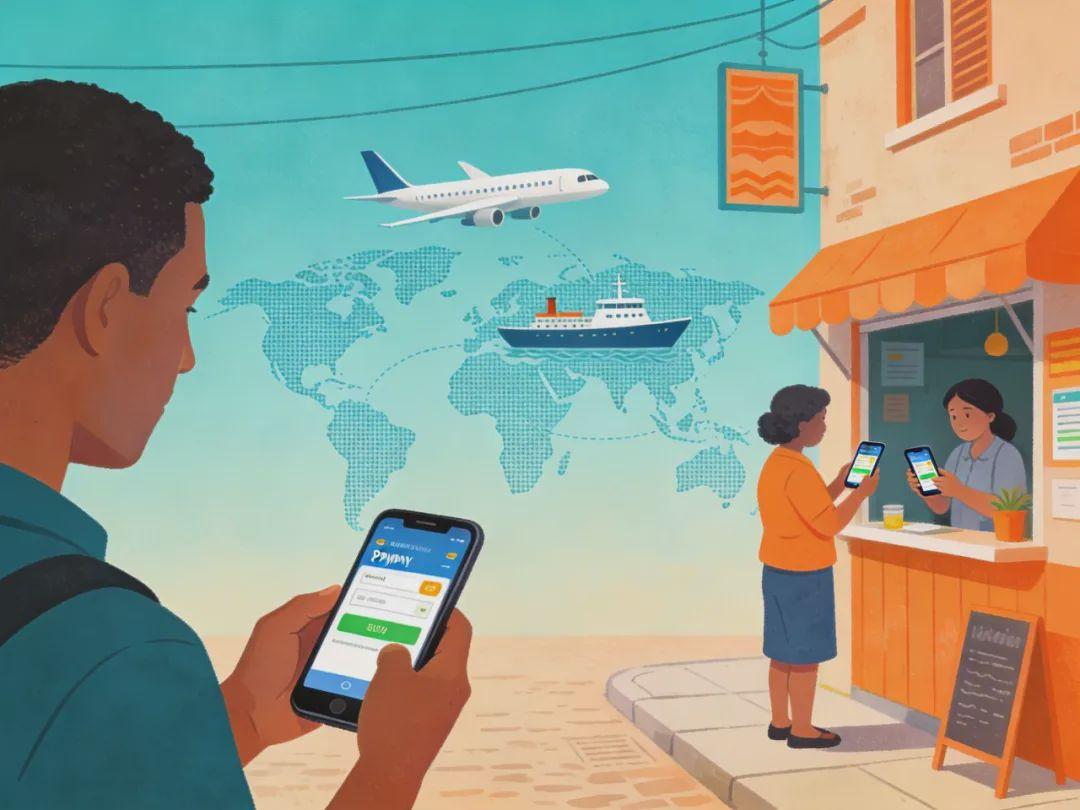
Conclusion, blockchain payments are coming
From a more macro perspective, competition in the payment sector is shifting from banks to traditional financial systems versus blockchain networks. The characteristics of Web3 payment infrastructure are: no need for traditional banks as intermediaries, peer-to-peer networks can complete settlements; blockchain protocols serve as universal standards, globally unified; smart contracts can support conditional payments and escrow; users have direct control over their assets and cash flows. Currently, stablecoin settlements are operating on a large scale; in scenarios such as cross-border payments, small payments, online payments, and B2B settlements, stablecoin payments are just beginning to penetrate, running parallel to or even partially replacing traditional methods.
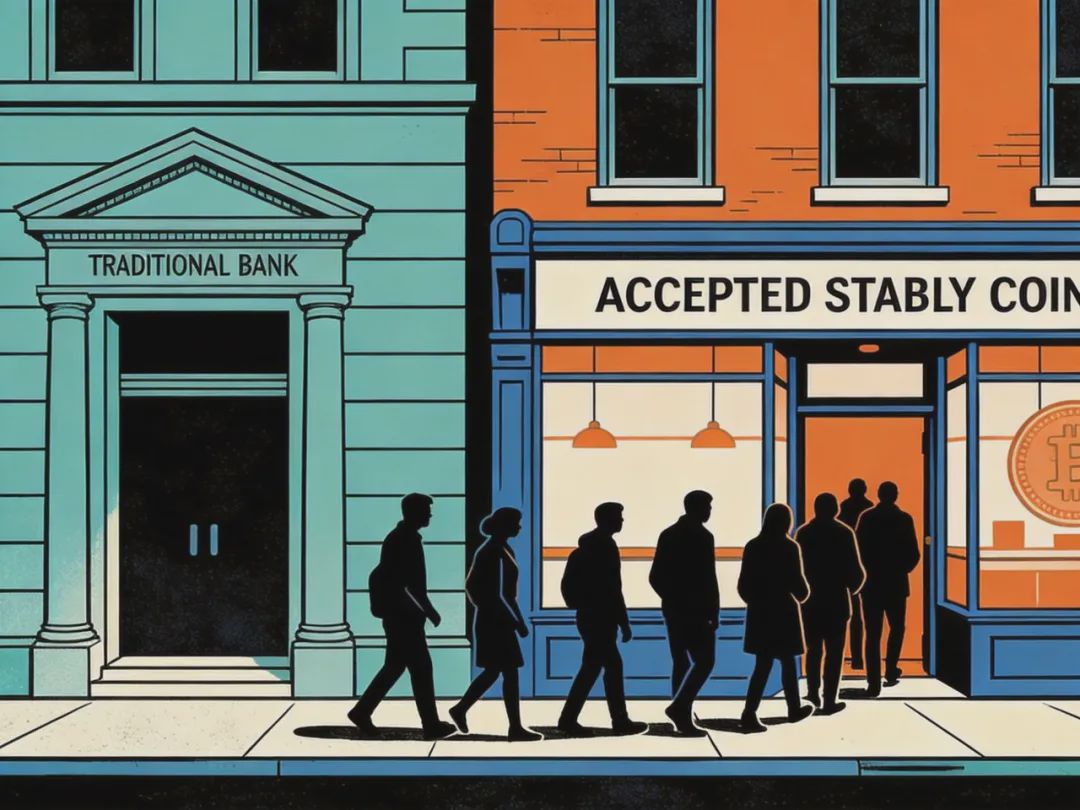
The settlement volume of stablecoins has surpassed that of mainstream card organizations, proving that on-chain infrastructure is sufficient to support large-scale capital flows; stablecoin payments (used for daily consumption, cross-border remittances, and trade settlement) are still in their infancy but will be key in the next phase. The competitive landscape has shifted from a competition between banks to a competition between traditional financial systems and blockchain networks. The expansion of stablecoins' use cases for the US dollar is a result of market choices. By 2025, stablecoin settlement volumes will surpass mainstream card organizations, the adoption rate in regions like Latin America will rise rapidly, and traditional giants like Visa will integrate stablecoin settlements, all confirming the maturity of the infrastructure. The payment revolution will gradually change the way traditional finance operates, which is a natural result driven by technological evolution and demand.
Two things are worth noting: payment habits in regions with unstable local currencies are changing rapidly; the strategies of traditional giants like Visa and PayPal regarding stablecoin settlements will determine who dominates this new track in the next phase. Understanding this trend helps grasp the next evolution of the global monetary and payment landscape.