
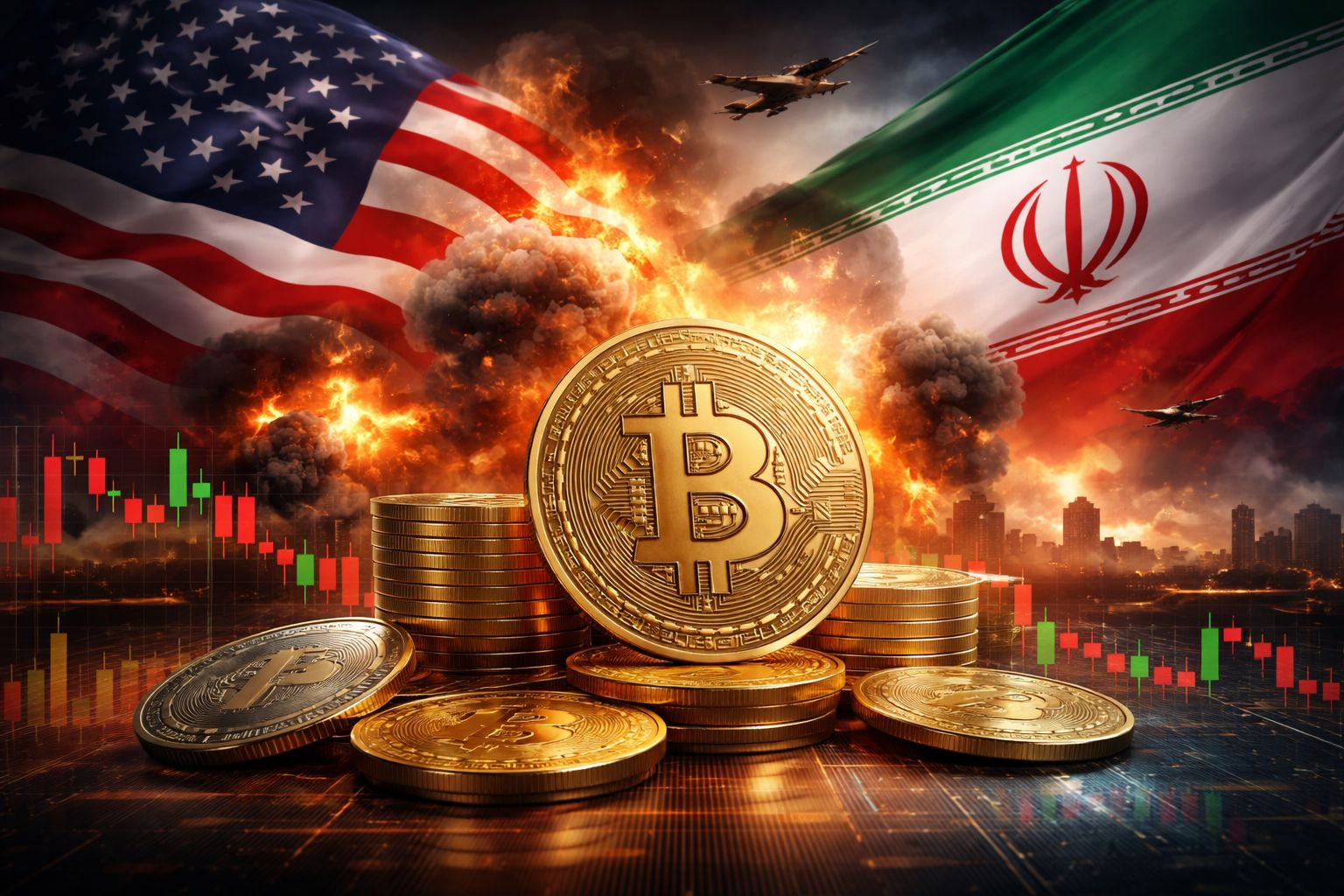
Cryptocurrency markets are witnessing a noticeable decline amid rising geopolitical tensions between the United States and Iran, which has brought back into focus the increasing relationship between digital assets and global political events. With each escalation in international conflicts, financial markets tend to adopt a cautious stance, directly impacting high-risk assets such as cryptocurrencies.
The escalation of tensions and its impact on investor sentiment
As the political and military rhetoric between Washington and Tehran intensifies, a state of anxiety has prevailed in global markets. This anxiety has driven many investors to reduce their exposure to high-volatility assets, leading to a wave of selling in the cryptocurrency market.
Cryptocurrencies are often among the first assets to be affected by risk aversion, as investors seek to protect their capital by turning to more stable assets during times of uncertainty.
Decline of major digital currencies
This tense climate has been reflected in the performance of major cryptocurrencies, with Bitcoin experiencing a decline after a period of relative stability. Many altcoins also faced increasing selling pressure, with reduced liquidity and a decline in risk appetite among traders.
This behavior indicates that the crypto market has become more correlated with the global economic landscape compared to its early years, when it was seen as relatively separate from the traditional financial system.
The relationship between geopolitical crises and financial markets
Historically, geopolitical tensions lead to rapid shifts in capital flows. In times of crisis, investors tend to turn towards assets known as safe havens, such as gold or the US dollar.
In contrast, assets with high volatility often face selling pressure, which explains the decline seen in cryptocurrencies amid the escalating conflict between the United States and Iran.
Oil and inflation and their indirect impact
One important point in this context is that any escalation in the Middle East could lead to disruptions in global energy markets. Rising oil prices can increase global inflation rates, prompting central banks to tighten their monetary policies.
These policies often negatively impact speculative assets, including cryptocurrencies, as they reduce liquidity available in financial markets.
Could the crisis turn into an opportunity for crypto?
Despite the current decline, some analysts believe that geopolitical crises may create new opportunities for digital assets in the long term. In countries facing financial constraints or economic sanctions, cryptocurrencies may become an alternative means of transferring money outside the traditional financial system.
This scenario could enhance the role of digital currencies in the global economy, especially if geopolitical tensions continue to shape the contours of the international financial system in the coming years.
The future of the market amid the current tensions
The future of the cryptocurrency market remains largely tied to developments in the global political landscape. If tensions between the United States and Iran ease, markets may quickly regain some investor confidence.
However, if escalation continues, markets are likely to remain in a state of volatility and caution, which may lead to sharp price movements in the cryptocurrency market.
Conclusion
Recent developments reveal that the cryptocurrency market is no longer isolated from the global economy as previously thought. It has become part of a financial system that is directly affected by major political and economic events.
As tensions continue in sensitive regions of the world, digital currencies will remain susceptible to fluctuations linked to geopolitical stability, making it important to monitor these developments to understand market trends in the next phase.