
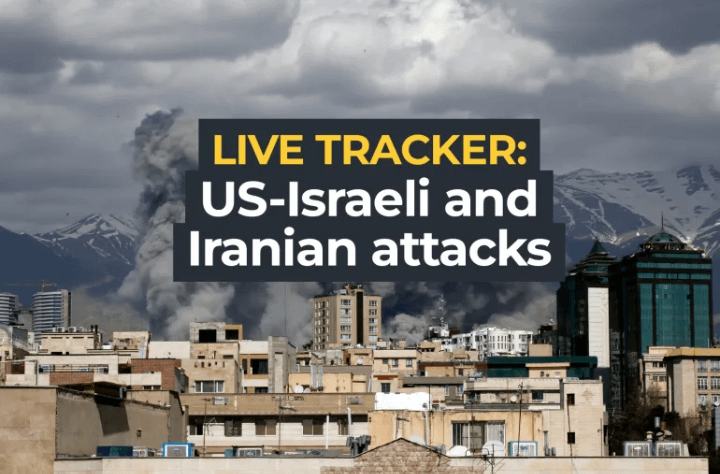
In the most serious escalation in decades, Iran is now at the center of a rapidly intensifying regional war involving the United States and Israel. What began as rising tensions has turned into a full-blown military crisis with widespread casualties and strategic strikes across the Middle East.
⚔️ U.S.-Israeli Strikes and Khamenei’s Killing
On February 28, 2026, U.S. and Israeli military forces launched coordinated air and missile strikes deep into Iran, targeting key military facilities and leadership. Among the most dramatic outcomes was the confirmed assassination of Iran’s Supreme Leader Ayatollah Ali Khamenei, a figure who had led the country for decades and shaped its foreign policy.
This unprecedented strike sent shockwaves across the region, dramatically altering the balance of power and provoking an immediate Iranian response.
💥 Rising Casualties and Civilian Toll
The conflict has already produced heavy casualties in Iran. Latest figures indicate:
Over 550 people killed within Iran since the bombing campaign began, including large numbers of civilians.
Reports of deadly strikes on infrastructure and schools, raising international concerns about civilian harm.
🚀 Iranian Retaliation and Regional Spread
In response to the attacks and the killing of their leader, Iranian forces have launched massive retaliatory strikes using ballistic missiles and swarms of drones. These attacks have targeted:
Israel, with ballistic and drone strikes aimed at military and governmental sites.
U.S. military bases and allied positions across the Gulf, including in Kuwait, Bahrain, Qatar, and the UAE.
Commercial airports and airspace hubs, causing flight cancellations across the Middle East.
This broad retaliation shows Iran’s intent to escalate beyond its own borders in a major show of force.
🔥 Protests and Unrest Beyond Iran
The crisis is fueling unrest far beyond Iranian borders. In countries like Pakistan and Iraq, pro-Iranian protesters have clashed with security forces, leading to dozens of deaths after demonstrations targeted American government buildings.
🌍 Global Diplomatic Tough Spot
World leaders are grappling with how to react:
U.S. leadership says strikes will continue until objectives are met.
Europe and the United Nations are calling for restraint, warning that full-scale regional war could have catastrophic consequences for global security and energy markets.
Amid these tensions, diplomatic efforts to de-escalate have so far failed, with both sides stuck on narratives of retaliation and national defense.
📉 Internal Crises Inside Iran
The conflict comes on top of significant internal turmoil in Iran itself:
In January 2026, the government enforced a nationwide internet blackout to control information during mass protests at home.
Earlier in 2026, security forces violently suppressed protests that erupted in multiple cities, resulting in large death tolls.
This means Iran is currently dealing with both internal political chaos and external military confrontation, making the situation far more volatile.
⚠️ Why This Matters Globally
This conflict isn’t just regional it has global implications:
Oil and trade routes in the Gulf are disrupted, pushing up energy prices worldwide.
Global airline travel routes are affected due to strikes on major Middle East airports.
Allied nations are forced to choose sides, heightening the risk of a broader international confrontation.
#IranConfirmsKhameneiIsDead #USIsraelStrikeIran #BitcoinGoogleSearchesSurge #TrumpStateoftheUnion #AnthropicUSGovClash


