
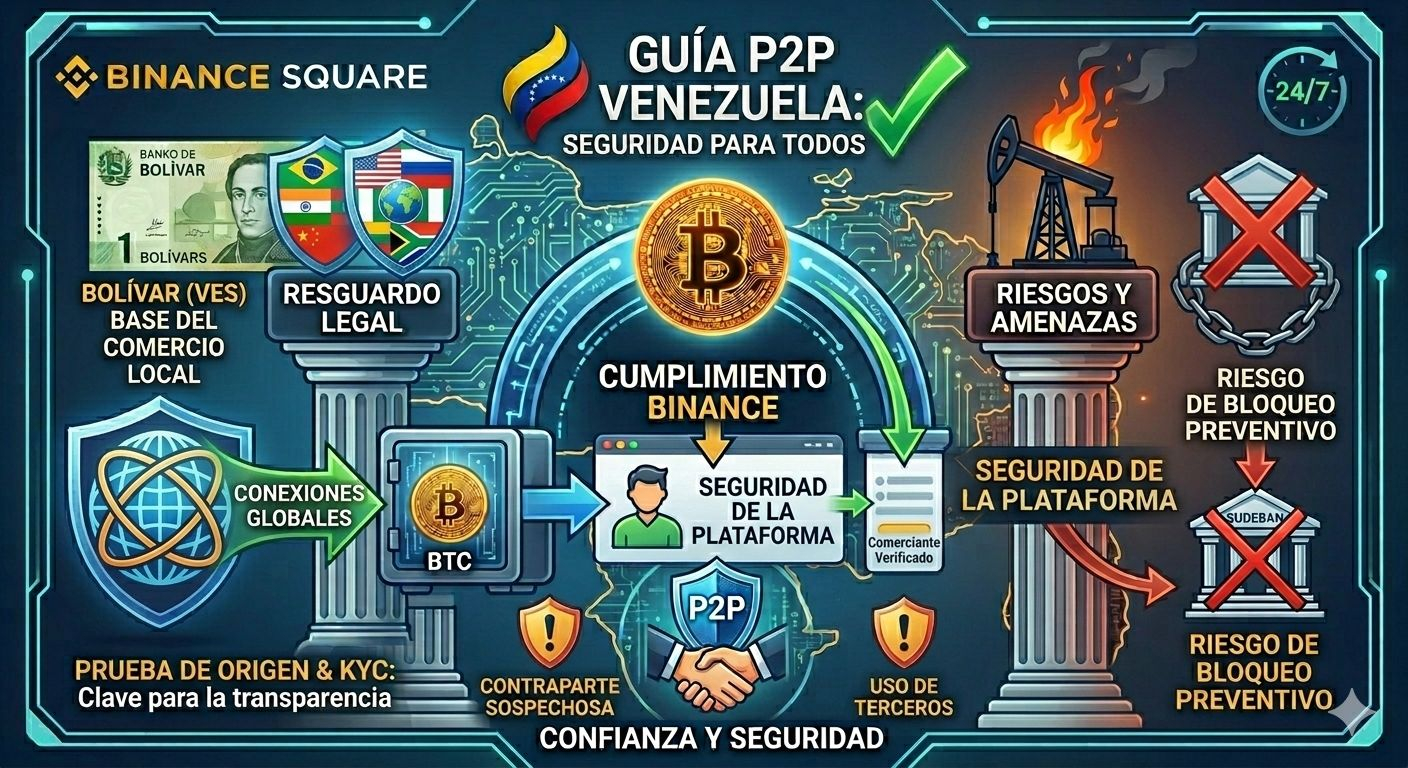
For the Venezuelan user, Person to Person (P2P) trading is not just an option, it is an alternative and a tool for survival and financial freedom. However, operating in this ecosystem requires more than just knowing how to buy and sell: it requires legal protection.
As of today, March 1, 2026, the regulatory framework in Venezuela remains a complex terrain. After the restructuring processes of the regulatory entities, the average user wonders: How can I protect my funds and my freedom? Here we explain it to you clearly and directly.
Is it legal to use Binance in Venezuela?
The short answer is yes. The use of cryptoassets is completely legal and recognized under the national legal framework. There is no criminal prohibition against the possession or exchange of digital assets.
However, the real risk is not the cryptocurrency itself, but the Money Laundering. If you exchange bolívares with someone whose funds come from illegal activities (scams or corruption), you could be dragged into a judicial investigation under the Organic Law Against Organized Crime and Terrorism Financing (LOCDOFT).
The Pillars for a Safe Operation
1. The Golden Rule: Strict Ownership
This is the most common mistake and the one that generates the most arrests or blocks. NEVER make or receive payments from third-party bank accounts. The Binance account and the bank account in bolívares must belong to the same person. If you use a relative's account, you are breaking legal traceability and exposing yourself to sanctions for money laundering.
2. Proof of Origin and Support
In the event of an audit by Sudeban or a bank inspection, your best defense is the history of Binance. Download your reports periodically. If you sell products or services and charge in USDT, keep your invoices or chat records. You must be able to demonstrate where each bolívar that enters your bank came from.
3. The Danger of "Triangulation"
Avoid at all costs users who say to you: "A cousin is going to transfer to you" or "Payment from my business account." This is the favorite technique of scammers to launder stolen money. If you accept a payment from a third party, you automatically become a link in the chain of criminal investigation.
4. Verified Traders: Your safe zone
Although everyone wants the best rate, sometimes what is cheap becomes expensive. If you are a beginner and starting on this platform, prioritize operating with "Verified Traders" (those with the yellow check). These users have passed additional security filters and usually have funds with greater traceability, which reduces the risk of your bank account being flagged for suspicious activities.
What to do if your bank account is blocked?
If you receive a notification of "preventive blocking" from your bank after a P2P operation, do not panic. Generally, these are automatic algorithms looking for patterns of "smurfing" (many small transfers).
Prepare a digital folder with your ID, your user registration on Binance, and the proof of the executed orders. In most cases, presenting this evidence of a "legitimate commercial transaction in good faith" is enough to unlock your funds.
LEGAL FRAMEWORK
The fundamental law regulating cryptoassets in Venezuela is the Constituent Decree on the Comprehensive System of Cryptoassets, which establishes the legal framework for the use, exchange, and mining of digital assets in the country.
Here are the key details of this regulation:
Data of the Decree and Date
Official Name: Constituent Decree on the Comprehensive System of Cryptoassets.
Official Gazette: N° 41.575.
Publication Date: January 30, 2019.
Summary of the Law and Regulatory Framework
Legality of Cryptoassets: The decree legally recognizes cryptocurrencies and digital assets as legitimate financial instruments in the national territory.
Creation of SUNACRIP: Establishes the National Superintendency of Cryptoassets and Related Activities (SUNACRIP) as the governing body responsible for supervising, monitoring, and regulating all activities related to the crypto ecosystem.
Regulation of Mining: Indicates that any digital mining activity must be properly authorized and registered with the regulatory body to operate legally.
Exchange and P2P: Validate the exchange platforms (Exchanges) and Person to Person (P2P) trading, as long as they comply with the regulations for preventing money laundering and financing of terrorism.
Use of Petro: Defines Petro as the unit of account and sovereign digital asset backed by natural resources, although its use has fluctuated according to current economic policies.
Important note: As of March 2026, although the base laws remain in force, SUNACRIP has undergone restructuring and intervention processes that have affected the application of some administrative provisions. It is essential to stay informed about Sudeban's circulars regarding bank accounts linked to these operations to avoid preventive blocks.
Conclusion
P2P in Venezuela is a technological blessing, but it carries responsibility. Do not operate blindly. Being a legally educated user is the only way to ensure that your assets are safe from blocks and judicial problems.
Was this guide helpful?
If you have any questions about how to declare these earnings to the bank or what terms to avoid in transfer concepts, let me know in the comments.
#BinanceSquare #Venezuela #P2P #LegalCrypto #SafeTrading