

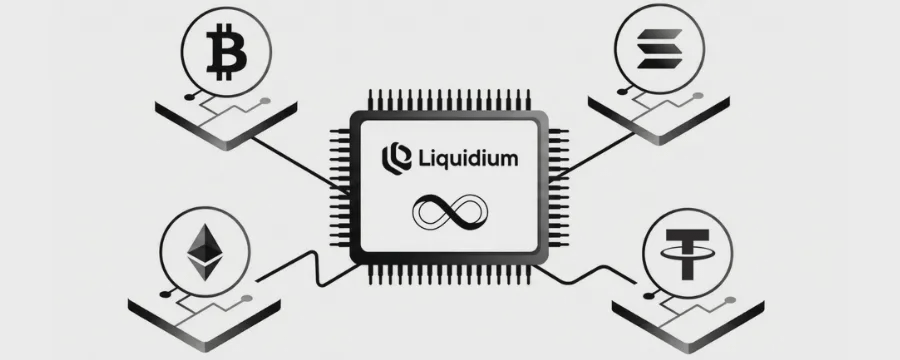
The decentralized finance (DeFi) space has long been dominated by a specific architecture: the Ethereum Virtual Machine (EVM). Platforms like Aave, Compound, Morpho, and Yearn Finance have built massive liquidity black holes, handling billions of dollars in transaction volume and defining the standards for over-collateralized lending.
But as the industry matures, the EVM-centric model has begun to reveal its flaws - especially in achieving truly trust-minimized interoperability. Liquidium has emerged, a lending protocol that rewrites cross-chain DeFi rules using Chain Fusion technology based on the Internet Computer (ICP).
This article will delve into the comparison between Liquidium and EVM giants, and why the era of wrapped assets is coming to an end.
The walled garden of EVM
Protocols such as Aave and Compound are undoubtedly industry giants, providing large liquidity pools, floating interest rates, and seamless execution on Ethereum and its Layer-2 scaling solutions (like Arbitrum and Optimism).
Yearn Finance and other yield aggregators have further optimized these ecosystems, while Morpho has improved the efficiency of existing EVM lending pools.
However, they all share a significant common limitation: they are fundamentally limited to EVM-compatible networks.
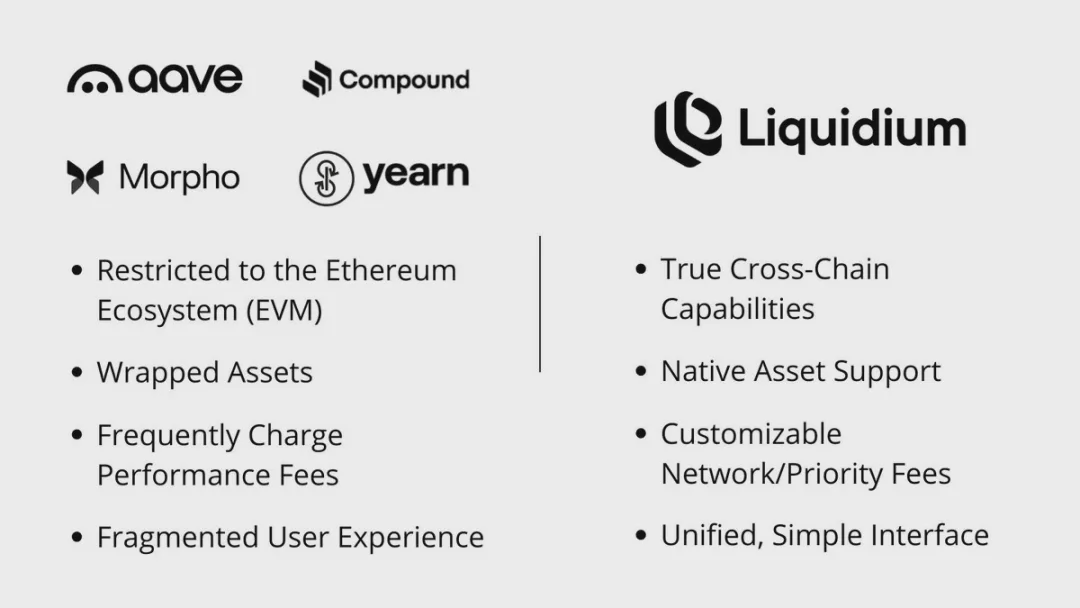
What happens when Aave or Compound users want to use Bitcoin as collateral? Since native Bitcoin cannot be directly stored on the Ethereum blockchain, users can only rely on wrapped assets (such as WBTC).
This requires locking native Bitcoin in centralized custodial institutions or multisignature bridges, which then issue ERC-20 tokens representing that Bitcoin.
This introduces a huge trust assumption; you no longer hold Bitcoin but instead hold an IOU from the bridge - and historically, bridges being hacked has been one of the biggest ways capital loss has occurred in the cryptocurrency space.
Liquidium and native cross-chain unlocking
The revolution of Liquidium lies in its departure from past models; it does not enforce asset migration to a single EVM environment through wrappers like other architectures, but instead adopts a native cross-chain architecture.
Liquidium is supported by ICP's Chain Fusion, allowing users to leverage native Layer-1 assets (such as Bitcoin on the Bitcoin network) as collateral to obtain stablecoin loans issued on completely different chains (such as Ethereum or Solana).
No bridges: you do not need to wrap or bridge your Bitcoin.
No custodians: you do not need to hand your keys to a centralized company.
The protocol uses threshold ECDSA encryption technology, with the private keys holding Bitcoin distributed mathematically across hundreds of independent ICP nodes; to execute transactions (such as releasing collateral or triggering liquidation), consensus must be reached and signed by these nodes, replacing the 'institutional trust' in traditional multisignatures with the 'mathematical trust' of decentralized protocol consensus.
Liquidity and execution speed
EVM giants excel at liquidity pooling, ensuring borrowers can always access funds; Liquidium's operational model is similar, combining liquidity pooling with instant P2P loans to ensure fund accessibility.
In fact, Liquidium has been battle-tested, with total loans exceeding $380 million, establishing its leading position in the Bitcoin-native DeFi space.
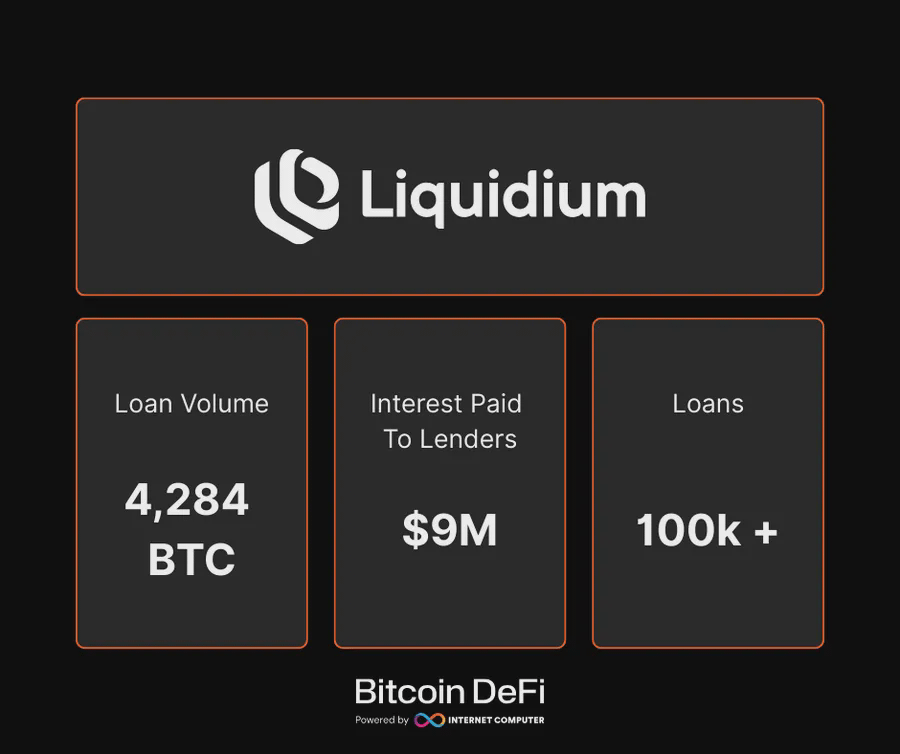
Additionally, Liquidium benefits from the underlying speed of the Internet Computer; although complex cross-chain settlements done through traditional bridging methods are slow and prone to delays, Liquidium's backend smart contracts can read Bitcoin network metadata and execute settlements in seconds, preventing bad debts from accumulating during periods of severe market volatility.
Governance model shift: ERC-20 vs. Runes protocol
The ideological differences between Liquidium and the EVM giants even extend to the field of token economics.
Aave, Compound, and Morpho all rely on standard ERC-20 tokens deployed on Ethereum for their decentralized governance, while Liquidium, in order to deeply integrate with the Bitcoin ecosystem, has adopted the Bitcoin Runes-based asset LIQUIDIUM•TOKEN, which directly links the governance of the protocol to the Bitcoin network, providing a new standard for decentralized voting outside the Ethereum ecosystem.
Trillion-dollar catalyst
The EVM giants have mastered the art of maximizing capital efficiency within their own domains; however, the world's largest capital pool - the massive Bitcoin market capitalization - remains dormant, as users refuse to take on the bridging risks required to use platforms like Aave or Compound.
Liquidium provides a trust-minimized, bridge-free lending experience that not only competes with EVM giants but also unlocks a new primordial state; the future of DeFi is not out of reach, but rather inherent.
Lending, borderless, experience it instantly:
https://app.liquidium.fi
To ensure a smooth launch and efficient scaling of the platform, access codes are currently being limited, and the access code for the IC Today community will be released soon…

IC content you care about
Technological advancements | Project information | Global events

Follow the IC Binance channel
Stay updated with the latest news