
Last Thursday night, Fogo founder Doug Colkitt did something that sent the VC world into a frenzy — the planned fundraising of $20 million in pre-sales was called off, and 2% of the tokens were directly given to the community. The reason given by this former Citadel high-frequency trader was very simple: rather than signing a bet with institutions, it is better to let the real coders have the final say. When the news spread, I was staring blankly at a failed liquidation trade on the screen — a delay of 58 milliseconds turned a profit of $60,000 into a loss due to liquidation. You see, the crypto world in 2026 is quite ironic: on one side, projects are desperately throwing money at the community, while on the other, traders are being kicked out of the market for just a few milliseconds. Fogo chose to launch its mainnet at this critical moment, and its strategy is actually quite ruthless — it doesn’t talk to you about industry vision, it just points to that failed trade record on your screen and speaks.
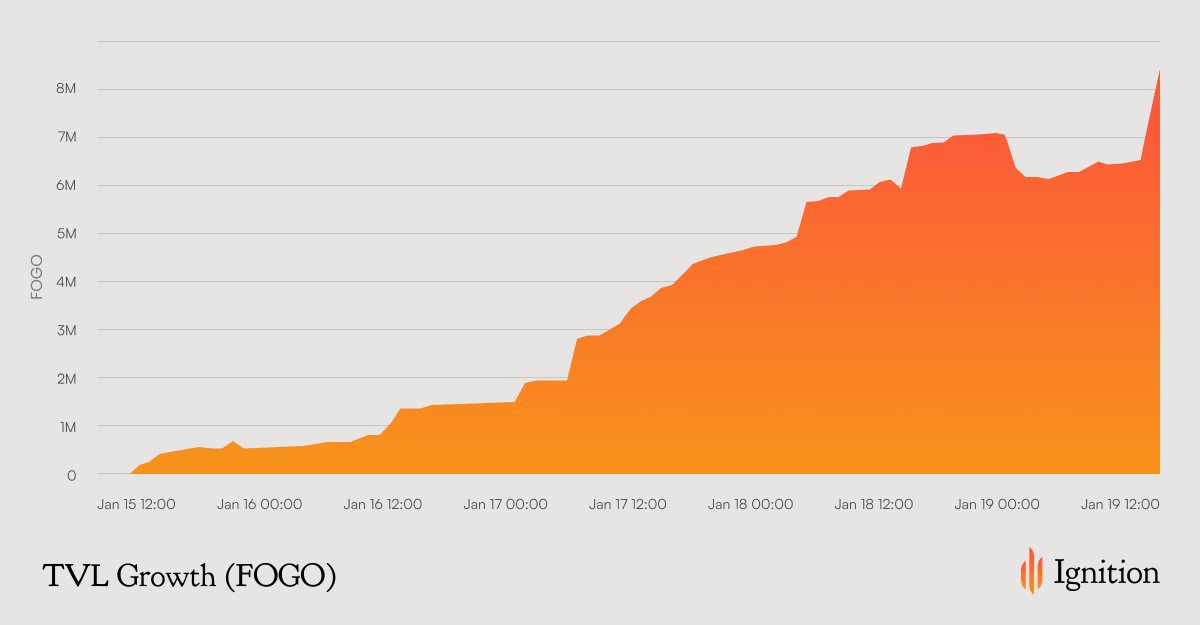
This L1 chain built on SVM has compressed block time to 40 milliseconds, with a final confirmation time of 1.3 seconds. The numbers sound dull, right? But you need to understand one thing: in professional trading markets, a difference of 50 milliseconds is enough to make three arbitrage trades. Fogo uses the Firedancer client to concentrate validators in financial hubs like Tokyo and New York, creating a 'multi-regional consensus.' What does that mean? It means that the order book contract you write runs on the Tokyo node during the Asian trading session, without having to go around the ocean. This is not some mystical performance optimization; it’s providing a knife to the DeFi derivatives track — real-time clearing and high-frequency market making that were previously too risky to do on-chain now have a physical space to land.
But to be honest, what really made me keep an eye on this project is not these performance data. It's its integration logic with Wormhole. You open the Portal interface, select Fogo as the target chain, and transfer USDC or SOL directly across without switching wallets or dealing with wrapped tokens. It's more convenient for developers — with just three lines of code, asset bridging is done. This sounds like basic skills, right? But if you look back at how many 'high-performance chains' have died in the past two years due to liquidity issues and users being lazy about cross-chain activities, you'll understand. Fogo's approach is smart: it doesn't pretend to create an isolated kingdom; it directly hooks into the existing liquidity network, allowing users to 'conveniently' come over and give it a try.
Looking back at my friend who lost $60,000, he has now shifted part of his strategy to run backtests on the Fogo testnet. When I asked him why he chose this new chain, he replied: 'Other chains talk to me about decentralization and ecological governance, but Fogo directly shows me latency data and even let me benefit from an airdrop.' This may sound crude, but it reveals the survival logic of new public chains — developers are not here to hear visions; they are here to find convenience. I don’t know if Fogo will succeed, but it at least understands one thing: in this era where everything claims to be 'faster', the true scarcity is not performance, but the reason for people to be willing to sit down and write a couple of lines of code.
