
$XRP — one of the most controversial cryptocurrencies. Skeptics from the crypto and DeFi community often claim that it has no real utility. In their opinion, it is merely a speculative asset that is hardly used outside the market.
At the same time, one of the largest and most active communities has formed around XRP. Its members believe that the altcoin will eventually become the foundation of the global financial system. We explain who is right.
XRP has unique characteristics.
$XRP — this is the native token of the XRP Ledger network, which was launched in 2012. The project's goal is to provide fast and efficient international transfers.
Unlike Bitcoin, created primarily as a decentralized means of saving, and Ethereum, focused on smart contracts, XRP was designed mainly to quickly and with minimal costs transfer funds between financial systems.
Transactions in the XRP Ledger network are completed in 3–5 seconds, and the commission is a fraction of a cent. Because of this, XRP is often used as an intermediary currency for instant exchanges between fiat currencies.
XRP is stored on millions of addresses, but the turnover is created by traders and infrastructure.
The majority of XRP users are retail investors. By the beginning of 2025, there were about 6–7 million active accounts in the XRP Ledger network.
If we consider exchange accounts and cases where one person manages multiple wallets, analysts estimate the actual number of XRP holders at about 2–3 million worldwide.
Cryptocurrency exchanges are another major category of users. Platforms like Binance, Bitstamp, Kraken, and Uphold use XRP to manage liquidity and conduct transfers.
The speed and low cost of transactions make XRP a convenient means of transferring funds between exchanges and managing trading flows.
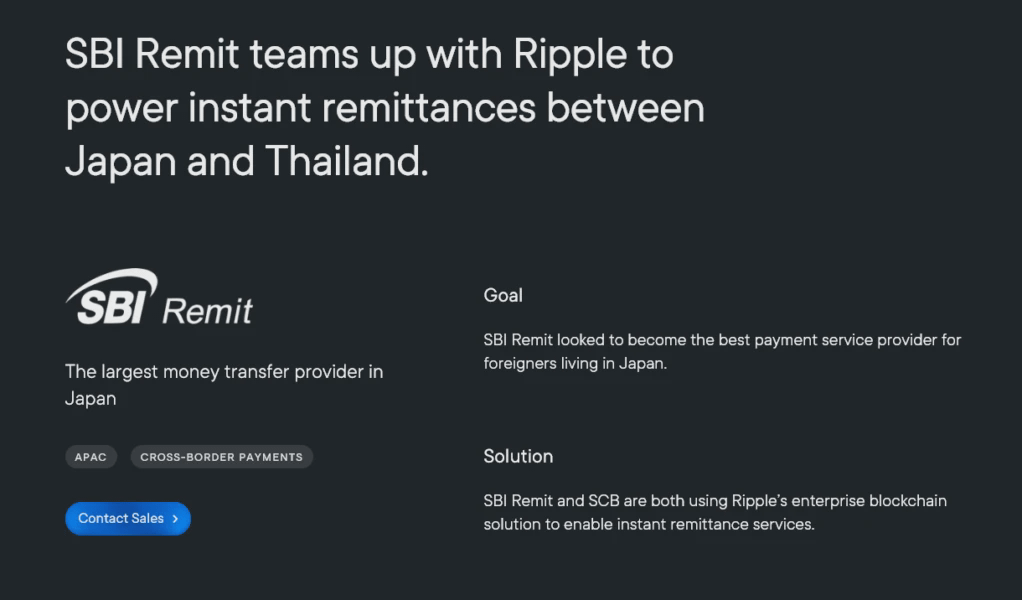
Payment providers also actively use XRP. For example, SBI Remit in Japan and Tranglo in Southeast Asia use XRP through Ripple's On-Demand Liquidity system for international transfers. In this scenario, XRP acts as a temporary bridge — allowing money to be instantly moved between countries without the need to open accounts abroad in advance.
Banks are implementing Ripple technologies, but XRP is only used by certain partners.
The situation with banks is more complicated. Major players, including Santander, Standard Chartered, and Bank of America, use Ripple's infrastructure for settlements. However, in most cases, banks only use software for messaging and settlements — without direct use of XRP. Only certain payment providers, rather than global banks as a whole, use XRP specifically for liquidity provision.
In addition to financial transfers, XRP also performs technical tasks within its own network. Every account holder in the Ledger must hold coins. To make any transaction, XRP is also needed to pay the commission.
The network allows for decentralized trading, issuing tokens, and transferring assets — all with the help of XRP.
Thus, XRP cannot be called useless or in mass demand. Its practical value is manifested in narrow tasks — primarily for ensuring liquidity and settlements.
#XRP #Ripple #XRPReview #CryptoMarketAnalysis
