The first automated trading systems I ever created ran on MetaTrader, a popular trading platform that connects to hundreds of brokers. At the time, MetaTrader dominated the space to such an extent that it even introduced its own proprietary language called MQL.
MQL was designed with a very narrow goal in mind. It existed to build Expert Advisors that operated exclusively inside MetaTrader. That tight specialization was both an advantage and a limitation. Your algorithm was confined to the platform. Expanding beyond it felt unnatural. Pulling in external data feeds, experimenting with different execution logic, or linking to crypto exchanges required awkward workarounds rather than seamless integration.
Most testing revolved around MetaTrader’s built in strategy tester. While functional, it lacked the freedom to design custom backtests, simulations, or experimental environments tailored to specific strategies. The surrounding ecosystem was also restrictive. There was no rich selection of modern data science tools, machine learning frameworks, or flexible APIs. Moving beyond standard technical indicators often felt like pushing the language beyond what it was meant to handle.
That experience pushed me toward Python. Python has its own shortcomings. It is slower than lower level languages, parallel execution is not always straightforward, and dependency management can get messy. For ultra high frequency strategies, it is usually not the best option. Still, compared to MQL, it felt like stepping into an entirely different world.
At a later stage, I decided to release one of my projects as open source: the Binance Volatility Trading Bot, known as BVTB. The core concept was simple. The bot aimed to trade volatility by automatically entering positions after sharp price movements in either direction. It monitored percentage changes over a defined time window, and when a coin exceeded a preset threshold, a trade was triggered.
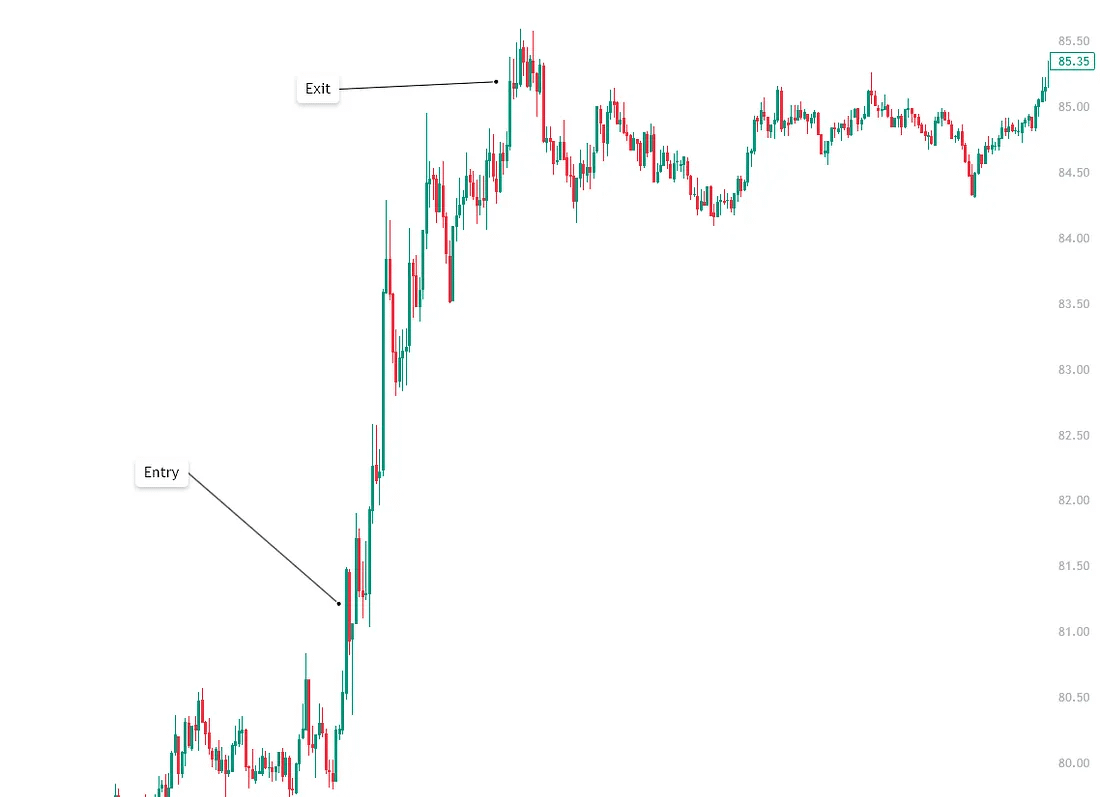
For example, a strategy could be defined as follows. Buy any asset on Binance that drops more than 10 percent within a two minute period. The underlying idea was that with properly tuned percentage thresholds and time intervals, the system could repeatedly capture sudden price swings similar to the one illustrated, in a consistent and systematic way.
I posted both the concept and the code on Reddit, and the repository quickly gained traction. It surpassed 3,000 stars on GitHub and remains active to this day. Over time, a small but committed group of contributors naturally came together to help maintain the project and continue development. As adoption grew, one type of feedback kept coming up. People wanted the bot to be easier to use. The most common request was a graphical interface that would allow users to configure and run strategies without touching code.
That feedback pushed us in a new direction. We started exploring how to turn the core volatility engine into a full trading bot platform. What began as a shared Python script evolved into a scalable, cloud based algorithmic trading product. We named it Aesir. After roughly a year of building, we released a closed beta. As expected, it exposed plenty of issues. Early users were instrumental in stress testing the system and helping us track down and resolve problems.
Today, Aesir has grown into a stable and dependable crypto trading bot platform. It offers a distinct feature set, including a volatility scanning tool that is only available within Aesir. Some of the features I personally value the most include:
Clear reporting and well designed dashboards
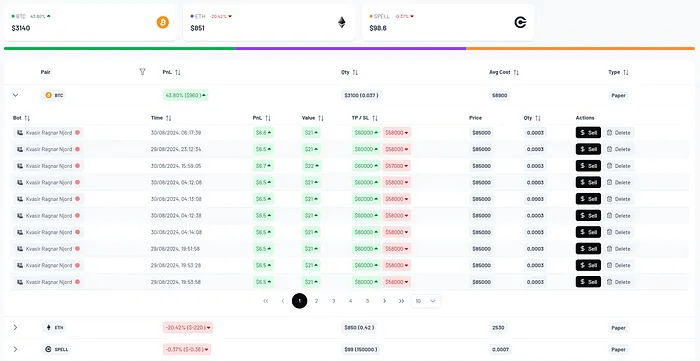
We combine all buy and sell activity from multiple bots into a clear, unified cost basis view, with the option to drill down into every individual trade.
Graphical Bot Creation Tool
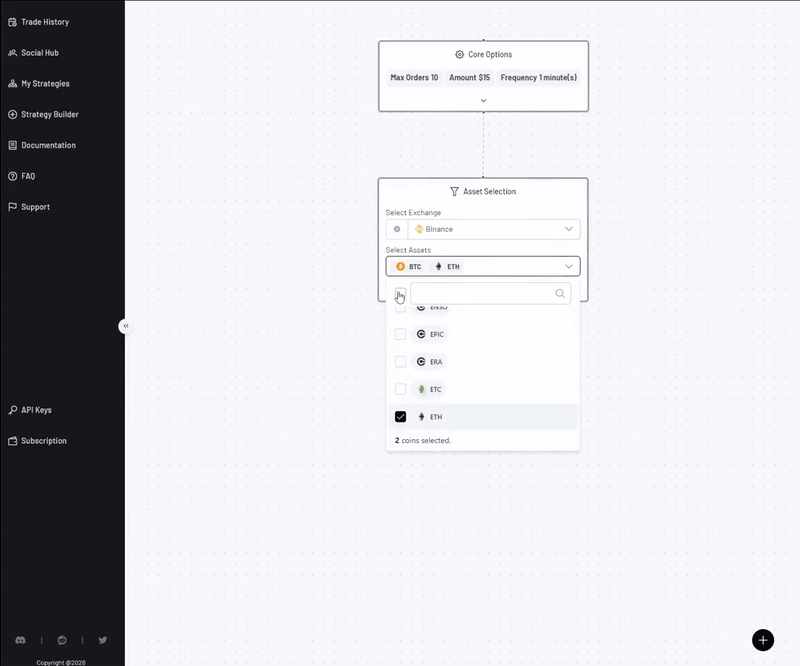
We created a clean, modern user interface that allows traders to construct crypto bots using a visual, step by step workflow. By linking logic components like entry signals, conditional rules, and risk controls, users can assemble well defined trading strategies without writing code.
Dynamic Trailing Stop Loss and Trailing Take Profit
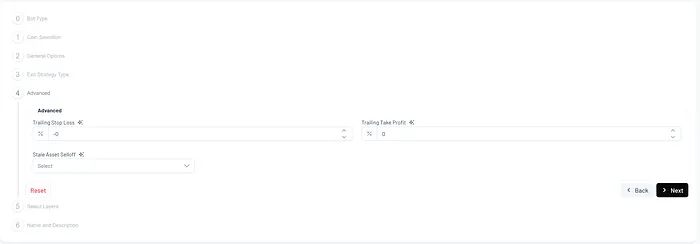
A strong exit plan is critical to any effective trading bot, which is why we have focused heavily on building advanced exit tools that help users manage risk more intelligently. One of the first capabilities we added is called Stale Asset Selloff. This feature lets you set a maximum holding duration. If a position stays open beyond that window without significant price movement, the bot will automatically close the trade.
Simulated Trading with Real Market Data