
During the DeFi restart cycle in 2025, there is a profound change occurring in funding structures and incentive logic.
The rise of Berachain marks a new stage in the exploration of consensus mechanisms and capital efficiency for the new generation of public chains. Among them, the most representative case is the 'secondary evolution' of stablecoins on Berachain.
One, PoL model: from inflation-driven to liquidity-driven
The traditional PoS model relies on inflation subsidies and static staking weights to distribute block rewards, leading to a disconnection between incentives and real liquidity contributions. Berachain's Proof of Liquidity (PoL) reshapes the incentive mechanism through the following paths:
Protocols must first attract liquidity to qualify for reward distribution;
Validator voting is tied to protocol earnings, incentivizing competition among protocols;
LP behavior affects incentive weights, giving users a higher say in capital allocation.
This mechanism not only improves incentive efficiency but also creates a self-optimizing cycle for on-chain capital: protocol competition → LP decision-making → increased capital utilization → enhanced user activity → overall improvement of ecological capital efficiency.
The migration of Dolomite is an intuitive example: since its deployment in February 2025, its total lending has exceeded 3.3 billion USD, with TVL achieving nearly 20 times growth, becoming a representative protocol of Berachain.
Two, the evolution of USDT0: from payment medium to yield asset
Stablecoins are the core infrastructure of DeFi, but in previous cycles, they played more of a 'digital cash' role. The emergence of USDT0 has opened a new path for the value capture of stablecoins.
● Cross-chain frictionlessness: Based on the LayerZero OFT standard, USDT0 achieves native cross-chain transfers.
● On the profitability of Berachain: The PoL mechanism endows USDT0 with yield attributes, allowing users to earn up to 100% annualized returns in the USDT0-HONEY pool.
● Ecological status: By August 2025, the supply of USDT0 on Berachain has exceeded 100 million USD, with a TVL peak surpassing 600 million USD, becoming a core asset for lending, trading, and collateral.
This shift means that stablecoins are no longer passive payment tools, but active capital engines.
Three, the growth flywheel driven by stablecoins
The expansion of USDT0 has driven the overall flywheel effect of Berachain:
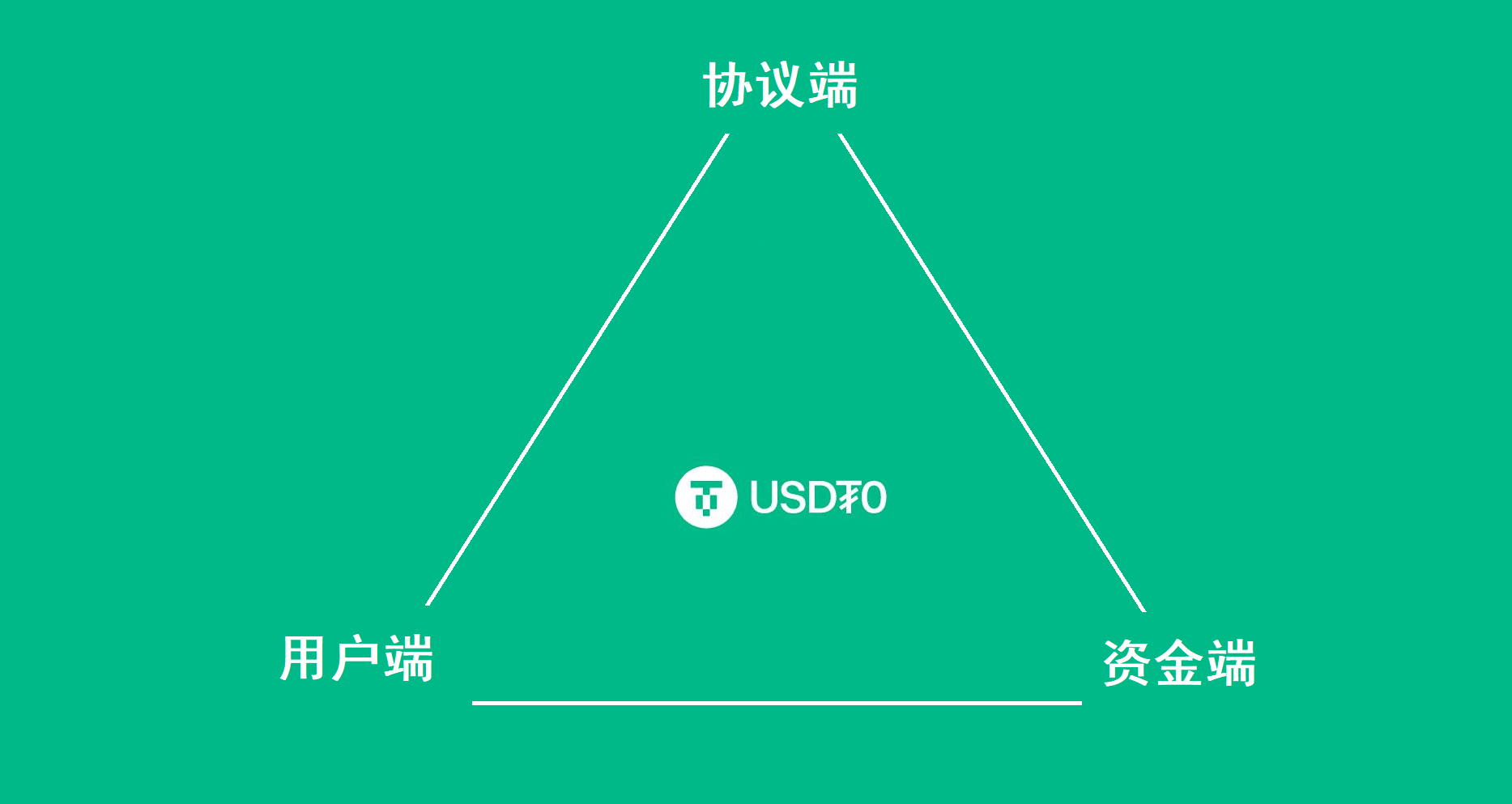
● Funding side: The 700 million USD pre-deposit before the mainnet peaked at 6.3 billion USD in March;
● User side: The number of active users increased from less than 100,000 to 250,000;
● Protocol side: DEX, lending, and derivatives protocols are built around deep integration with stablecoins.
At the same time, the entry of new stablecoins like USD0 and USDT0++ has further promoted the integration of RWA assets, cross-border clearing, and institutional funds, making Berachain more attractive in the capital market.
Four, global comparisons and outlook
In Q3 2025, the global DeFi market growth rate is about 41%, while Berachain achieved over 50% growth. Its cross-chain inflow exceeded 880 million USD, with stablecoin TVL accounting for over 80%.
Compared to Solana's 35% TVL growth rate during the same period, Berachain's advantages in capital efficiency and stablecoin integration are more prominent. If estimated with a 12-15x TVL/FDV multiple, Berachain's potential FDV could reach a range of 7-10 billion USD.
Looking ahead, the competition among stablecoins will shift from 'market share competition' to a contest of 'whether they can become chain-level infrastructure'.
The combination of Berachain and USDT0 provides a model for this trend:
● The yield attributes of stablecoins enhance capital stickiness;
● The ecological penetration of stablecoins enhances protocol reusability;
● The cross-chain capability of stablecoins amplifies Berachain's global competitiveness.
Conclusion:
Berachain is reshaping the capital efficiency logic of DeFi with the combination of 'PoL + stablecoins'. The 'secondary evolution' of stablecoins not only changes the way users utilize funds but also makes Berachain the most representative growth model in the new cycle.