
An internal Russian document reviewed by Bloomberg reveals that the Kremlin has prepared a set of proposals that may open the door for Russia to use the U.S. dollar again, as part of a potential broad economic partnership with the administration of U.S. President Donald Trump.
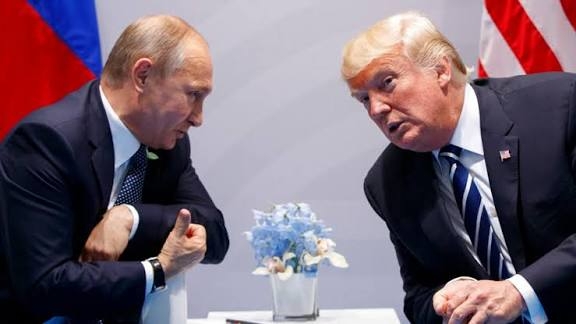
The high-level memo, prepared during the current year, outlines seven points where Moscow believes that Russian and American economic interests could intersect, following an agreement to end the war in Ukraine. These points include cooperation between the two countries in supporting fossil fuels at the expense of green alternatives, along with joint investments in natural gas, offshore oil, and vital raw materials, as well as significant potential gains for American companies.
The document, which was circulated among several senior Russian officials, reveals insights and tactics that have not been disclosed before from within the Kremlin, at a time when potential economic agreements between the United States and Russia are a key element in any future peace settlement concerning Ukraine.
At a moment when Russia is planning to return to the dollar system after years of attempts to abandon it, understanding the major geopolitical shifts becomes an utmost investment necessity.
Russia's return to the dollar 💵 is at the core of the offer
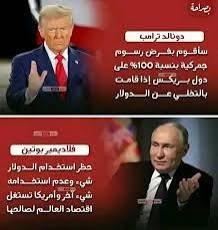
These proposals revolve around Russia's return to the U.S. dollar settlement system, a step that represents a radical shift in the Kremlin's monetary policies and a practical retreat from the path of reducing reliance on the dollar, and from previous bets on creating an alternative unified currency within the BRICS bloc, which could directly impact the balances of the global financial system and redraw the map of international financing.
The United States had already proposed the idea of gradually lifting sanctions imposed on Russia as part of any potential peace agreement, which is a prerequisite for Moscow's return to dollar transactions. However, what the Russian memo contains goes far beyond that.
So far, the search for alternatives to the dollar, rather than a return to the U.S.-led financial system, has been a central goal of Russian policy, especially as President Vladimir Putin seeks to deepen the partnership with China. For this reason, Western officials who reviewed the content of the document believe that the likelihood of Putin ultimately entering into an agreement that contradicts Beijing's interests seems extremely weak.
Political reservations and ambiguity regarding Moscow's official position
It remains unclear whether Moscow has officially offered any of these provisions to the U.S. side.
Long before the full-scale invasion of Ukraine in 2022, Putin was working to reduce the Russian economy's dependence on the U.S. dollar, as part of a trend led by economic powers competing with the United States to limit its global financial dominance.
The justification for this approach became clear when the United States and its allies used their control over the dollar transaction system to impose sweeping sanctions on large sectors of the Russian economy following the outbreak of the war, prompting Moscow since then to seek to expand its trade using alternative currencies and systems, particularly with China and other countries like India.
On this basis, returning to the dollar settlement system means, from a certain perspective, Russia's subjection once again to U.S. financial dominance, and a retreat from efforts to make the Russian economy less vulnerable to pressures coming from Washington.
In contrast, this step could represent a significant political gain for the Trump administration if it is indeed aimed at weakening the relationship between Moscow and Beijing.
Some provisions of the plan also seem carefully designed to align with ambitions previously expressed by Trump in other files, as the idea of compensating American companies for their previous losses in Russia resembles demands previously made by the U.S. president to Venezuela, while the push to confront low-emission technologies, which are supported by Europe and China, aligns with Trump's known positions opposing wind energy projects.
A plan to woo Washington 🇺🇲 and confuse European allies 🇪🇺
Western officials who reviewed the memo believe that some of the proposals contained within it were specifically formulated to deepen the rifts between the United States and its European allies supporting Ukraine.
These officials added that some other provisions are nothing more than long-term promises carrying huge numbers that may be enough to entice the U.S. president into a deal, but they may ultimately not see the light of day, stressing that they prefer to remain anonymous given the sensitivity of the document.
They also noted that it is unlikely that the Kremlin 🇷🇺 will actually seek to distance itself from China 🇨🇳, especially since Beijing has become an extremely important supplier of components and raw materials that the Russian economy relies on to support its military efforts, after Western sanctions shut down other sources.
Potential economic gains and messages from Kyiv 🇺🇦
The Russian memo argues that returning to the dollar system will allow Russia to expand its foreign exchange market and reduce fluctuations in its balance of payments. As for the United States, the document indicates that this step will strengthen the dollar's position as a global reserve currency and may help reduce global trade imbalances by aligning energy costs between China and the United States.
In this context, Ukrainian President Volodymyr Zelensky stated in a conversation with a group of journalists earlier this month that the United States and Russia are conducting discussions about massive bilateral economic agreements alongside ongoing peace talks with Kyiv.
Zelensky clarified that the information regarding the Russian offer, named the Dmitriev package after the chief Russian negotiator Kirill Dmitriev, was gathered by Ukrainian intelligence agencies, noting that Dmitriev also heads the Russian sovereign wealth fund.
#BRIKS #TRUMP #ZelenskyPutinTalks #dollar $USDC
 BTC66,722+0.35%
 USDC1.0006+0.01%