
Three months ago, when a friend contacted me, there were only 5000 USDT left in the account, and it was about to collapse. I just said, 'Don't think about getting rich quickly; let's aim for three times first.'
He followed the advice, steadily progressing for the first seven days, and on the eighth day encountered a bullish line, earning 9,800 USDT. He messaged me saying, 'Finally seeing recovery.'
I do not become an internet celebrity, nor do I make money by cutting leeks. I focus on one thing — helping people stabilize their position flips.
Core logic: In the cryptocurrency market, it’s not about technology, but rhythm and execution power.
Technical analysis? Retail investors using it is just self-deception. I have seen too many people fail due to 'over-leveraging, chasing prices, and betting on rebounds' — leveraging 10 times on altcoins, a single bearish line can lead directly to zero.
The key to flipping positions is three points:
Control your position: no more than 15% of your principal per order, use profits to increase your position;
Set fixed take profit and stop loss: withdraw principal after earning 5%, cut losses immediately after losing 3%, don't make 'fantasy orders';
Follow the rhythm: only trade mainstream coins (BTC, ETH), small altcoins should only be hedged, not heavily invested.
Recently, one of my brothers, who had previously lost 100,000 USDT, followed me for 7 days:
In the first three days: use 1000 USDT as the principal, control each order within 150 USDT, focusing on BTC pullbacks, and earn 3%-5% before exiting;
On the 4th day: encounter a small rebound in ETH, use the profit of 200 USDT to increase the position, set a stop loss, and lock in 8% profit;
On the 7th day: the principal has been withdrawn to 3000 USDT, and the remaining profits are rolled into SOL, encountering a major upward wave, directly multiplying by nearly 10 times.
There are no miracles; only execution power of 'not greedy, not panicking, and not chaotic'.
To be frank:
Whether you believe me or not is not important; what determines whether you can recover your losses is whether you believe in 'locking in profits'. Those who criticize me are still using 10x leverage to gamble on altcoins; those who follow me have already etched the word 'stability' into their trading.
The cryptocurrency market is not a casino where individuals play alone; it is a battlefield where a group of people synchronize their rhythms. Want to change the bad habits of over-leveraging and chasing prices? Want to learn the technique of 'playing with profits' for flipping positions?
Next order, let's take the 'stability' to heart — opportunities are reserved for those with discipline.
The cryptocurrency market is always full of opportunities; what is lacking is execution. The methods are very simple; the hard part is execution.
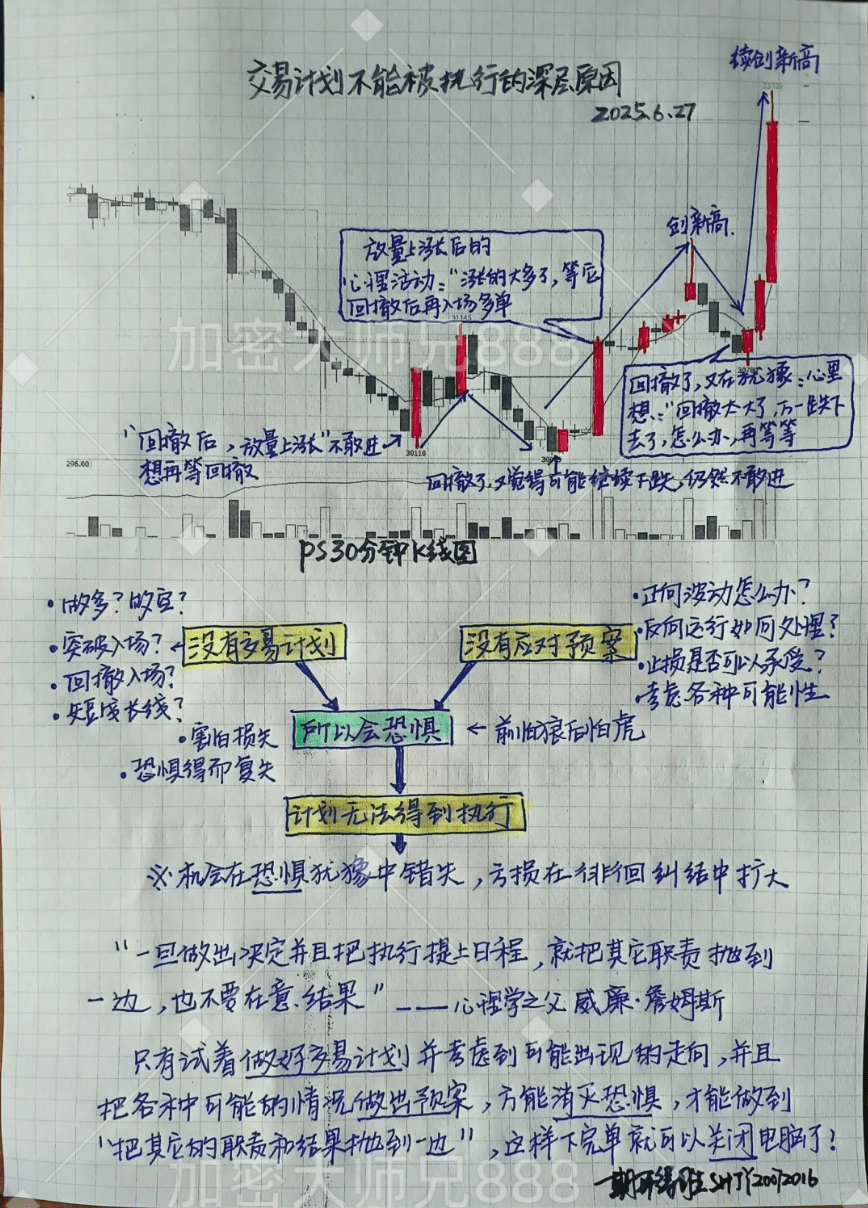
If your funds are within 50,000, and you want to succeed quickly in the cryptocurrency market through short-term trading, please read this post carefully. After reading, you will surely have an epiphany about the essence of short-term trading!
I was born in '87, and I've been in the cryptocurrency market for 11 years. I have been a full-time cryptocurrency trader supporting my family for 5 years!
Not choosing finance or computer science in college is a great regret in my life. I started engaging with Bitcoin and blockchain online a long time ago; the magical K-line charts and disruptive concepts captivated me. With infinite expectations for the crypto world, I participated in trading early on, thus starting this journey full of challenges and opportunities.
Like most friends who have just entered the market, they often become fascinated with various technical indicators and on-chain data, continuously backtesting and trying to find the 'holy grail'; they are keen on bottom-fishing for 'low-priced' altcoins or those that have already dropped more than 90%+, thinking their 'margin of safety' is higher. The cruel reality tells me that most of this initial understanding of the market is erroneous and dangerous.
Only later did I deeply understand: If you want to quickly and relatively controllably achieve profits in a highly volatile, 24/7 market, focusing on short-term hot trends is almost the only viable path (for small funds). The core of short-term trading lies in identifying the mainstream narrative tracks of the market and accurately grasping the sentiment cycle. The mainstream narrative nurtures leading coins, and the explosive rise of leading coins reinforces and spreads that narrative. The coins that contribute the most to your account, with the highest efficiency, are often those leading coins at various stages of the cycle. In the raging bull market of 2021, I captured the most rapid upward waves of my career in leading coins like SOL and MATIC.
Buying the same coin at different stages of market sentiment and narrative cycles leads to vastly different results! The sentiment cycle tells you: when you can boldly strike, even leverage (with caution!); when you must hold back, or even short (if capable); when you should completely exit and observe. The mainstream narrative of the market tells you in which direction the funds are aggressively attacking (is it AI, MEME, new public chain, or Layer 2?). This is the correct top-down speculative mindset. Unfortunately, many friends have completely reversed this, going against the market sentiment, resulting in being ruthlessly harvested.
There is a saying that has left a deep impression on me: 'The high ground of mental cognition, if you do not occupy it, FUD (fear, uncertainty, doubt) and FOMO (fear of missing out) will occupy it.'
Today, the short-term survival and offensive mindset I share with you in the cryptocurrency market is the core logic that supports my survival and continuous profitability in this market, which is even bloodier, faster, and more unpredictable than the stock market. If you can calm down to understand, practice, and ultimately internalize it, your understanding of 'trading cryptocurrencies' will undergo a tremendous transformation!
Stay close to Bitcoin's fluctuations
Bitcoin is regarded as the barometer of the cryptocurrency market, and the fluctuations of most small altcoins are influenced by it. Coins like Ethereum, which have a strong conceptual logic, may occasionally deviate from Bitcoin and create unilateral trends, but other altcoins generally cannot escape Bitcoin's 'control'. Therefore, closely monitoring Bitcoin's trading fluctuations can provide important references for trading other coins.
Seize the golden moments of trading
From 12 AM to 1 AM every day is a special trading period in the cryptocurrency market, where the phenomenon of 'scooping gold rays' is likely to occur. This is the trading volume period for most parts of the world, and all sorts of unexpected situations may arise. Friends who want to buy at a low price or sell at a high price can place a super low buy order before sleeping or set an ideal price for selling while lying down; you might just get lucky and have a successful transaction.
Pay attention to USDT price trends
Generally, USDT and Bitcoin move in opposite directions. When USDT rises rapidly, you should be alert for a potential Bitcoin crash; conversely, when Bitcoin rises, it is often a golden buying point for USDT. By grasping the relationship between the price movements of the two, better trading decisions can be made.
Pay attention to the financial news of various countries' central banks
The volatility in the cryptocurrency market is deeply influenced by various governments' attitudes towards Bitcoin. If the government takes measures to suppress or control it, the market will likely decline. In addition, fluctuations in US financial policies, such as the recent news of taxing the wealthy, will also have a significant impact on the cryptocurrency market. Therefore, paying attention to the financial news of various countries' central banks daily is an essential task for cryptocurrency traders.
Grasp key time periods
Every morning from 6 AM to 8 AM is a critical period for determining buy and sell decisions, and it can also be used to judge the trend of that day's fluctuations. If the price has been falling from 12 AM to 6 AM and continues to fall during this period, it is a good time to buy or add to positions; the market is likely to rise that day; if it has been rising from 12 AM to 6 AM and continues to rise during this period, then it is a selling opportunity; the market is likely to fall that day.
Pay attention to “Black Friday”
There is a saying in the cryptocurrency market about 'Black Friday', where significant drops often occur on Fridays, though there can also be sideways movements or surges. While not particularly accurate, it is still necessary to pay a little attention to the news.
Value trading volume
Trading volume is the lifeline of digital currencies. For cryptocurrencies with a certain trading guarantee, if the price drops, there is no need to worry too much; patiently holding has a high probability of recovering. It may take as little as a week or as long as a month. If you have extra funds, you can add to your positions in batches to lower the average cost, which will speed up recovery; if not, just wait patiently, and it often won’t let you down.
Avoid frequent trading
For the same cryptocurrency, trading spot purchases for a long-term hold usually yields much greater returns than frequent trading, which tests investors' patience. Frequent trading can not only increase transaction costs but also easily lead to erroneous decisions due to emotional fluctuations.
The application of K-line moving averages
In cryptocurrency trading, K-line theory has certain applicability, but not all indicator analyses are useful. Although the accuracy of K-line technology is not 100%, many people find it not very useful after learning it. In fact, according to the experiences of many experts, K-line technology plays a key role in analyzing the long-term trends of cryptocurrency prices. No matter which direction the price goes, it will be reflected in trading, and we can use these techniques to understand price movements.
Moving average rules: build a trend framework
In the trend cycle of the 1-hour chart, we can use three EMA moving averages to build a trend framework: the fast line 21 represents short-term momentum, the middle line 55 reflects mid-term direction, and the slow line 144 defines long-term trends. When the moving averages show a 'fast line > middle line > slow line' bullish arrangement, the market is in a strong upward cycle; conversely, it is dominated by bearish trends. This arrangement can effectively filter noise; even if the moving averages turn, as long as the order of arrangement does not change, the trend direction remains valid.
However, the moving average has the disadvantage of lagging. We can compensate for this with the 'trend K-line confirmation' mechanism: when the price breaks through the moving average arrangement, wait for a 15-minute chart to show the same direction K-line (such as a bullish trend's big bullish line) before entering, which can avoid false breakouts and capture trend acceleration stages. The choice of parameters also has its logic; the 21-period corresponds to monthly fluctuations, the 55-period fits quarterly trends, and the 144-period resonates with annual lines. This combination has a stable win rate of over 65% in historical backtesting of foreign exchange, futures, and other varieties, with a profit-loss ratio of 1:2.3.
The support and resistance role of moving averages
Important parameters of moving averages have support and resistance roles. When the market tests important parameters of moving averages from below to above, it may face pressure, with expectations of a pullback or reversal downwards; when the market tests important parameters of moving averages from above to below, it may gain support, with expectations of a pullback or reversal upwards. In practice, we can choose these important parameters of moving averages, combined with some reversal structures or patterns for trading.
For example, in the ETH/USDT one-hour chart in May 2024, when EMA 21/55/144 shows a bullish arrangement, but the price continuously tests and touches the 55 moving average three times without breaking. At this point, observe the 15-minute chart, noticing that each test is accompanied by shrinking trading volume and a doji candlestick pattern, which is a typical 'trend continuation signal'. Ultimately, ETH breaks through the previous high, with a single wave increase of 37%.
Moving average crossovers to judge trends and entry timing
The cross of moving averages is also a commonly used analysis method. Add two moving averages on the chart, with the smaller parameter being the fast line, changing quickly; the larger parameter being the slow line, changing slowly. There are two main uses for moving average crossovers: one is to determine direction; when the slow line crosses above the fast line, it's a confirmation of a bullish trend; when the slow line crosses below the fast line, it's a confirmation of a bearish trend. The second is to determine entry signals; when the slow line crosses above the fast line, it’s a signal to enter a long position; when the slow line crosses below the fast line, it’s a signal to enter a short position.
For example, in a certain hourly K-line chart of spot gold, when the K-line drops below the moving average, judge the trend to be bearish, wait for the K-line to retrace and face resistance at the moving average without breaking it, then break the previous low again to enter a short position, setting the stop loss at the high point of the retracement. After the first order is executed, if the market experiences a decline and retraces to the moving average, facing resistance, and after breaking the low again, you can enter an additional position.
Combining moving averages with other indicators
Moving averages can be combined with indicators like Fibonacci retracement and MACD to improve the accuracy of trading decisions. For example, after confirming direction with moving average crossovers, the market usually has already moved a certain distance, making the entry profit-loss ratio potentially unreasonable. By combining with Fibonacci retracement, you can find key positions for trend pullbacks to enter trades, with smaller stop-loss space and a more reasonable profit-loss ratio.
For example, when the market tests the moving average with reversal expectations, if MACD also shows a divergence pattern, it forms a resonance for market reversal, allowing you to enter with smaller moving averages. This way, the stop-loss space is small, and if the market goes well, the profit-loss ratio will be relatively ideal.
Trading is a long-term practice. To gain in the cryptocurrency market, you must follow the rules and build your trading system. I hope this cryptocurrency trading strategy can provide useful references for everyone in their trading in the cryptocurrency market. I wish everyone can achieve satisfactory returns.
Here comes the key! Next, I will share the application of K-line moving averages. We all know the importance of K-lines in the stock market.
In the cryptocurrency market, these K-line theories only apply to a portion, and not all indicator analyses are applicable.
Although the accuracy of K-line technology is not 100%, and many K-line knowledge points seem less useful after learning,
In fact, based on the experiences of many experts, K-line technology plays a key role in analyzing the long-term trends of coin prices.
Regardless of which direction the coin price is going, it will be reflected in trading, and we can use these techniques to understand.
The movement of the coin price and K-lines speak of probabilities, guiding you to a bright path when you feel lost.
Without further ado, let's get to the point.
Today, I mainly want to share foundational indicator strategies:
1. Moving average usage and settings.
2. RSI Indicator + Usage 3 Value Investment
1. How to use moving averages to judge trends
1. First, let's learn how to set the indicators.
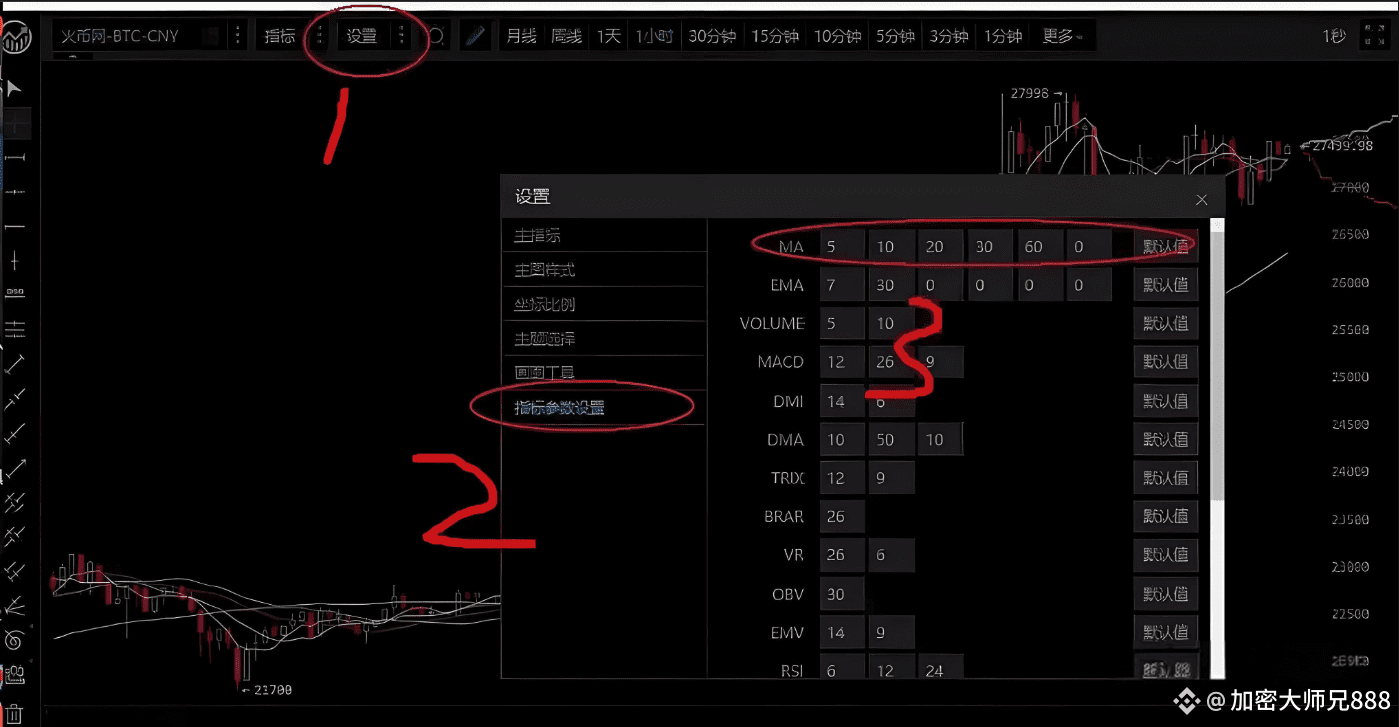
Due to some updates set by Huobi, if you can't find it, you can directly click on the line with the mouse.
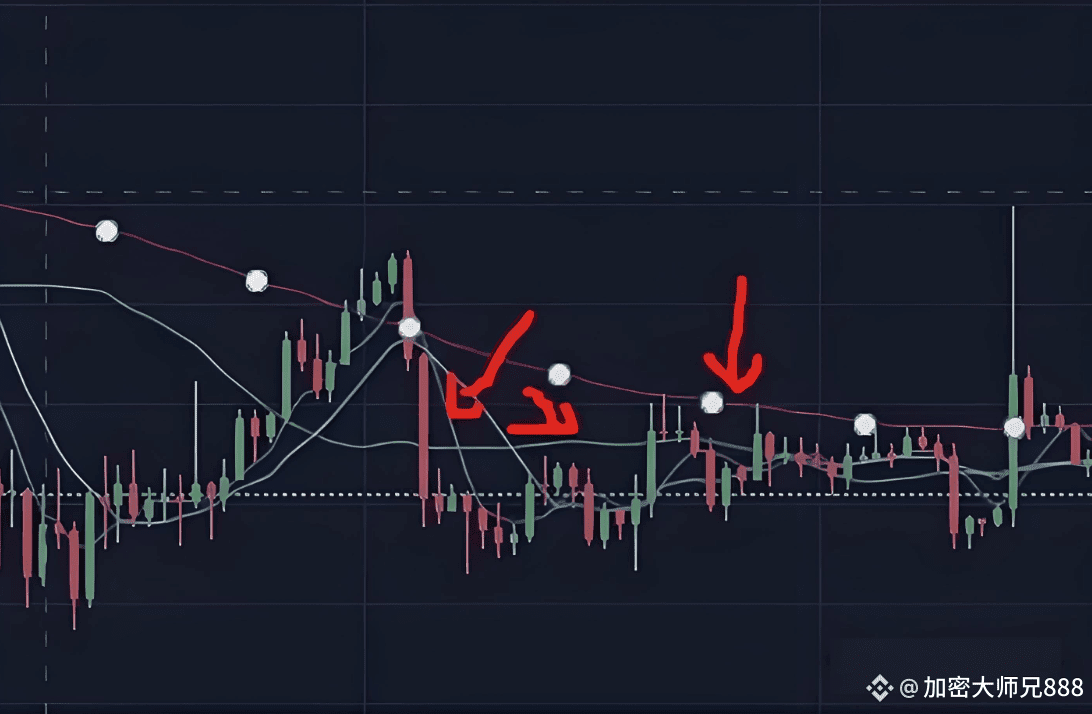
You can see these lines; click directly on the line to modify it.
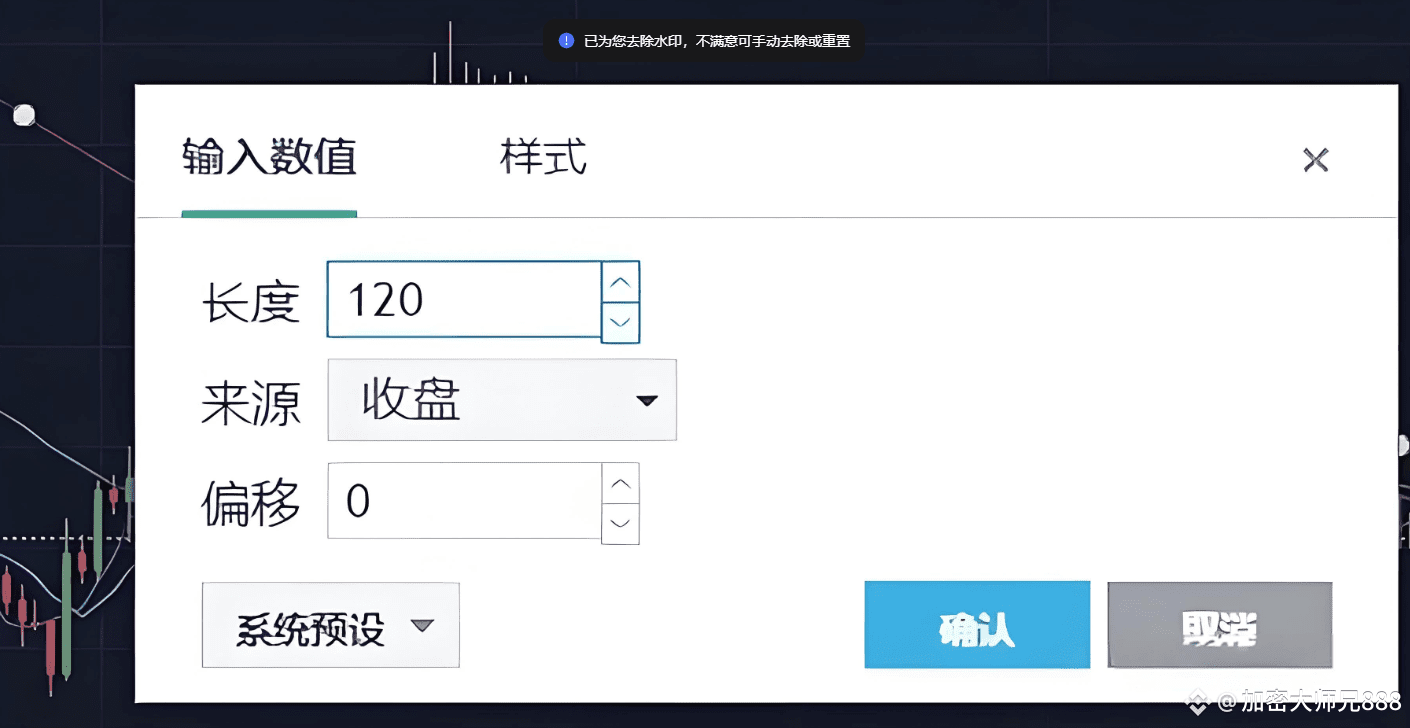
After clicking here, you can directly modify. The moving averages we need to use include: the 5-day moving average, the 30-day moving average, the 60-day moving average, and the 120-day moving average.
If you find it not useful, you can even change the 5-day moving average to a 4-day moving average, as the market reacts more swiftly.
2. Short-term moving average indicators: 5-day moving average strategy.
The commonly used short-term indicator is the 5-day moving average. What is the 5-day moving average? The 5-day moving average is the sum of the closing prices over five days divided by five. Generally, the system is set up to be
Weekly lines are, in short, also based on the weekly average price as the moving average, but a week's time is too long, and the reflection is relatively slow. Of course, there is also
The four-day moving average used by experts and so on can be visually displayed through settings. The 5-day moving average is the most practical for short-term judgments.
The 5-day moving average represents the average holding price of everyone over five days, indicating buy and sell signals within this period and reflecting what people can psychologically bear.
Surrounding, the average holding cost. The same applies to moving averages.
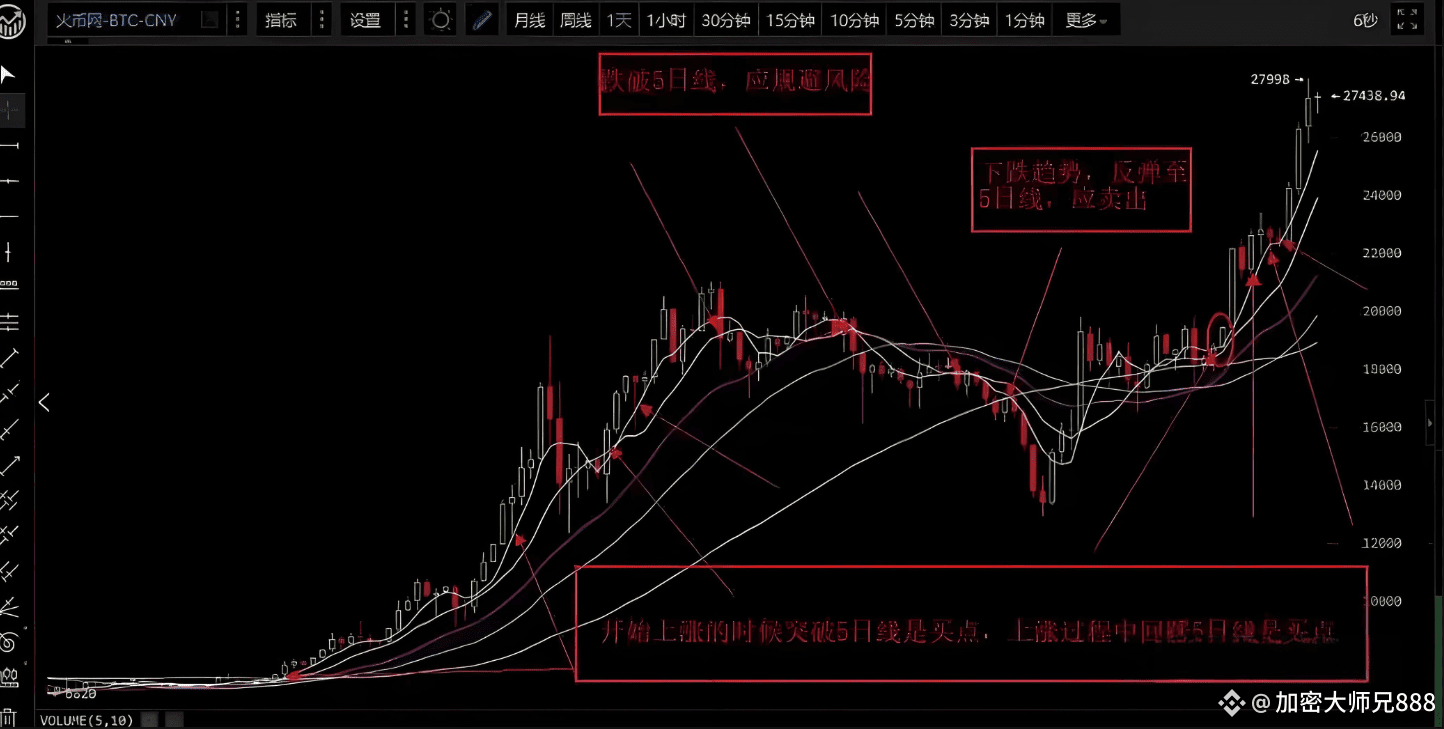
Usage: In a bull market, when the price retraces to the 5-day moving average, it’s time to increase your position (if it quickly breaks through, you should observe); in a bear market
When the price drops below the 5-day moving average, you must sell immediately; as long as it doesn't break the 5-day moving average, there should be no major issues. During the fluctuation period, you can observe the 1-hour line.
And the 4-hour line, this is the short-term usage.
This theory requires a lot of exploration from everyone, as very few people will tell you that you will encounter many problems in practice, which requires you to explore more.
Verification shows that the 5-day moving average strategy is very useful in practice and is one of the indicators that short-term experts must rely on.
Why use the 5-day moving average? There is a saying: a day in the cryptocurrency market is equivalent to a year in the human world; the market reacts particularly quickly. If you use the conventional 7-day moving average, it will be
Relatively slow, unable to keep up with the changes in market direction. We all know that there is no limit to the fluctuations in the cryptocurrency market, and it can even be 24 hours
While trading.
If using the 5-day moving average as the judgment standard, then when the price reaches the 5-day moving average, it will form a support level. If sold, it will break below the 5-day moving average.
Once you have to wait to return to the cost price, you can only wait, and this point also forms a support level.
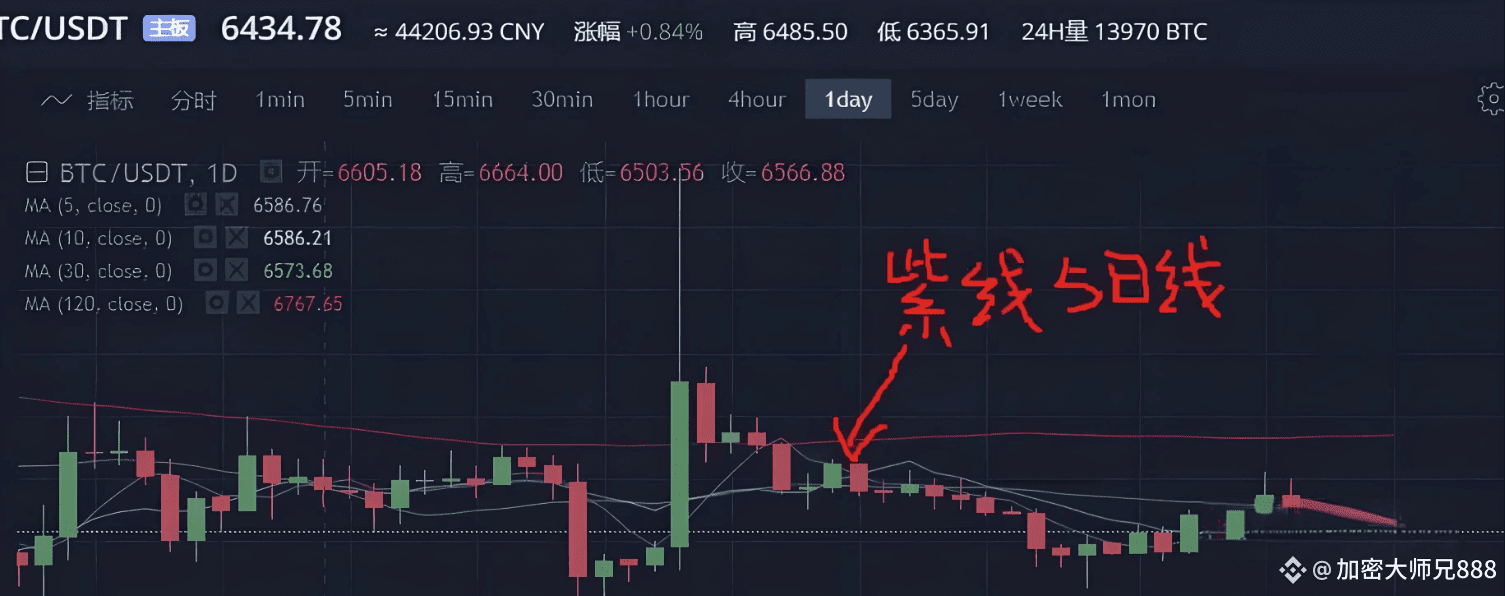
It shows that the current price has still not stood above the 5-day moving average, and there are many uncertainties. At this time, we should use the hourly and four-hour lines.
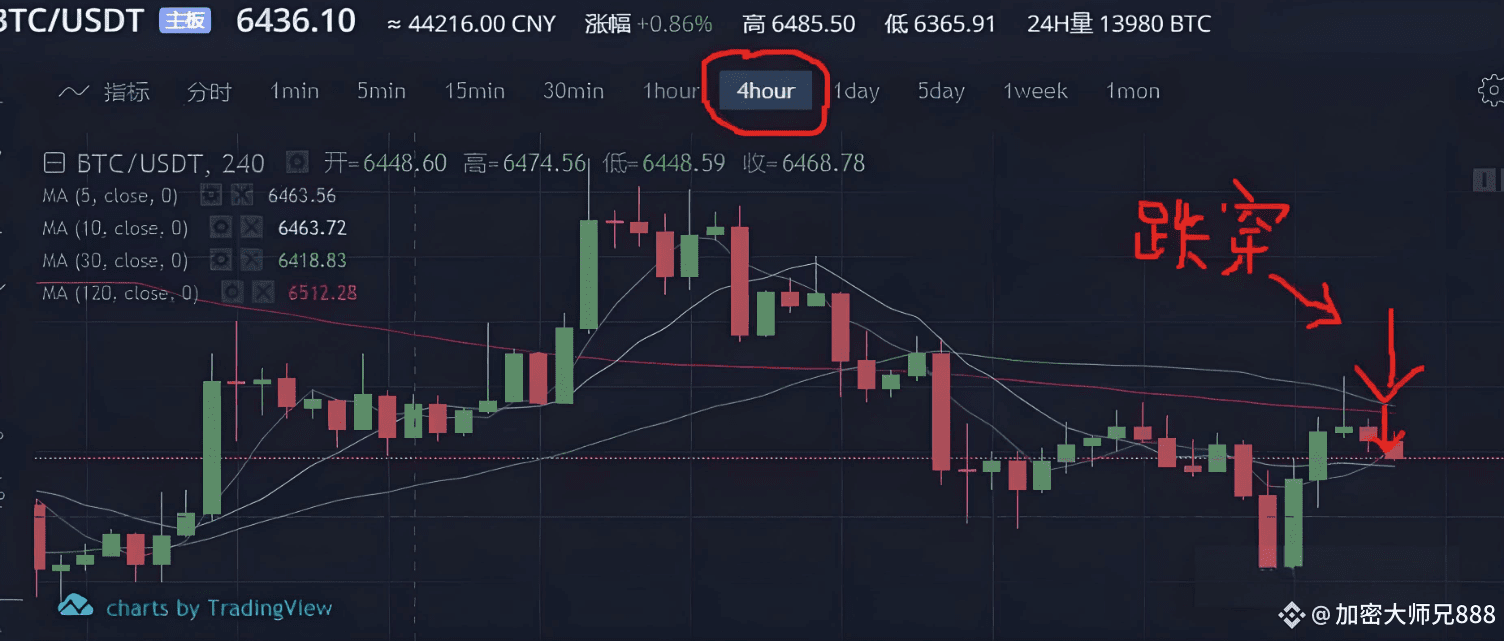
Practical summary: This strategy primarily uses short-term indicators. When approaching the moving average, which is also everyone's cost price, selling pressure decreases, so it is relatively.
The price will rise again; if it deviates too much from the moving average, the probability of adjustment will increase, mainly as investors choose to arbitrage, leading to
Price drop.
3. The 30-day and 10-day moving averages combined with short-term strategies:
The 30-day moving average is also a short to medium-term strategy. If you are not that fond of trading, we recommend this strategy for you.
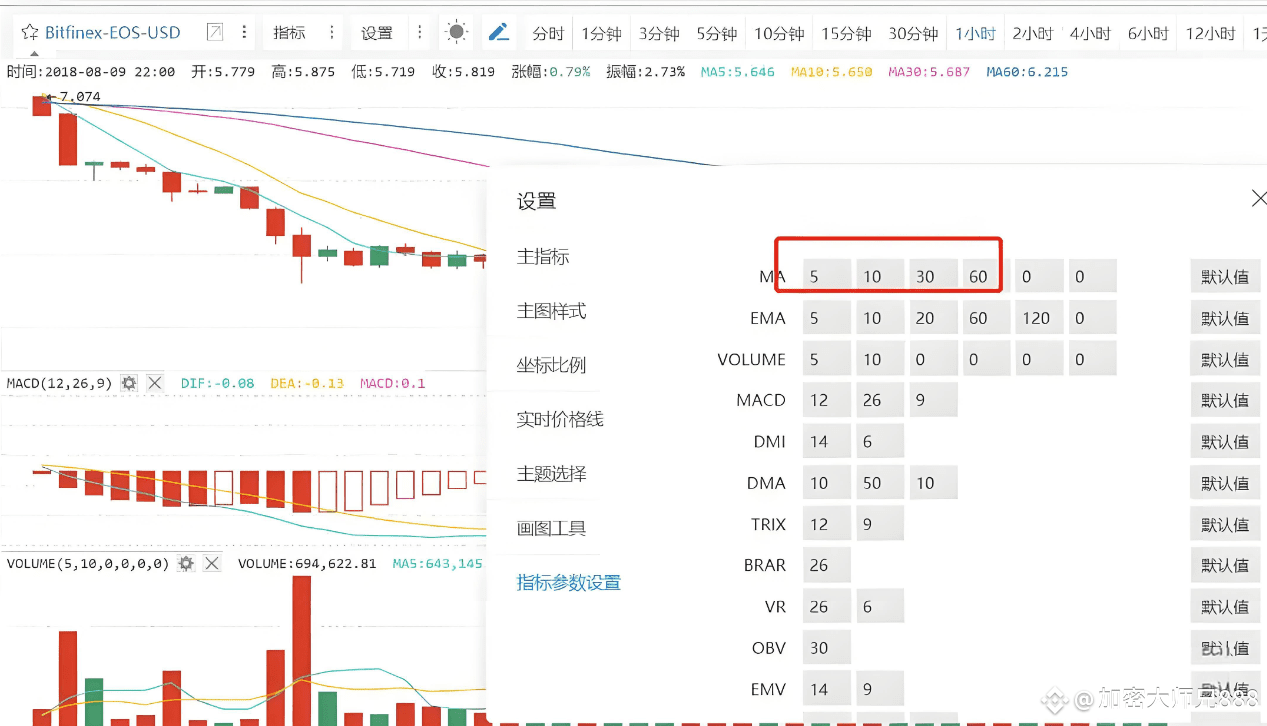
As usual, if you previously followed my settings: 5-day moving average, 30-day moving average, 60-day moving average, 120-day moving average, change the 60-day moving average to the 10-day moving average.
line. Because this set of indicators only involves the 10-day and 30-day moving averages.
This set of indicators is relatively simple to use: sell when it drops below the 10-day moving average, buy when it breaks above the 30-day moving average. The time frame is changed to one hour, as detailed in the chart:
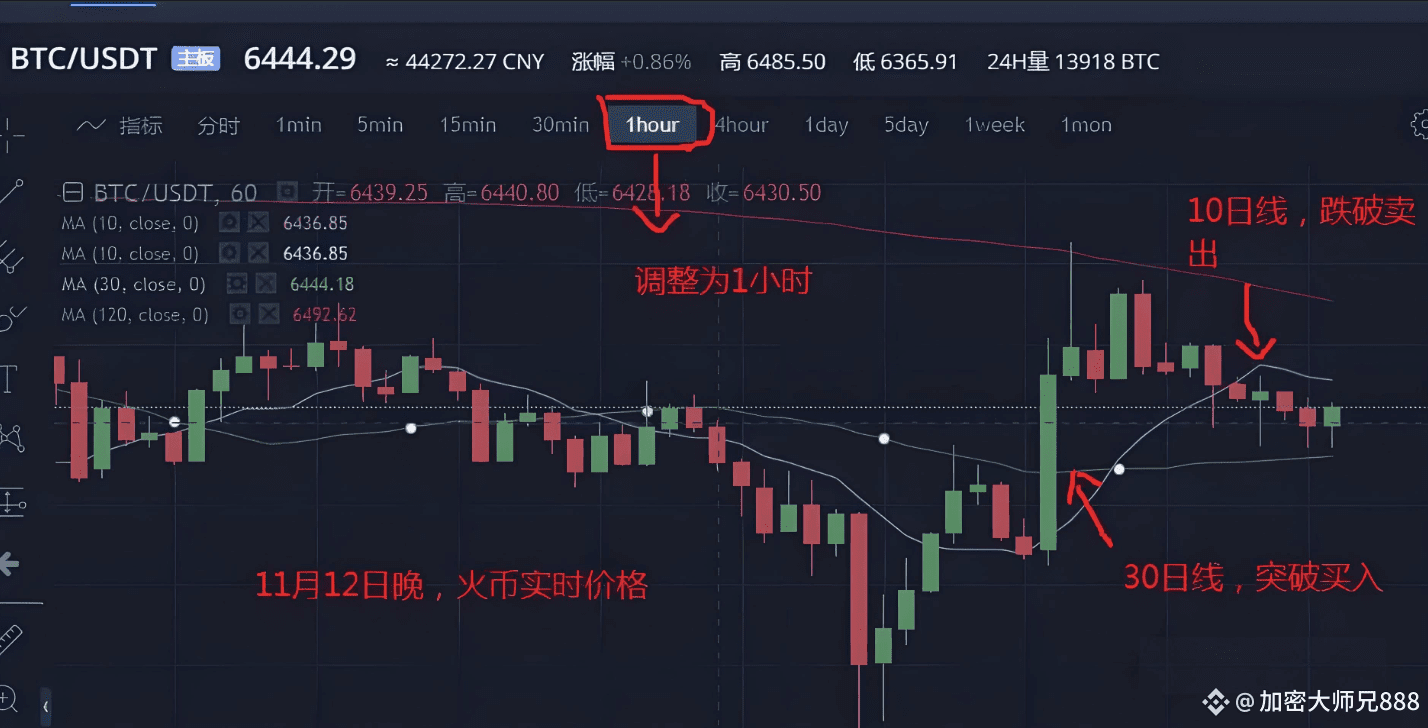
This theory is similar to the 5-day moving average; the 30-day moving average is for short to medium-term trends, set to one hour, which becomes a short-term buying point, while dropping
Breaking below the 10-day moving average opens up a short-term downward channel. By combining in this way and applying it in practical situations, the effect is significant.
4. Medium to long-term strategies: 60-day and 120-day moving averages.
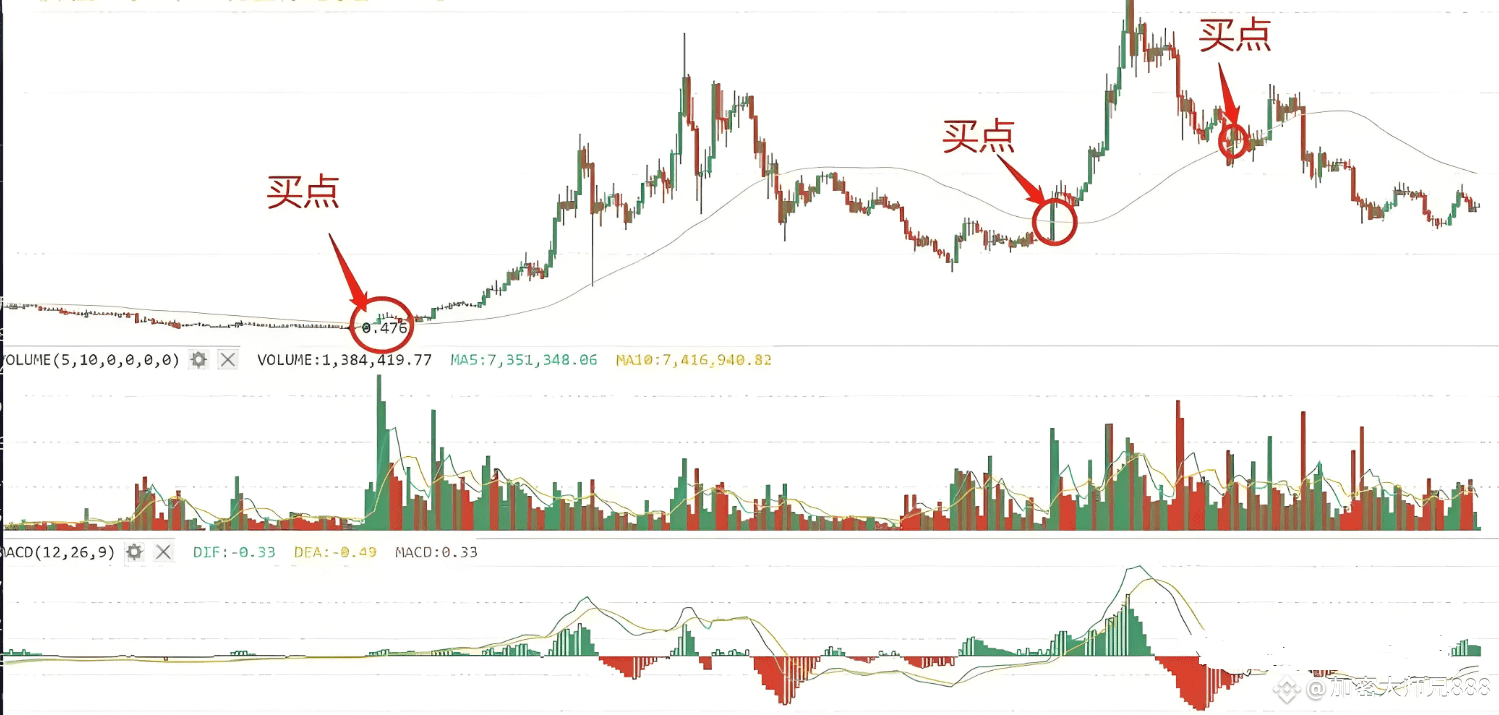
This chart shows the trend of EOS. It is said that some investors trade a few times a year using the 60-day moving average to bottom out, which is a stable investment method suitable for those who do not have time for operations.
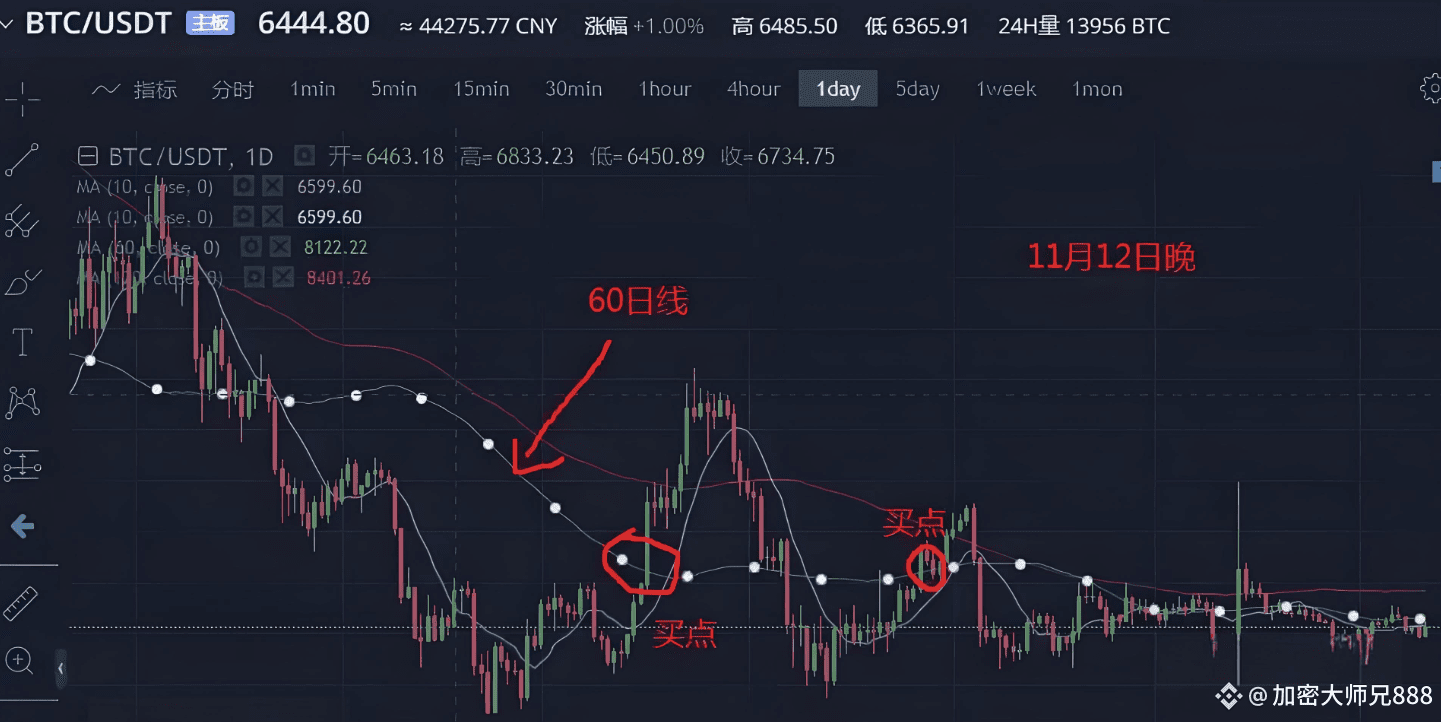
When it comes to the 120-day moving average, it serves as the dividing line between bull and bear markets.
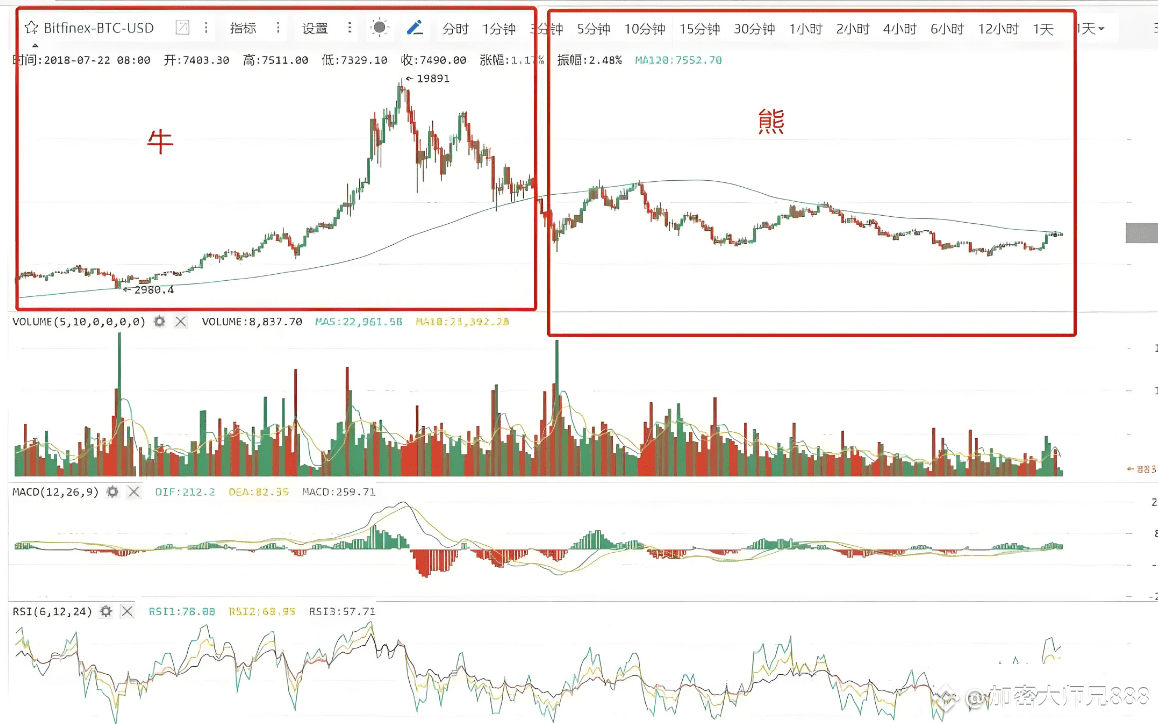
So how to use the 120-day moving average for investment?
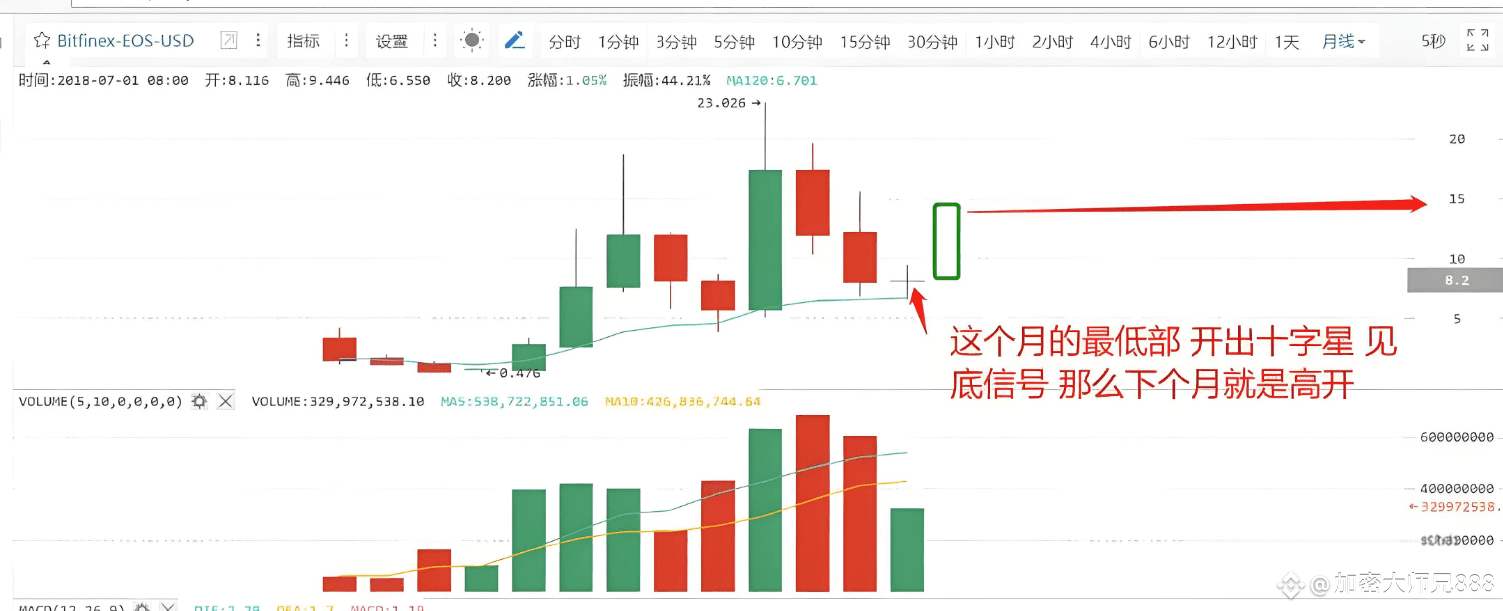
This was the previous technical chart, and according to the current market, it has never crossed the 120-day moving average. The usage of the 120-day moving average is actually to determine long-term
Technical indicators of trends are also a reference in daily trading. This bear market has not yet ended, and once it crosses the 120
The daily line is an indicator to judge the arrival of a bull market.
We often see what various experts refer to as pressure and support levels, which actually correspond to moving averages. When analyzing the overall trend, long-term investments in
Then, you cannot rely on the 5-day moving average strategy; the main reference moving average for bull and bear transitions is the 120-day moving average.
5. Box wave analysis looks at pressure and support.
This is from Elliott Wave Theory*, which provides a good explanation for wave trading. Many novices in the stock market have relied on this theory.
Having swept the stock market for many years, whether it is practical or not remains to be seen; after all, seeing is believing. Here we will briefly introduce the support and
Pressure level.
When the coin price operates within a certain box, the waves formed, where each wave's highest point is on a line, are pressure levels, and the wave's bottom
Connecting parts into a line serves as a support level. The general judgment is that a breakout may lead to a higher surge; in this case, how should we select?
What to choose? The main point comes from the fundamentals, which is to release good news or to have large funds entering the market, allowing one to flow with the tide.
Sentiment; another situation is often a breakout followed by consolidation, which is also quite common, indicating that the funds are unable to push higher or the selling pressure is too large, at which point you should
Be cautious; of course, such a span will be relatively large and can only serve as a reference.
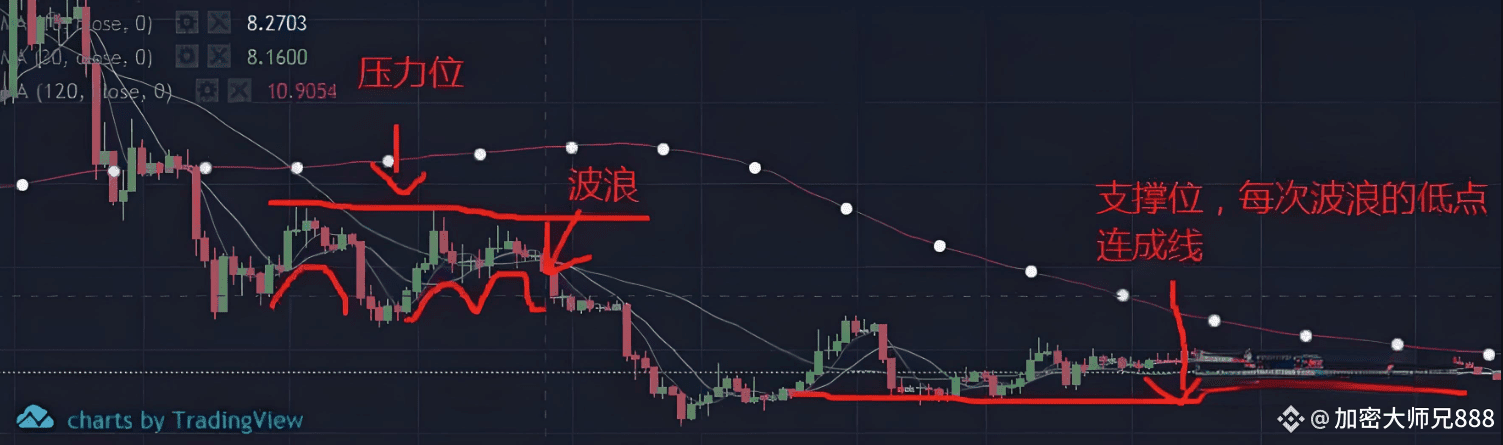
Using box waves to look at each low and high point to judge support and resistance is a relatively common analysis method, brainlessly simple.
but they are not that accurate. You can explore them in practical situations or look at wave theory technical books. Of course, it’s not just
Speaking of which, I've read several good books on wave theory. In practical combat, the effectiveness is not too good, but it doesn't mean that everyone will not see results after reading.
Everything still relies on practical exploration. I prefer practical techniques over conceptual things. What do you think?
6. RSI bottom-fishing and topping-out rules.
RSI is also an old technical indicator in the stock market, and it performs particularly well as a reference in the cryptocurrency market.
The RSI indicator represents a measure of strength, calculated based on the statistics of the price increase and decrease.
The principle of the RSI indicator, simply put, is to calculate the strength comparison between buyers and sellers using numbers. For example, if there are a hundred people buying
One coin, sixty people buy, forty people sell, and the coin price will rise.
So how do we use it? 80 to 100 is a strong sell; 20 to 50 is a strong buy; weak observation 0 to 20 is an extremely weak buy. One
Once a golden crossover is reached, it becomes a buy/sell point.
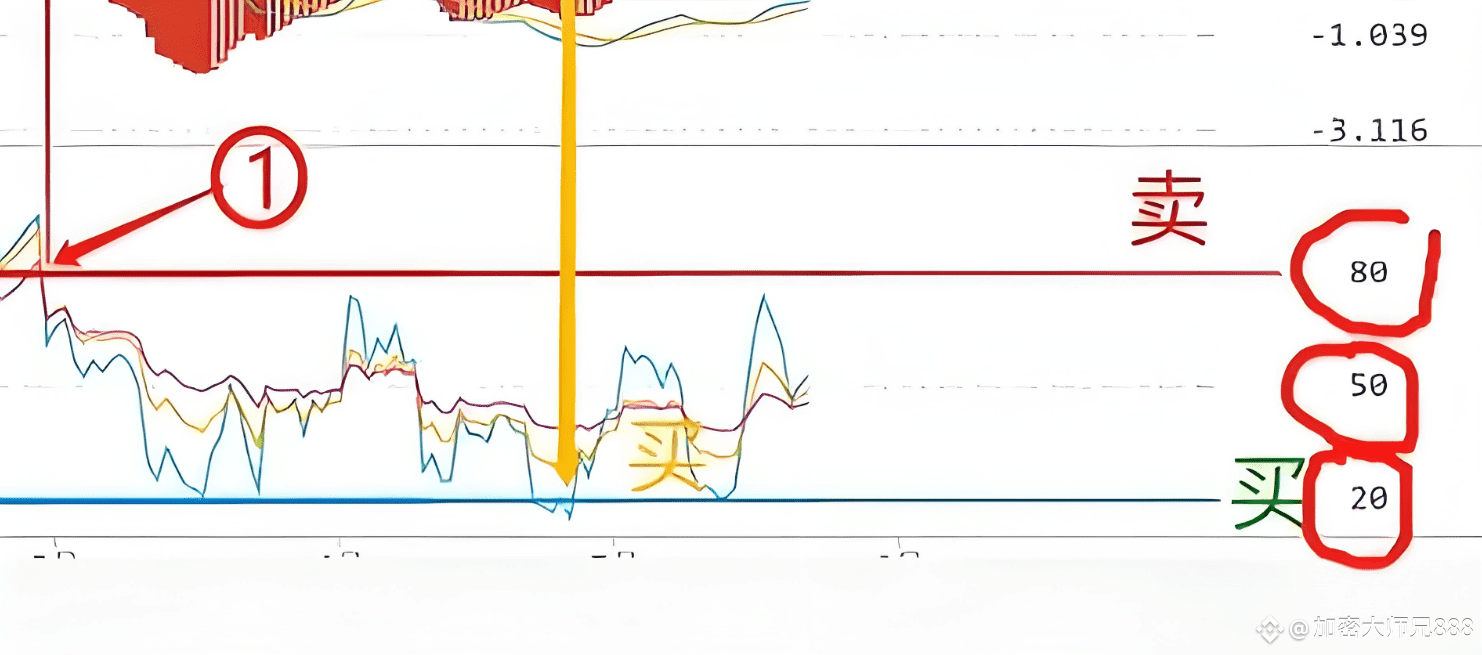
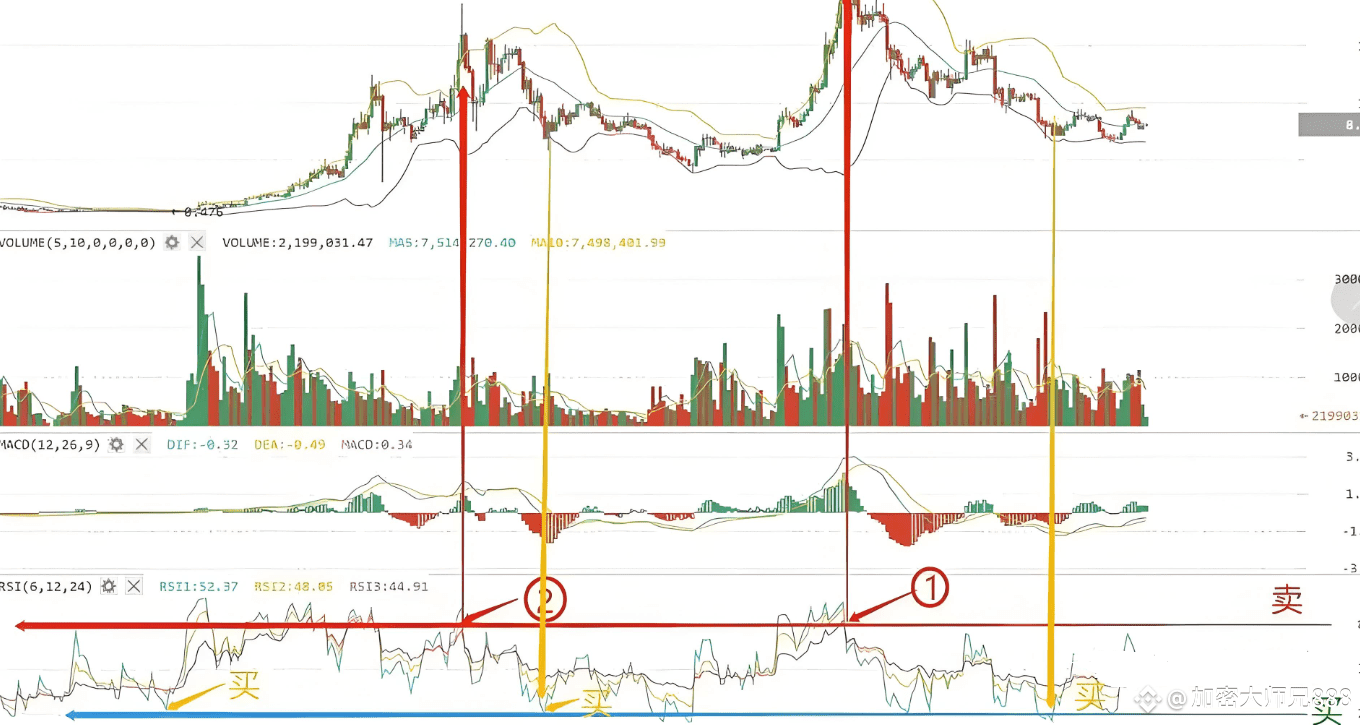
Note, if it reaches 80, there is a significant risk of a pullback. So when should you sell? Sell at the moment it drops below 80; the RSI technique is
After market verification, it has been in use since its research in 1978, indicating its significant reference value, while in emerging coins
In the cryptocurrency market, this set of indicators can also effectively lead you to victory.
Short-term wave segments can choose the one-hour line for operation, achieving wave-top escapes.
Summary: Let's review the five technical indicators we discussed today: the 5-day moving average strategy, the combination of the 10-day and 30-day moving averages, and the middle
The role of long-term strategies like the 60-day and 120-day moving averages, box wave support and resistance levels, and the RSI bottom-fishing and topping-out rules. While the above reference indicators may not be
Many are very simple, but in fact, the simpler the reference indicators, the easier they are to use. In practice, we have introduced five technical indicators to you.
Methods for trading cryptocurrencies, through practical investment, I believe there is always one that can bring you a different investment experience, and there is always one that can become your tool on the path of investment.

You don’t have to stay up late watching the market to guess the trend; you don’t have to worry about whether the buy and sell points are accurate. Only take opportunities where the trend is clear, hold back in a bear market, and maintain positions in a bull market. In the next wave of the market, I will say, let's step in rhythm and profit, letting the profits beat 90% of retail investors! Remember, the cryptocurrency market is not lacking in opportunities, but in the execution to keep up.