#signdDigitalSovereignInfra $SIGN

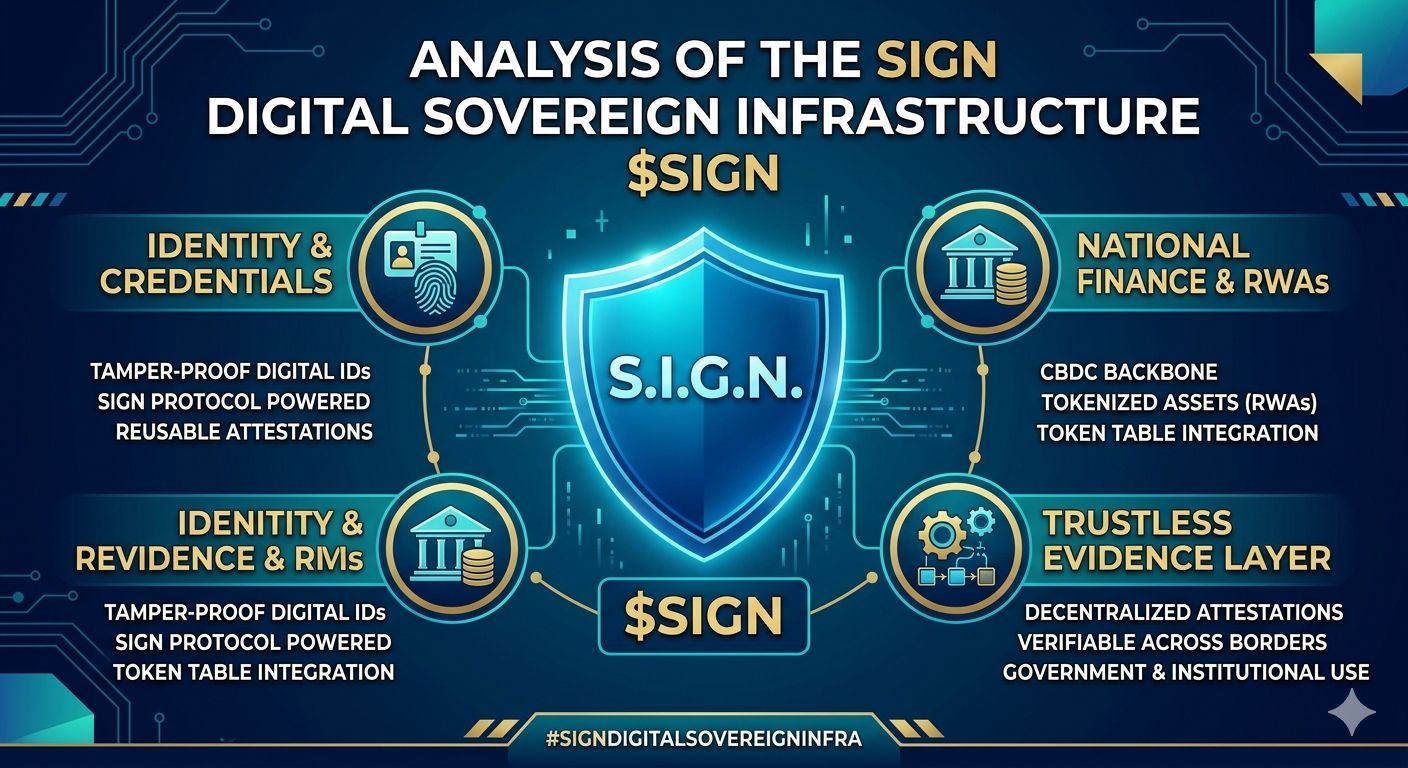
@SignOfficial The project is built on the S.I.G.N. (Sovereign Infrastructure for Global Nations) architecture, which functions as a "digital lifeboat" for essential state functions.
Pillar Function
Identity & Credentials Powered by Sign Protocol, it uses on-chain attestations to create reusable, tamper-proof digital IDs (e.g., SignPass) that don't require repeated verification.
National Finance Provides the backbone for Central Bank Digital Currencies (CBDCs) and national stablecoins, ensuring governments maintain control over their monetary policy.
Capital Management Through TokenTable, it enables compliant token distribution and Real-World Asset (RWA) tokenization at an institutional scale.
Trustless Evidence Creates a standardized "evidence layer" where all data and transactions are cryptographically signed and verifiable across borders.
Strategic Analysis: Why It Matters in 2026
1. The Shift Toward "Verifiable Truth"
Unlike traditional systems that rely on centralized databases (vulnerable to hacks or outages), $SIGN uses decentralized attestations. This is critical for cross-border trade in the Middle East, where institutions require "inspection-ready" evidence that is both transparent and auditable.
2. Regulatory Synergy
The project is designed to be "Compliance-First." It allows for on-chain activity that meets the strict regulatory requirements of jurisdictions like the ADGM (Abu Dhabi Global Market) without forcing users into closed, permissioned "silos."
3. Market Sentiment & Narrative
Narrative Power: $SIGN is currently the lead "horse" in the Digital Sovereignty narrative, which has gained massive traction on platforms like Binance Square.
Utility vs. Hype: While many tokens rely on social media hype, $SIGN is increasingly viewed as an infrastructure play. Its value is tied to the "network effect" of national-level adoption rather than speculative retail trading.
Performance: In Q1 2026, the token saw significant volume spikes as investors rotated from "hype" assets into projects with tangible government and institutional integration.
## Risks & Considerations
While the outlook is bullish, there are two primary hurdles:
Adoption Speed: Government-level integration is notoriously slow and subject to shifting geopolitical policies.
Execution Risk: Building a "national backbone" requires flawless security; any vulnerability in the core protocol could be catastrophic for its reputation as a sovereign-grade tool.
#GoogleStudyOnCryptoSecurityChallenges