
The operator moment that sticks with me is ugly because it is so normal. A payout run is already open. One wallet is already sitting in the table. The proof tied to that row looked fine earlier. Now it does not. You reopen it and the status is bad. That part is easy. The problem starts right after that. Expired is not fraud. Superseded is not disputed. Issuer mistake is not user deception. But if all of them land as the same flat red state, the system is basically telling the operator to improvise the rest.
And that is where real mistakes start. One row should probably wait for refreshed evidence. Another should be replaced and moved forward. Another should freeze immediately. Another might need clawback. Another should go nowhere until somebody investigates. Same red mark on the screen. Totally different next moves. Collapse the reason and the wrong row gets frozen, or the wrong case gets hit with clawback, or support gives the user a neat answer that the record itself cannot actually defend.
That is the part in SIGN that feels real to me. Not the abstract idea that proof can be checked. I care about the moment one proof turns bad in the middle of a live run and the system still has to keep the next step honest. For that moment, I do not need a long stack story. I need two things. I need a control that can actually stop the row before a bad decision drifts forward. And I need the reason for that stop to survive in a way somebody else can replay later without dragging the answer out of chat, memory, or side spreadsheets.
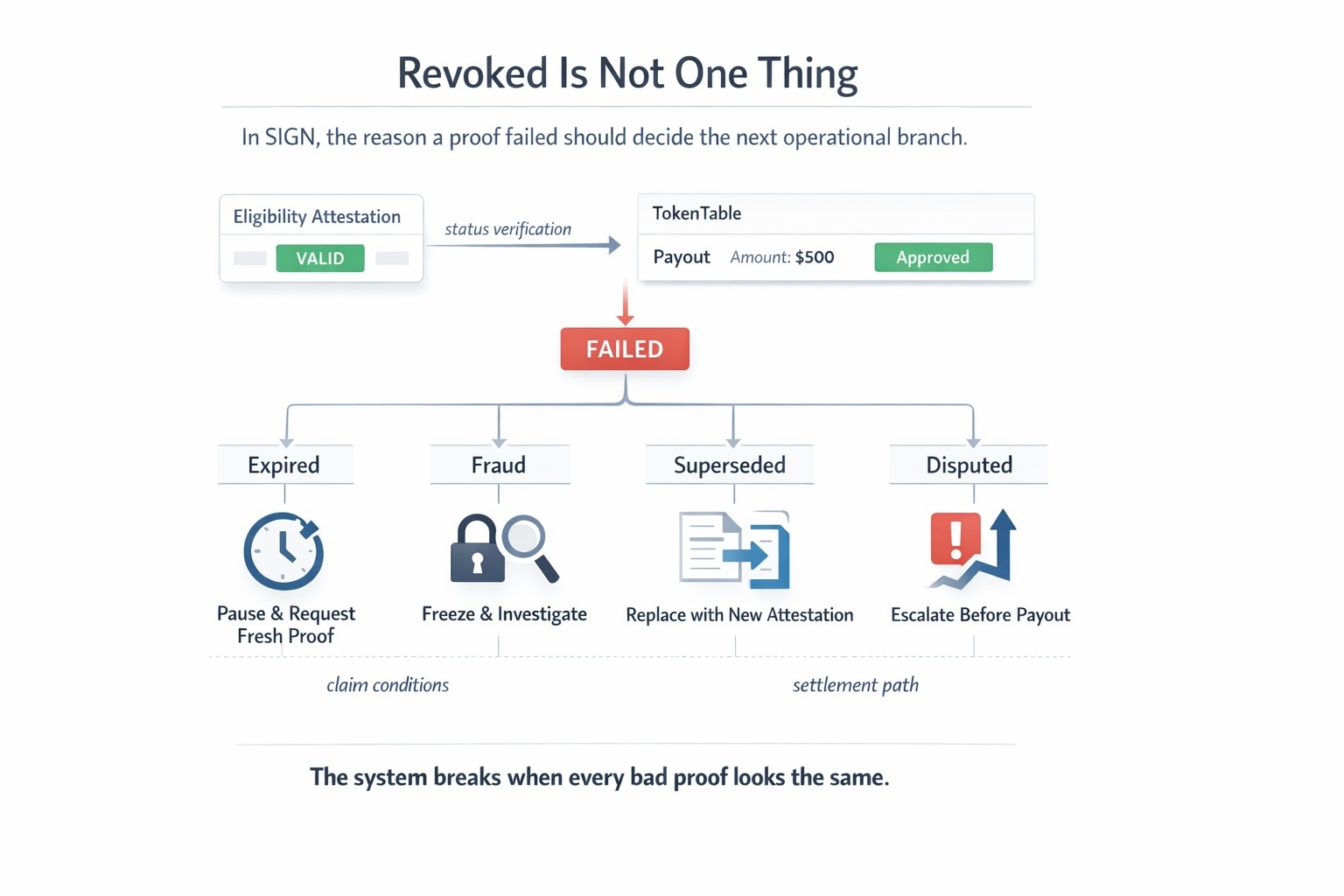
That is why the revocation reason matters so much to me. Revocation is not one generic stop sign. In a payout flow, the reason is the branch. It tells you whether the row should sit still, whether new evidence can replace the old one, whether this is a temporary hold, or whether somebody just found something serious enough to shut the case down harder. If that reason disappears, the record still exists, but the real decision logic is already gone.
And once that logic leaks out, teams start doing dumb things with confidence. A support agent sees revoked and treats expiry like misconduct. An operator sees the same red state and freezes a row that only needed updated evidence. Somebody else applies clawback to a case that should have been replaced and settled. Later the user asks why their payout was blocked, and now nobody can point to one durable reason trail inside the evidence path. They can only retell the judgment after the damage is already done.
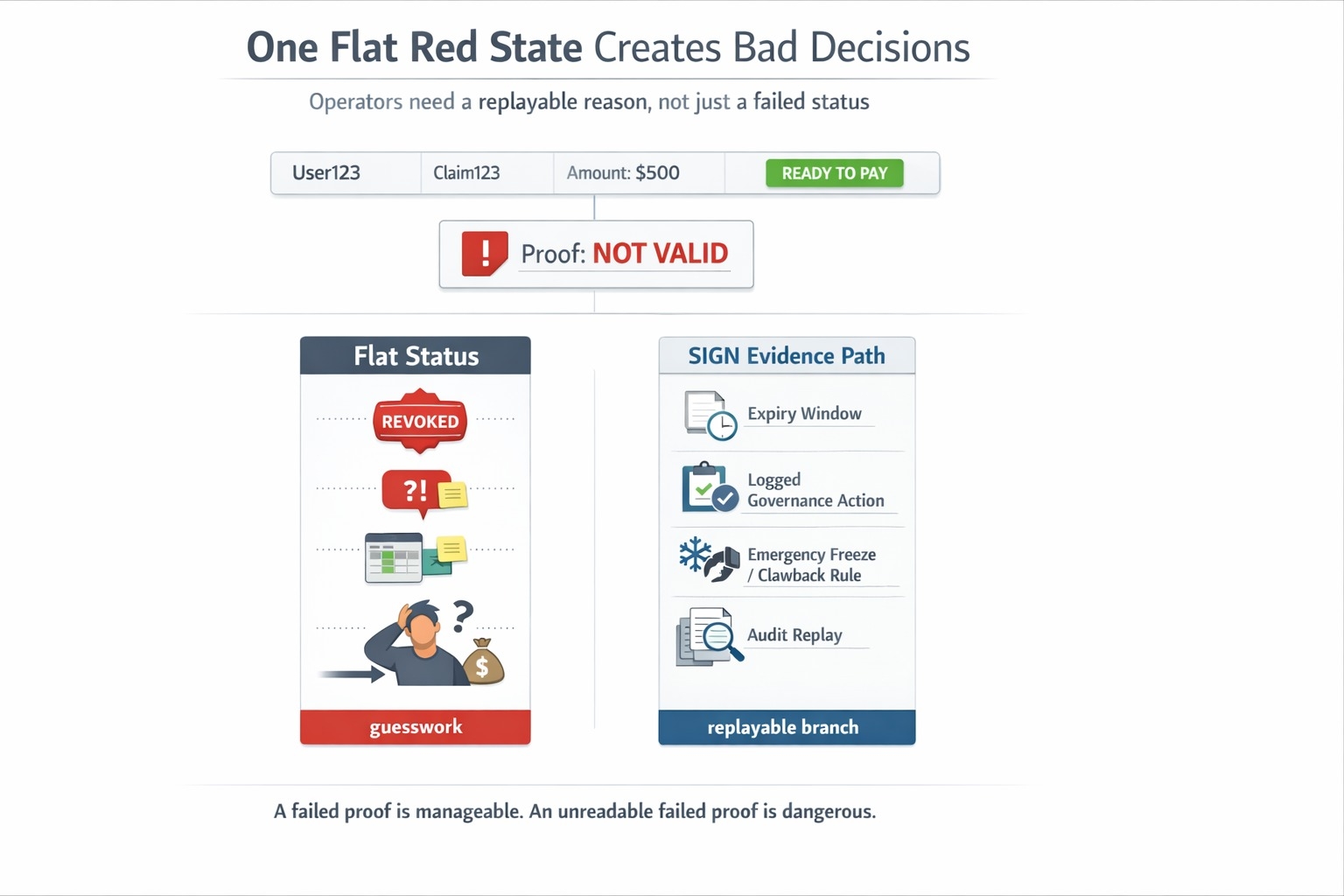
That is why freeze logic and a replayable reason trail feel more important to me than a clean verification badge. A bad state is survivable. A flat bad state is dangerous. The system does not break because one proof failed. It breaks when different failures get flattened into one label and the operator quietly becomes the hidden rules engine again.
That is where $SIGN starts to feel earned to me. Not because I need to force a token mention in. Because this is the real test. When one row goes bad right before money moves, can the system hold that row, preserve the reason, and make the next action replayable? Or does the truth fall out of the record the second the clean proof disappears?
That is the version of SIGN I keep watching for. Not whether it can tell me a record stopped qualifying. Whether it can stop the right row for the right reason, and still prove later why that exact branch was taken.