

While traditional markets hemorrhaged value and Bitcoin trembled under geopolitical pressure, something extraordinary happened.
A token called SIGN didn't just survive—it doubled in value within days, surging from 0.02089 to 0.05278.
The answer lies not in speculation, but in a fundamental shift in how nations think about digital sovereignty.
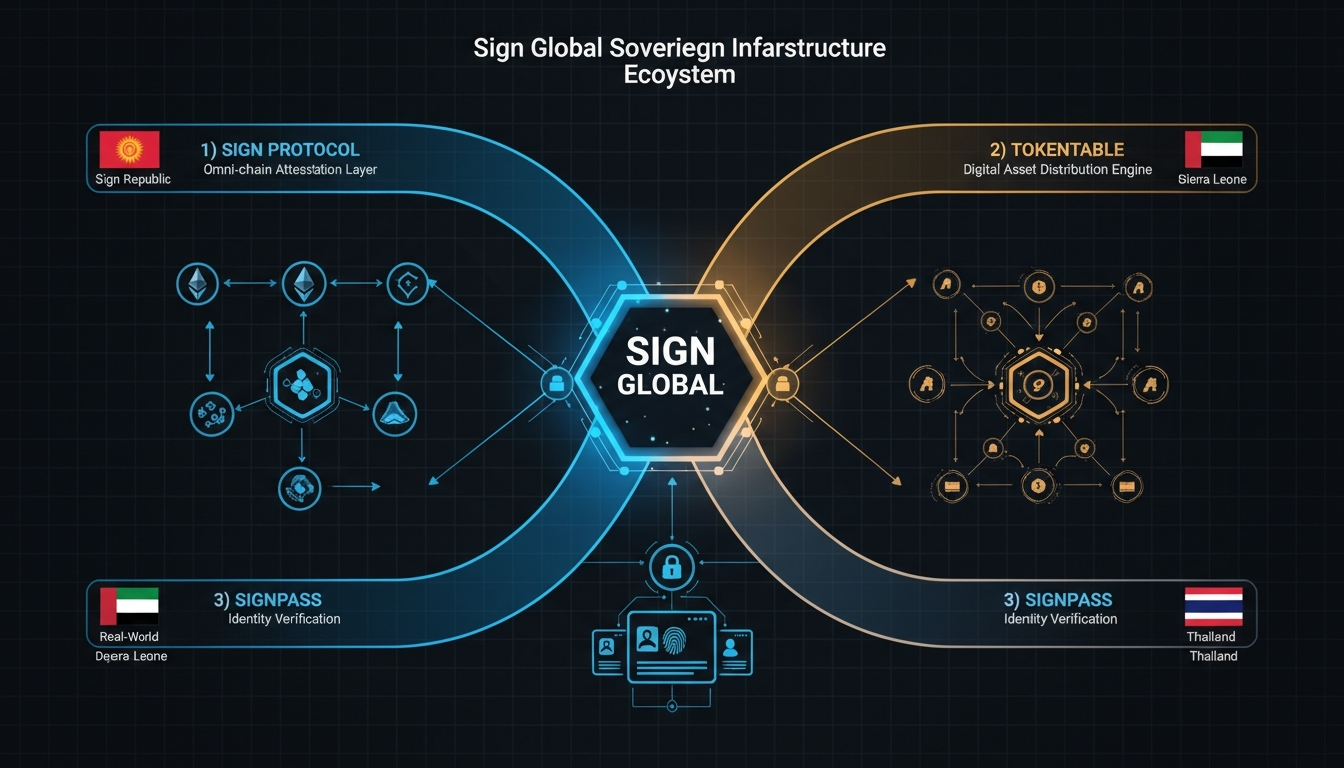
This is the story of Sign Global—the infrastructure project quietly building the backbone for a new kind of digital nationhood.
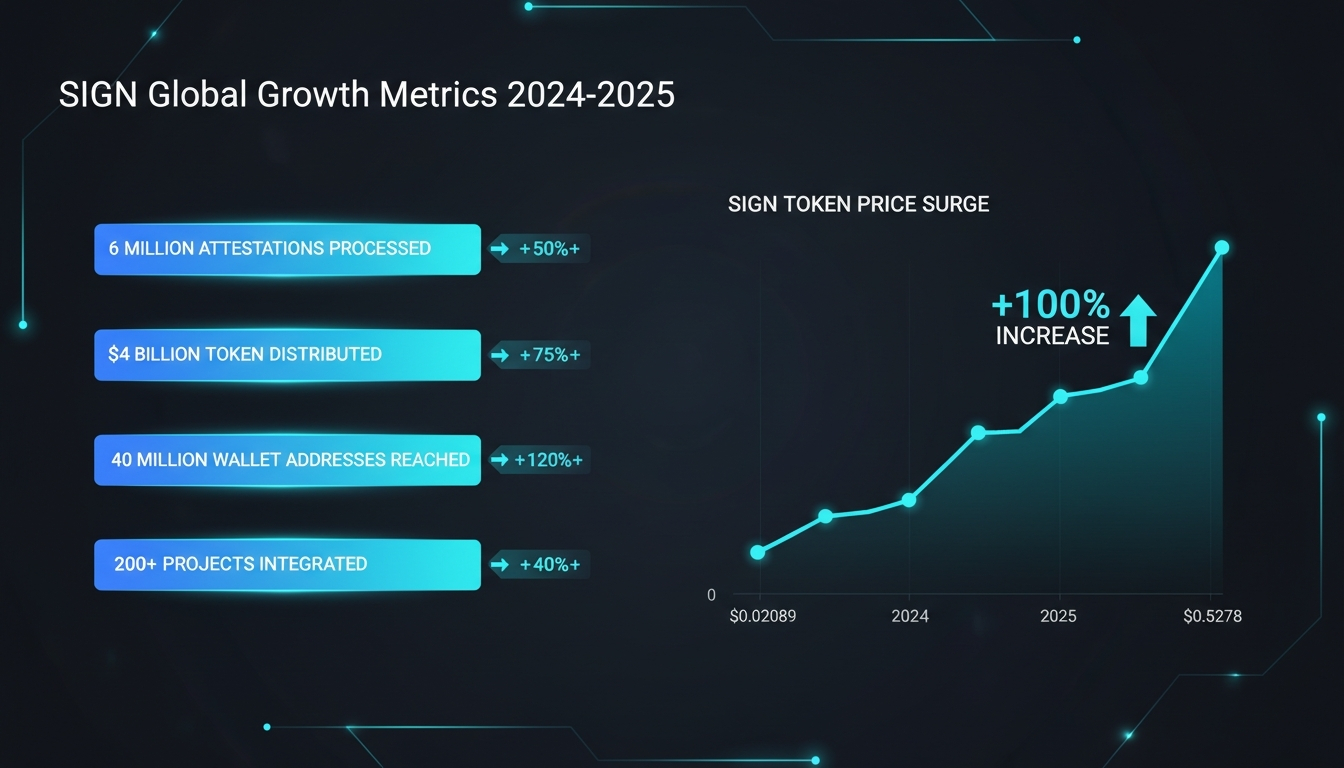
In 2024 alone, Sign processed over 6 million attestations—cryptographic proofs verifying identity and ownership without exposing sensitive data.
The platform distributed more than 4 billion in tokens across 40 million wallet addresses. These aren't vanity metrics.
They represent real people gaining access to financial systems and economic opportunities previously out of reach.
These numbers span 200+ projects across Ethereum, BNB Chain, Base, Starknet, Solana, and TON.
Sign isn't building a walled garden—it's constructing a universal translator for trust.
Imagine a world where your identity isn't stored in a hackable government database. Instead, it exists as a cryptographic proof—a verifiable credential that you control, issued by authorities you trust, readable by anyone who needs verification.
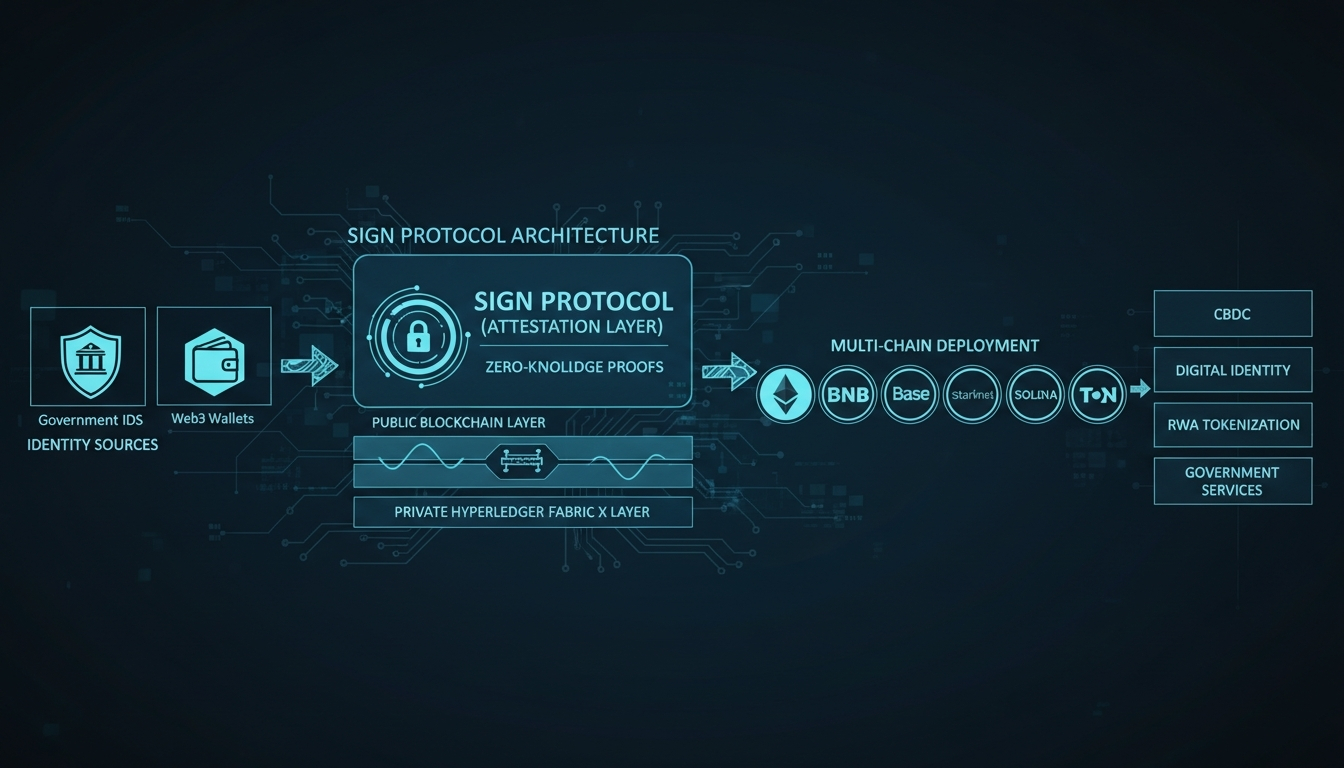
Sign Protocol makes this possible through an omni-chain attestation layer.
When the National Bank of the Kyrgyz Republic issues digital identity, or when Sierra Leone verifies citizen eligibility for social services, they're using this infrastructure.
The genius lies in the dual architecture:
- Public Layer: Transparent operations on BNB Chain for global accessibility
- Private Layer: Hyperledger Fabric X for privacy-sensitive CBDC transactions
- The Bridge: Seamless value transfer between both worlds
This isn't theoretical.
It's live.
It's working.
And nations are adopting it.
Sierra Leone's Minister of Communication, Technology and Innovation called their Sign partnership "a defining step toward establishing the digital backbone that will drive inclusive growth and technological leadership."
Consider the context.
In Sierra Leone, 73% of citizens have identity numbers but only 5% hold physical cards. This gap creates cascading failures: 66% financial exclusion, 60% of farmers unable to receive digital subsidies.
Sign's infrastructure doesn't just digitize systems—it removes barriers that kept people out.
The Kyrgyz Republic partnership modernizes financial systems.
UAE's Blockchain Centre explores regulatory frameworks.
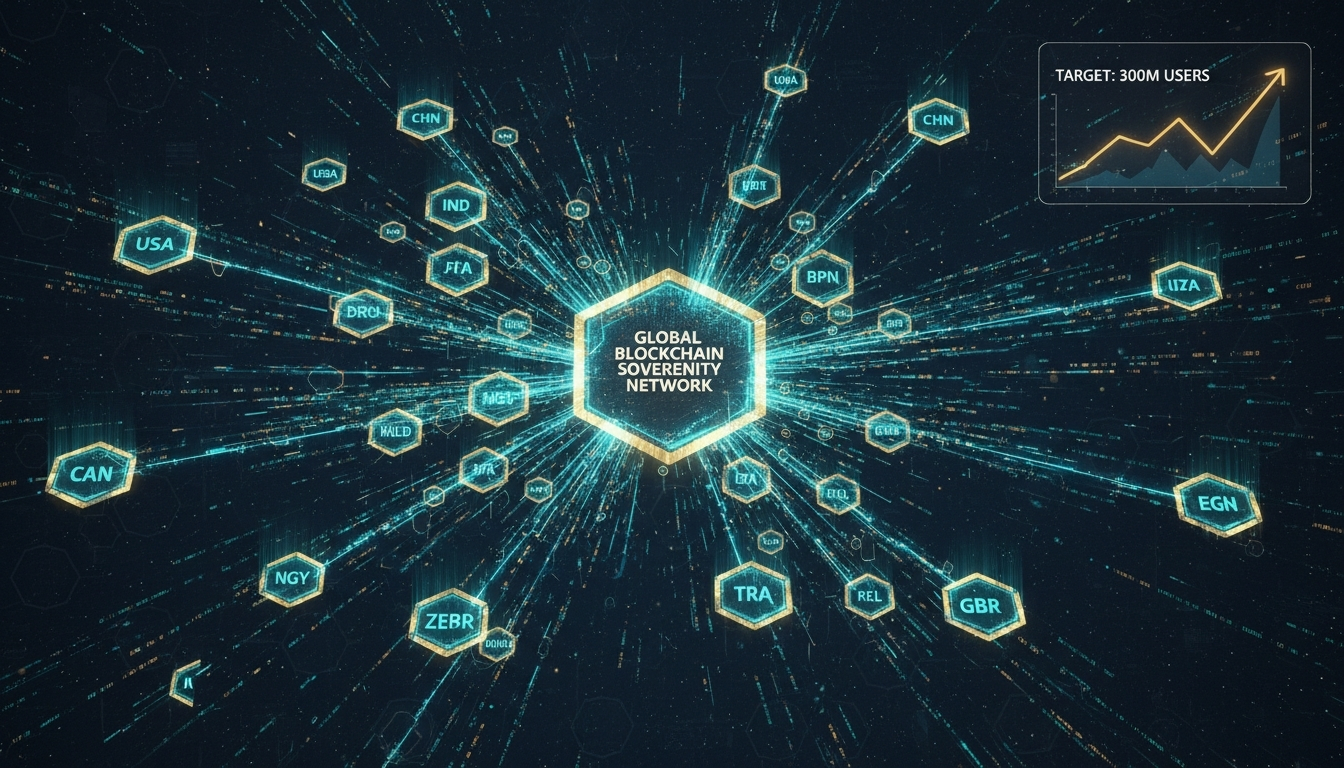
Thailand and Barbados are in negotiations. The target? 300 million people onboarded by 2028.
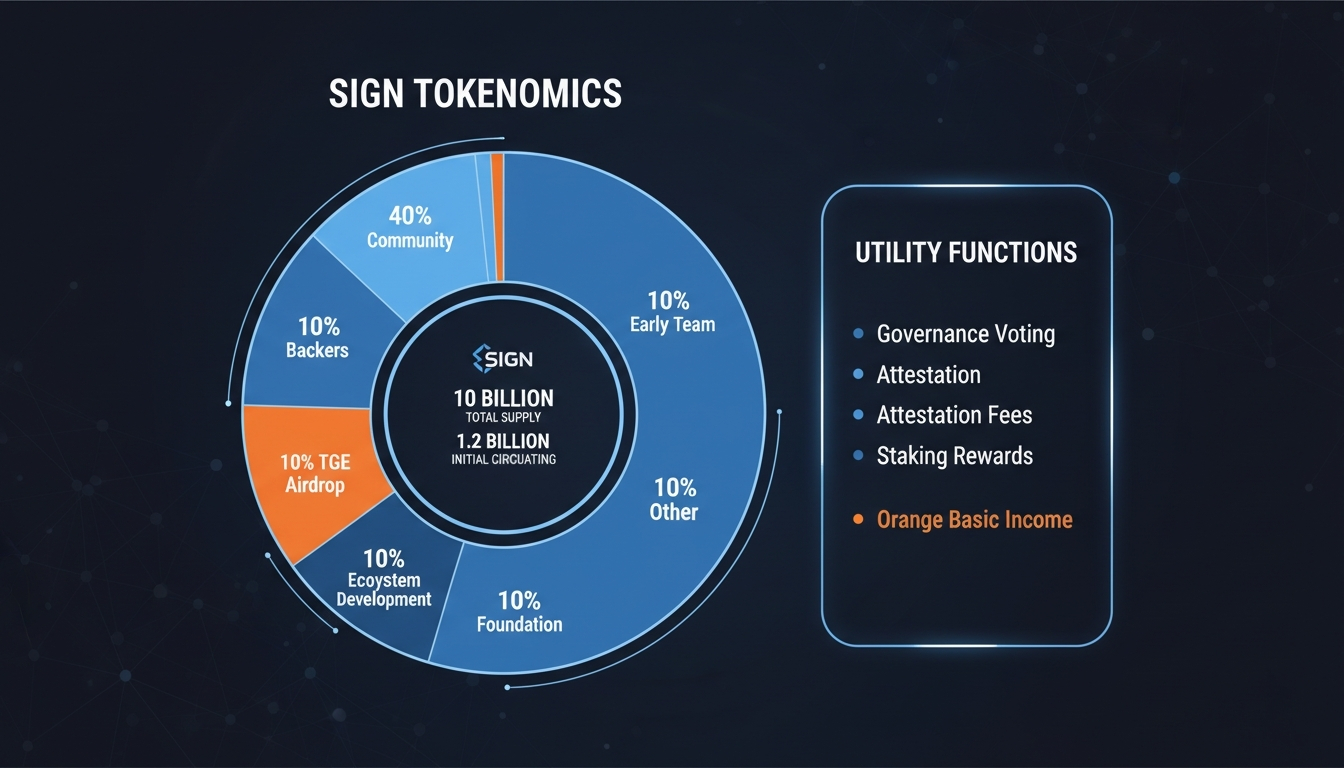
SIGN is the economic layer of sovereign digital infrastructure.
With 10 billion total supply and 1.2 billion in initial circulation, the tokenomics reflect community ownership:
- 40% Community (including "Orange Basic Income" rewarding self-custody)
- 20% Backers (Sequoia Capital, YZi Labs)
- 10% Early Team | 10% Foundation | 10% Ecosystem | 10% Other
SIGN pays for attestations, secures the network through staking, and enables participation in one of crypto's most ambitious experiments: delivering government services at national scale.
The Digital Lifeboat Thesis
Sign's core thesis is elegantly simple: sovereign nations need sovereign infrastructure.
When traditional systems fail—through cyberattack, disaster, or conflict—blockchain-anchored identity ensures continuity.
This isn't about replacing governments.
It's about giving them resilient parallel infrastructure.
A "digital lifeboat" preserving citizen access when primary systems go dark.
The 100%+ SIGN price surge reflects market recognition of this value.
As geopolitical uncertainty amplifies, demand for shock-resistant infrastructure grows.
Sign isn't speculating—they're building the rails.
Looking Forward
Sign's 2025 roadmap reveals ambitions beyond current achievements:
Q2: Sign SuperApp—integrating identity, tasks, and distribution
Q3: Expanded government deployments across continents
Q4: Sign Media Network—transforming from protocol to content distribution
Beyond: Sovereign Layer2 solutions and the emerging concept of "on-chain countries"
The Question Remains
What if your national identity could survive a government collapse? Sign Global is proving it can.
Not by replacing nations, but by giving them—and their citizens—tools for resilience impossible in the analog era.
The SIGN surge isn't market noise.
It's a signal that the world is waking up: digital sovereignty isn't a luxury.
It's infrastructure every country needs, and Sign is building it at global scale.
In a world of increasing uncertainty, the projects that matter aren't promising moonshots. They're building lifeboats.
$SIGN | @SignOfficial | Digital Sovereignty for All