
POn-chain rules that actually run. A technical look at how Sign Protocol embeds cooldowns, identity gating, and jurisdictional blocks directly into smart contract logic — and why that matters more than any whitepaper claim.
Years ago I watched a real estate syndication deal die on a fax machine. Not metaphorically. Literally a thermal-paper fax carrying a transfer-consent form that nobody could locate afterward. The attorneys billed anyway. The deal closed six weeks late. The underlying asset, a strip of commercial property outside Lahore, had not moved an inch. Only paper had moved, slowly, through hands that added friction and extracted fees without adding a single byte of useful information to the transaction.
I think about that fax a lot when I read about tokenized real-world assets. Most blockchain infrastructure projects promise to kill the fax. What they actually build is a faster courier service for the same paper. Sign Protocol is the first technical architecture I have spent serious time reading that feels like it is actually trying to kill the fax.
Rules baked into movement, not bolted on top
Imagine every property deed in your city came pre-printed with specific conditions. Not as a contract clause someone might enforce later, but as a physical impossibility. Sign Protocol makes blockchain-based asset transfers behave like that deed.
Cooldown Logic: A transferLock() condition compares each acquisition to a configurable minimum hold period (30, 90, or 180 days). No override unless the contract is redeployed.
Buyer Gating: Instead of storing ID on-chain, it calls an off-chain oracle for a cryptographic proof. The contract checks the signature without ever touching the underlying documents.
Jurisdictional Blocks: Deny-lists (OFAC, EU, etc.) are checked against the receiver's verified location. A blocked transfer simply does not initiate.
The architecture shifts compliance from a post-hoc legal problem into a pre-execution technical constraint. That is a fundamentally different relationship between law and code.
Every previous attempt left the pain somewhere else
The hard part is making rules execute atomically with the asset movement. Sign Protocol treats compliance as part of the transaction's execution context. The transfer and the compliance check are the same event. They succeed together or fail together.
Market context behind the architecture
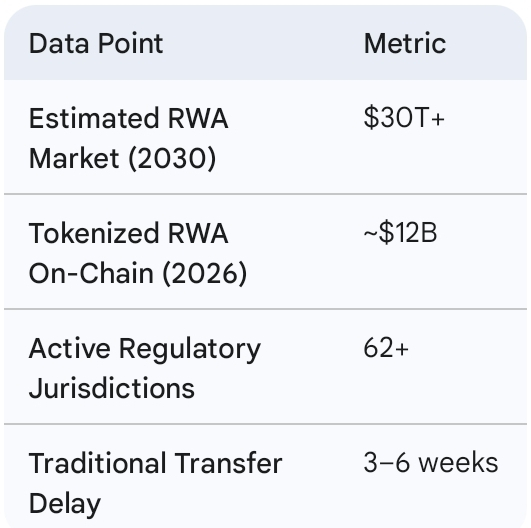
Critical Analysis
Where the architecture has genuine exposure
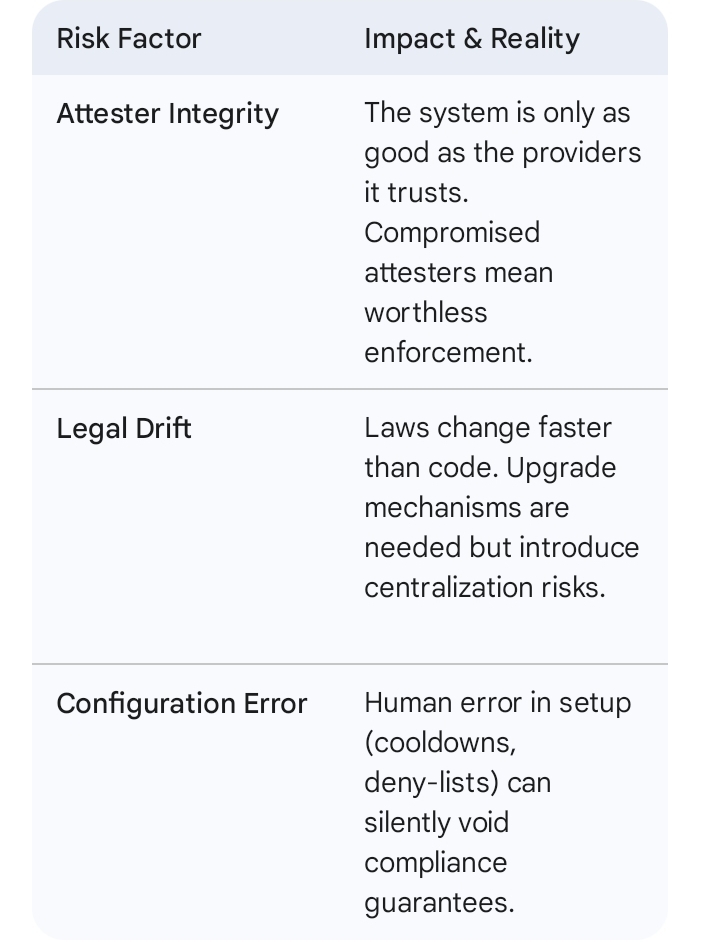
Sign Protocol is not for every project. A gaming token doesn't need this overhead. Where it earns its place is in legally catastrophic categories: private securities, real estate syndications, and regulated fund shares. In these markets, a failed check isn't a support ticket; it’s a securities violation.
The institutional buyers in these markets want to see enforcement, not just intent. Sign Protocol produces an on-chain audit trail that a regulator can verify independently.
The fax machine is still in a lot of offices. Killing it is slower work than anyone wants to admit.
Written after independent research
