
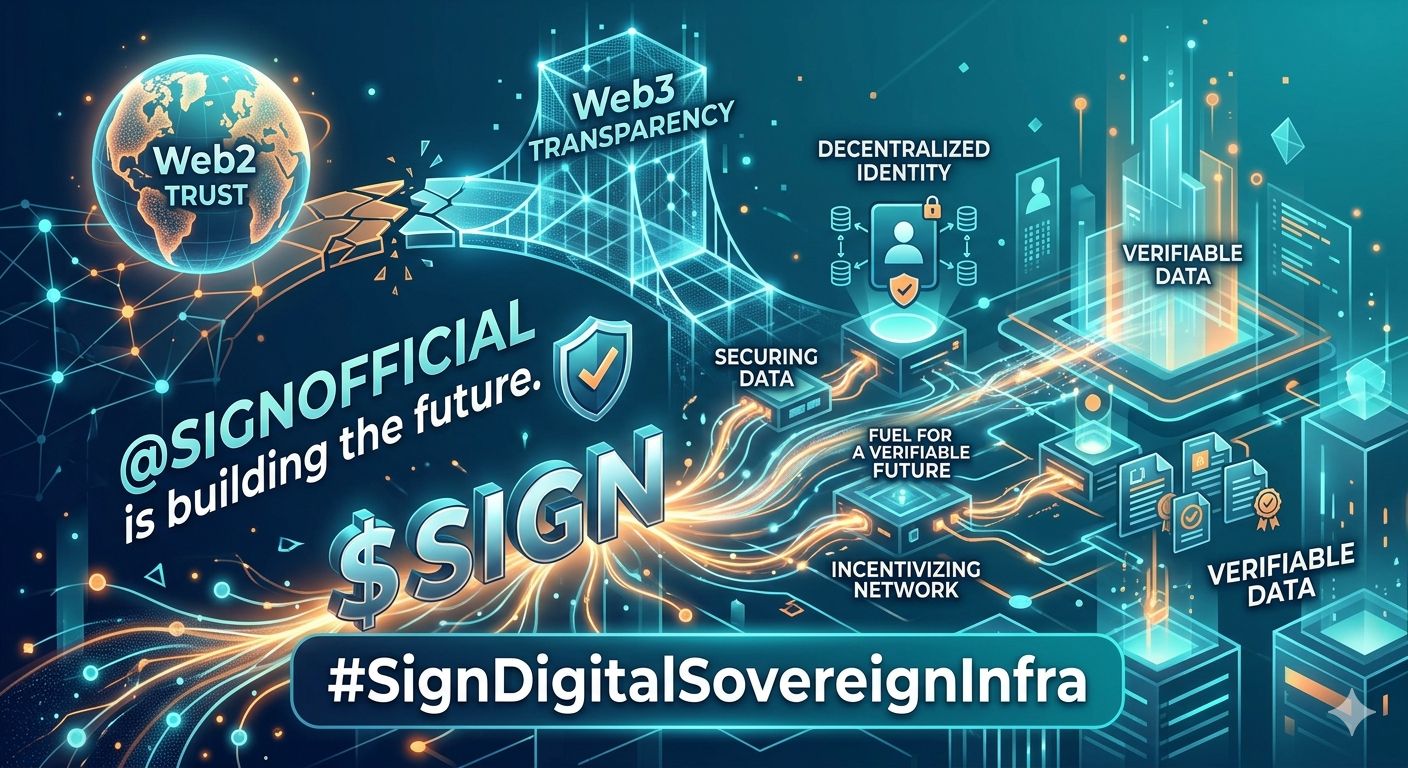
The digital landscape is currently facing a massive crisis of authenticity. As we transition from the centralized silos of Web2 to the decentralized promise of Web3, the need for a reliable, "sovereign" way to verify data has never been more critical. This is where @SignOfficial enters the frame, not just as another project, but as a fundamental layer of infrastructure.
The Problem with Modern Data
Currently, our digital identities and the data we generate are scattered across platforms that we don't truly own. When we "sign" a document or verify an identity online today, we are often relying on third-party intermediaries who hold the keys to our digital lives. Sign aims to dismantle this dependency. By providing a decentralized attestation protocol, they allow users and developers to create verifiable claims that are permanent, transparent, and—most importantly—user-controlled.
The Power of the $SIGN Token
At the heart of this revolution is the $SIGN token. It isn't merely a speculative asset; it is the economic engine that powers the entire ecosystem. Here is how it functions within the network:
Incentivization: Rewarding those who provide high-quality, truthful data attestations.
Security: Ensuring the network remains resistant to bad actors through robust staking and governance mechanisms.
Utility: Serving as the primary medium for accessing premium verification services and decentralized infrastructure tools.
Building Digital Sovereignty
The hashtag #SignDigitalSovereignInfra isn't just a catchy phrase—it’s a mission statement. Digital sovereignty means having the power to prove who you are and what you own without asking for permission from a tech giant. Whether it’s verifying educational credentials, on-chain credit scores, or the authenticity of AI-generated content, @SignOfficial provides the tools to make it happen.
As the Web3 space matures, the projects that survive will be those that provide tangible, necessary utility. By focusing on the "trust layer" of the internet, Sign and the $SIGN token are positioning themselves as the indispensable architects of a more honest and sovereign digital future.