
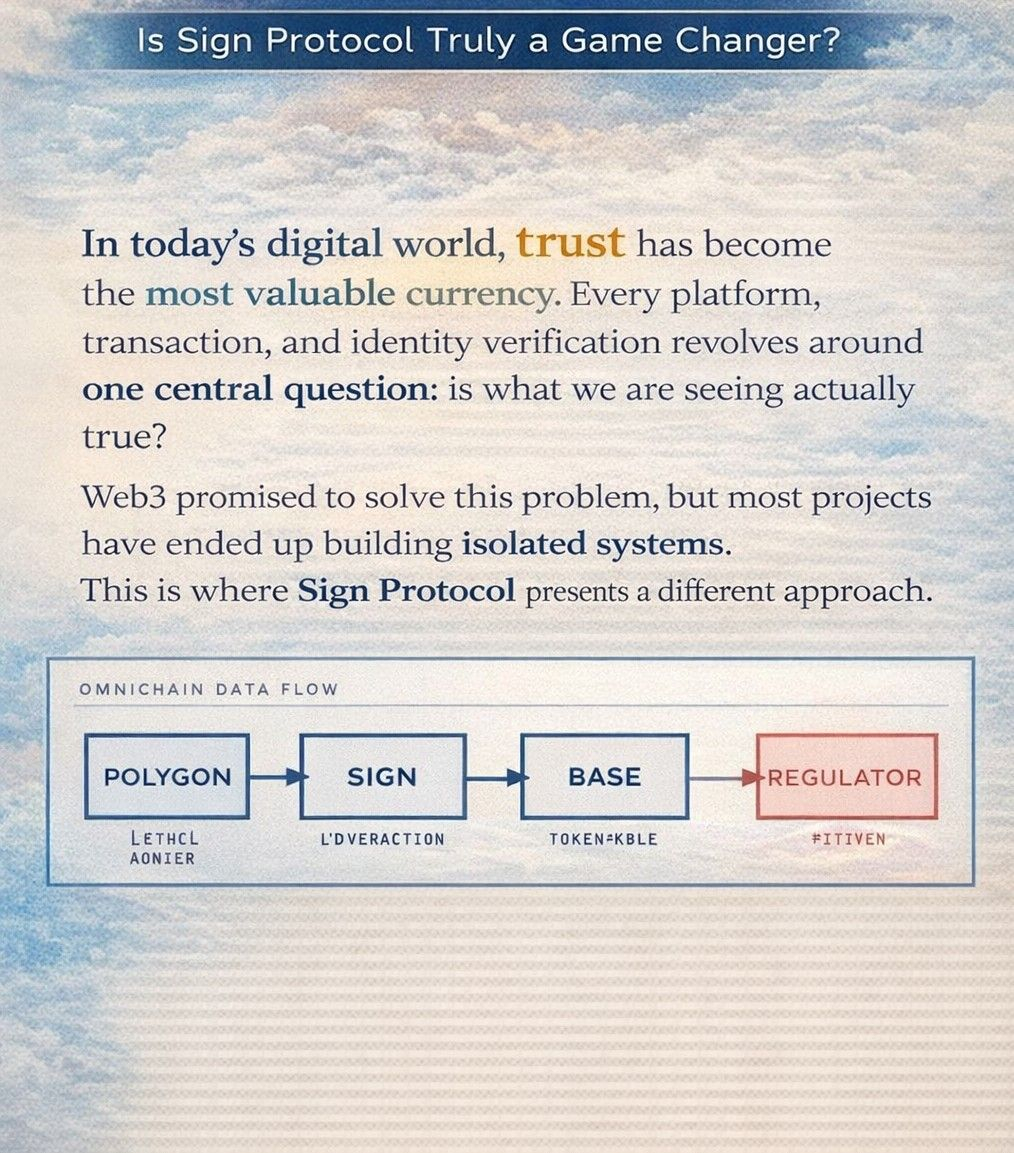
In today’s digital world, trust has become the most valuable currency. Every platform, every transaction, and every identity verification
process revolves around one central question: is what we are seeing actually true? Web3 promised to solve this problem by removing the need for trust, but so far
most projects have ended up building isolated systems that do not communicate well with each other.
This is where Sign Protocol presents a different approach.
At first glance, the idea behind Sign Protocol seems simple, but its implications run deep. It is building what can be described as a “verifiable evidence layer” that operates across multiple blockchains.
In practical terms, this means that data or credentials created on one blockchain can be verified on another without friction.
This omnichain design directly addresses one of Web3’s biggest challenges: fragmentation.
To understand this more clearly, think of Sign Protocol as a system where institutions or individuals can create attestations, essentially digital proofs.
These proofs can represent anything from identity and educational degrees to financial qualifications. Once created, they are either stored or referenced on the blockchain, making them easily verifiable across different platforms and ecosystems.
However, a fundamental paradox lies at the heart of this system. Blockchain and cryptography aim to eliminate the need for trust by creating “trustless” environments.
Yet, when it comes to real-world data, human trust cannot be fully removed. For example, if someone claims to hold a medical degree, the blockchain can verify who issued that claim, but it cannot guarantee that the issuer itself is legitimate.
This is where theory meets reality. Consider a decentralized finance (DeFi) application using Sign Protocol to verify accredited investors. From a technical perspective, everything works perfectly. A smart contract reads the attestation, and the data flows seamlessly from one blockchain, such as Polygon, to another, like Base.
But when a regulator steps in, the situation changes. Regulators do not care about how flawless the cryptography is; they only care whether the issuer of that credential has valid legal authority.
This reveals a key limitation: the system remains trustless only until it intersects with the real world. The moment human institutions become involved, trust re enters the equation. This tension exists in every system that attempts to digitize physical reality.
One of Sign Protocol’s strengths is that it does not ignore this reality. Its earlier product, EthSign, has already been used to handle real-world legal agreements.
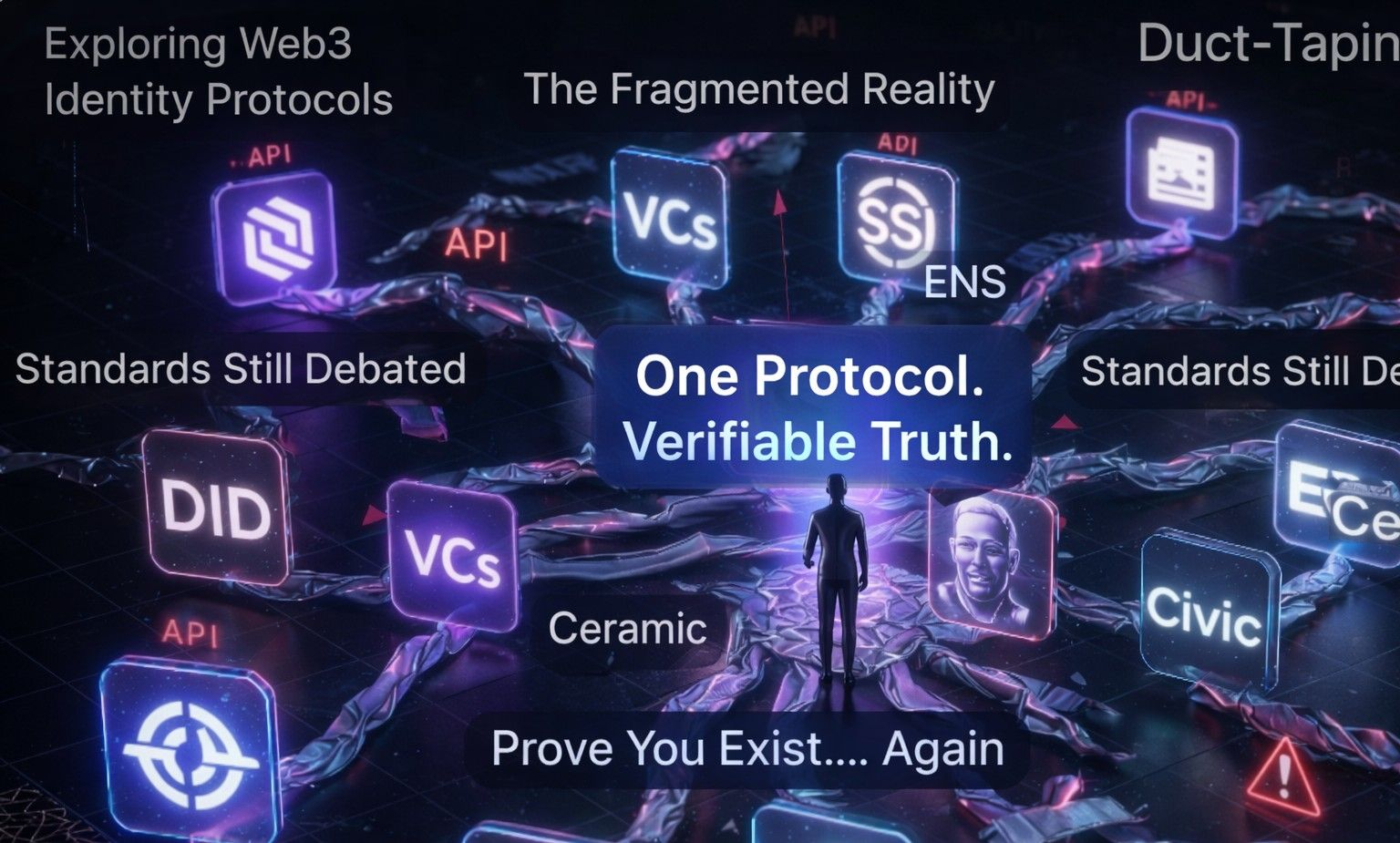
This demonstrates that the team is not just building theoretical infrastructure but is focused on practical, legally relevant use cases. That legal recognition also creates a significant advantage, as it is not easy for new competitors to replicate such credibility without deep regulatory engagement and substantial legal resources.
Another important aspect of the protocol is its hybrid storage model. Sensitive data can remain off-chain, while the cryptographic proof of that data is stored on chain.
This approach allows for both privacy and verifiability, which is particularly important for enterprises and financial institutions that must comply with strict regulations.
That said, the system is not without its risks. A critical question remains: if Sign Protocol achieves widespread adoption, will it truly remain decentralized?
Or will the same institutions that control trust today become the gatekeepers of this new system?
If only approved entities are allowed to issue attestations, the network could become effectively permissioned, even if it is technically decentralized.
This is a real concern that cannot be ignored. As the system scales, the balance between openness and control will become increasingly difficult to maintain.
In conclusion, Sign Protocol represents a promising attempt to bridge the gap between Web3 infrastructure and real-world systems. Its omnichain vision and focus on verifiable data could play a major role in shaping the future of digital trust.
However, its longterm success will depend not just on its technology, but on how well it manages the delicate balance between decentralization and institutional control.
In last . future may indeed be omnichain, but the challenge of trust remains as complex as ever. Sign Protocol offers a compelling direction forward, but the final outcome is still unfolding.