
The moment I keep coming back to is not the launch. It is the moment after the table is already live, when one row is flagged because the beneficiary reference is stale and that wallet should not execute as written.
The person behind the row may still be legitimate. The problem is that the payout path attached to that entry is no longer the one the team should trust. In most systems, this is where the record starts drifting away from the truth. Someone edits the sheet. Someone pushes a manual override. Someone reroutes the funds and says the explanation can be handled later. The payout may get fixed, but the original state is gone, and from that point on the team is defending a memory instead of preserving a record.
What made SIGN stand out to me is that TokenTable seems designed for exactly this kind of mistake. The live row does not need to disappear. The path can be frozen while the original allocation state stays visible. The table itself remains versioned and immutable once finalized, with beneficiary identifiers, claim conditions, and revocation or clawback rules already attached. If the valid claimant now needs a different route, the team can move through an explicit delegated path instead of quietly replacing the first state and pretending the error never existed.
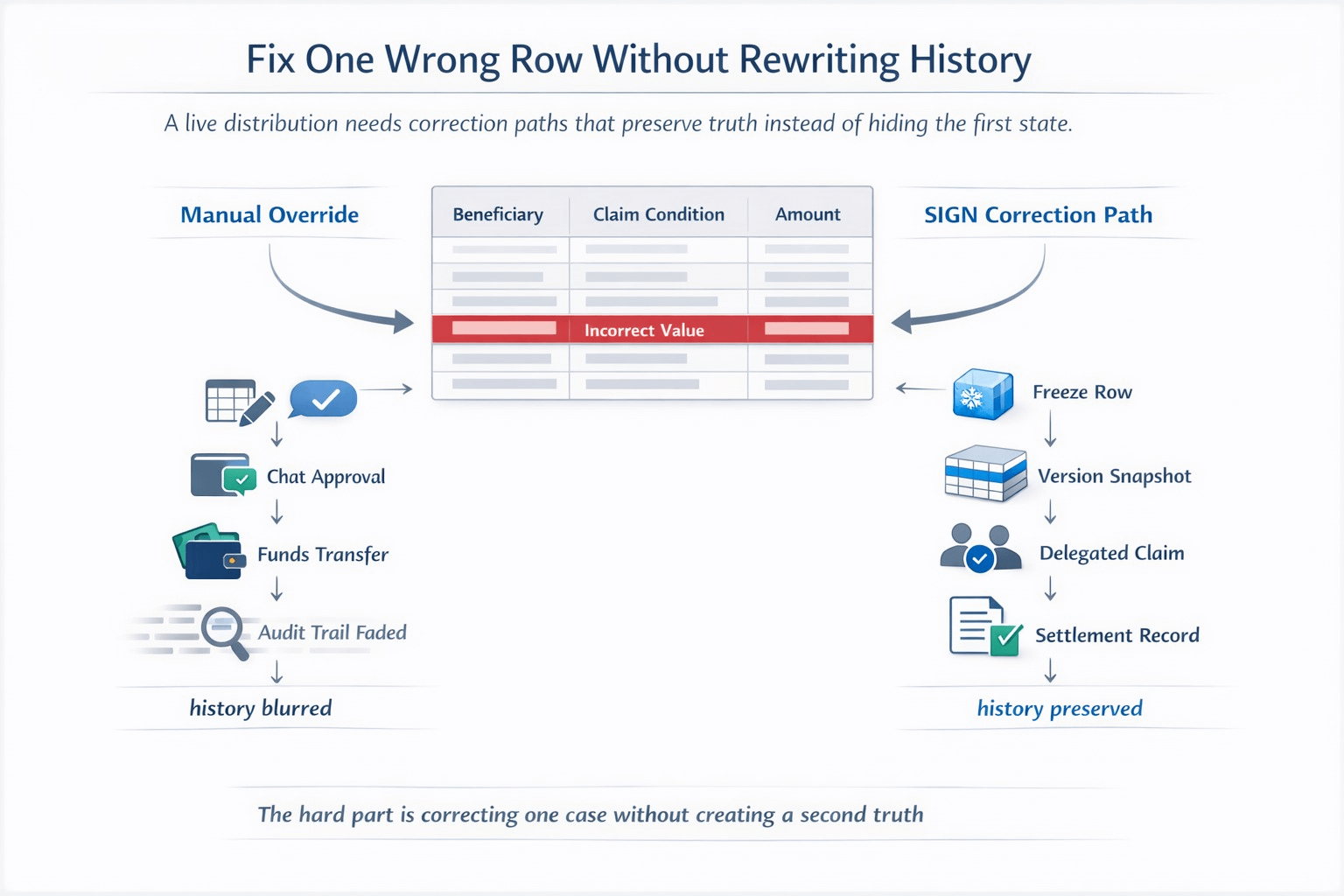
That sequence is the part I care about. The stale beneficiary reference is discovered. The row is stopped before the wrong payout becomes final. The original entry remains in place. The corrected route is chosen through an authorized delegated action. The eventual outcome is linked to settlement evidence instead of being patched together from chat messages and operator explanations. Nothing has to be hidden for the correction to happen.
The real pressure comes later, when the original claimant reopens the case and asks why their row did not follow the published table. That is where weak systems usually fall apart. Support has to dig through screenshots. Someone tries to reconstruct who changed what. The explanation depends on whether the right person is still around to remember it. With SIGN, the stronger answer is supposed to live inside the record itself: the original row, the freeze, the delegated correction path, the anchored allocation manifest, and the linked settlement attestation. TokenTable describes anchored evidence, settlement-linked execution results, and deterministic replay of allocation logic during audits. That means the answer does not need to survive as team memory. It can survive as replayable evidence.
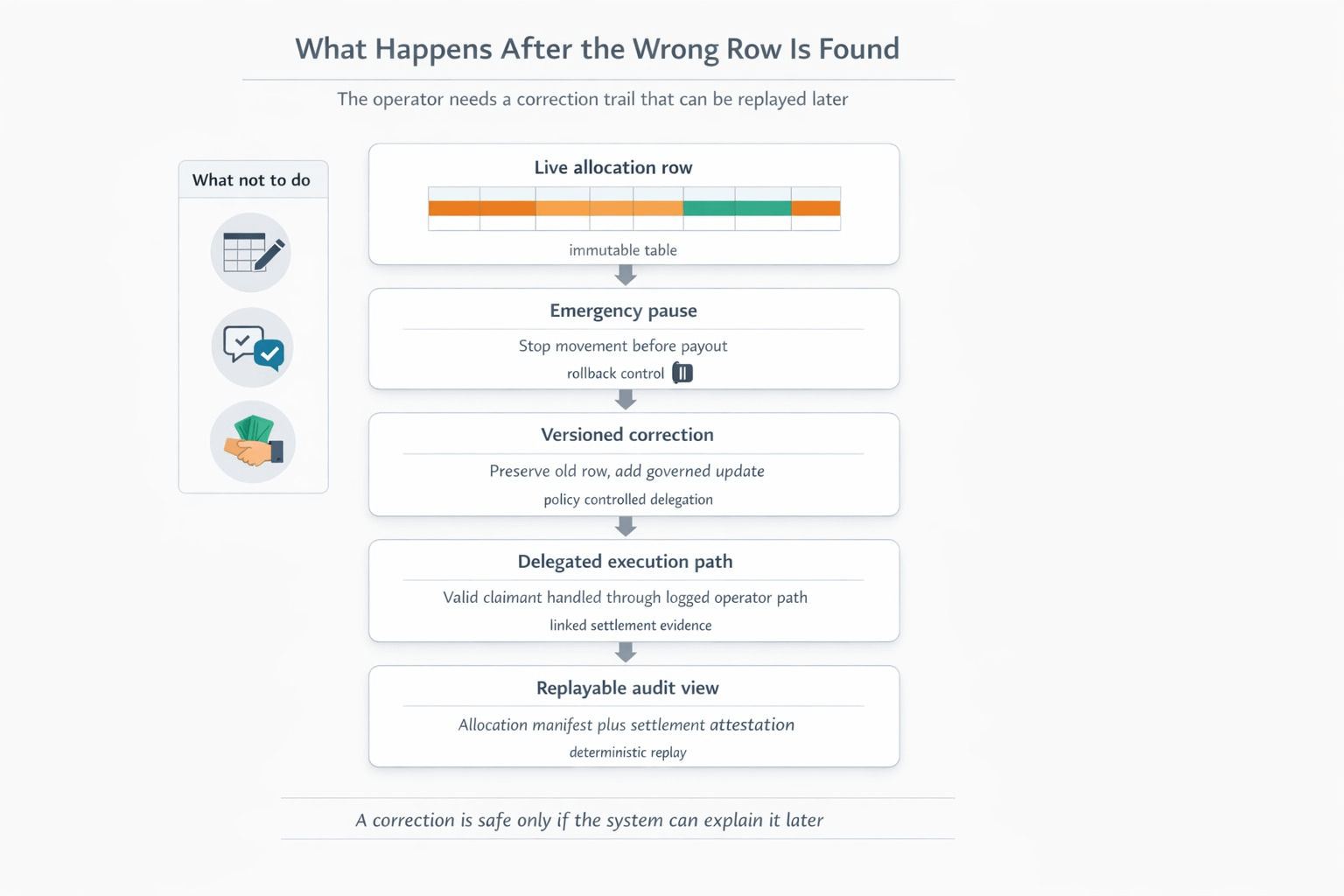
That is where $SIGN starts to feel justified to me. Not because a token is attached to infrastructure, but because this system only deserves weight if one wrong row can be stopped, corrected, and answered later without stepping outside its own rails. The original state stays visible. The freeze shows why execution paused. The authorized correction shows how the valid path was chosen. The settlement evidence shows what finally happened. Replay shows why the outcome changed.
That is the test I care about most. When one live row turns out to be wrong, can the system preserve the first state, authorize the correction, and explain the final payout from the record alone? If SIGN can do that through versioned tables, logged delegation, settlement evidence, and replayable audit logic, then the history stays stronger than the operators managing it. If it cannot, then the system may still look clean while the real truth is being repaired somewhere off to the side. And that is still the question I keep coming back to. Can one wrong row be repaired without rewriting history?