
📊 Fundamental Analysis of SIGN (Crypto)
🧠 Project Overview (What SIGN actually is)
At its core, @SignOfficial SIGN is trying to position itself as more than just another token—it’s building infrastructure around digital identity, verification, and Web3 ecosystems.
There are actually two overlapping narratives around SIGN:
A Web3/GameFi platform (gaming hub + NFT + social layer)
A blockchain infrastructure layer for identity, attestations, and token distribution
This dual positioning is both interesting and risky.
On the infrastructure side, SIGN focuses on:
Digital identity systems
On-chain credentials (proofs, certificates)
Token distribution tools
This is powered by:
Sign Protocol → enables verifiable credentials across chains
TokenTable → manages airdrops, vesting, and token allocation �
CoinMarketCap
👉 In simple term #SignDigitalSavereigninfra is trying to become a trust layer for Web3 + governments + apps.
⚙️ Core Utility & Value Proposition
What makes $BTC SIGN fundamentally valuable depends on adoption.
1. Real-World Use Cases
Governments issuing digital IDs and records
Platforms verifying user credentials without KYC friction
Web3 apps distributing tokens transparently
Gaming ecosystems managing assets and identities
Some reported collaborations include public-sector experiments like national digital identity systems �
CoinMarketCap
👉 This is important:
Most crypto projects claim utility — SIGN is trying to integrate into state-level infrastructure, which is rare.
2. Token Utility (Why the token matters)
The SIGN token is used for:
Paying protocol fees
Governance voting
Incentives and rewards
Staking for participation
A large portion of supply is allocated to community incentives (~40%), showing a growth-through-adoption strategy �
CoinMarketCap
🧱 Development Progress & Ecosystem Growth
SIGN’s development shows a mix of technical expansion + ecosystem building.
Key development highlights:
Launch of a GameFi aggregation platform
Integration of:
NFT marketplace
Game hub
Social network
Partnerships with gaming projects and guilds
Exchange listings improving liquidity and accessibility �
CoinMarketCap
On the infrastructure side:
Development of multi-chain attestation systems
Focus on cross-chain compatibility
Expansion into identity + e-signature solutions �
PP One
👉 The project is evolving from a gaming platform → broader Web3 infrastructure layer
🗺️ Roadmap & Future Vision
SIGN’s roadmap is ambitious and leans toward mass adoption and scalability.
🔮 Key roadmap milestones:
1. Cross-Chain Expansion
Development of EthSign Next
Support for multiple chains like:
TON �
CoinMarketCap
👉 This is crucial for interoperability—a major trend in crypto.
2. SuperApp Ecosystem
Launch of Orange Dynasty SuperApp
Combines:
Social features
Web3 identity
Community tools
👉 Think of it as a Web3 “everything app”
3. Sovereign Infrastructure (Big Vision)
Plug-and-play systems for:
National digital identity
Digital currencies
Public records
👉 This is the most ambitious part and also the hardest to execute.
📈 Fundamental Strengths
✅ Strong Points
Real-world utility focus (identity + government use)
Multi-product ecosystem (protocol + distribution tools)
Cross-chain compatibility vision
Growing adoption narrative (public + private sector)
👉 If executed well, SIGN could become a backend layer of Web3 trust systems
⚠️ Risks & Weaknesses
❌ Key Concerns
Narrative confusion
GameFi + infrastructure = unclear focus
Execution risk
Government-level systems are complex and slow
Token supply pressure
Large token unlocks can impact price short-term �
CoinMarketCap
Anonymous team
Founders are not publicly known �
CoinMarketCap
👉 These are serious factors for long-term investors.
🧾 Final Verdict (Human Perspective)
SIGN is one of those projects that sits in the “high potential, high uncertainty” category.
If it succeeds in digital identity + sovereign adoption, it could become a major infrastructure player
If it fails to execute, it risks becoming just another overextended Web3 platform
👉 My honest take:
SIGN is fundamentally interesting because it’s targe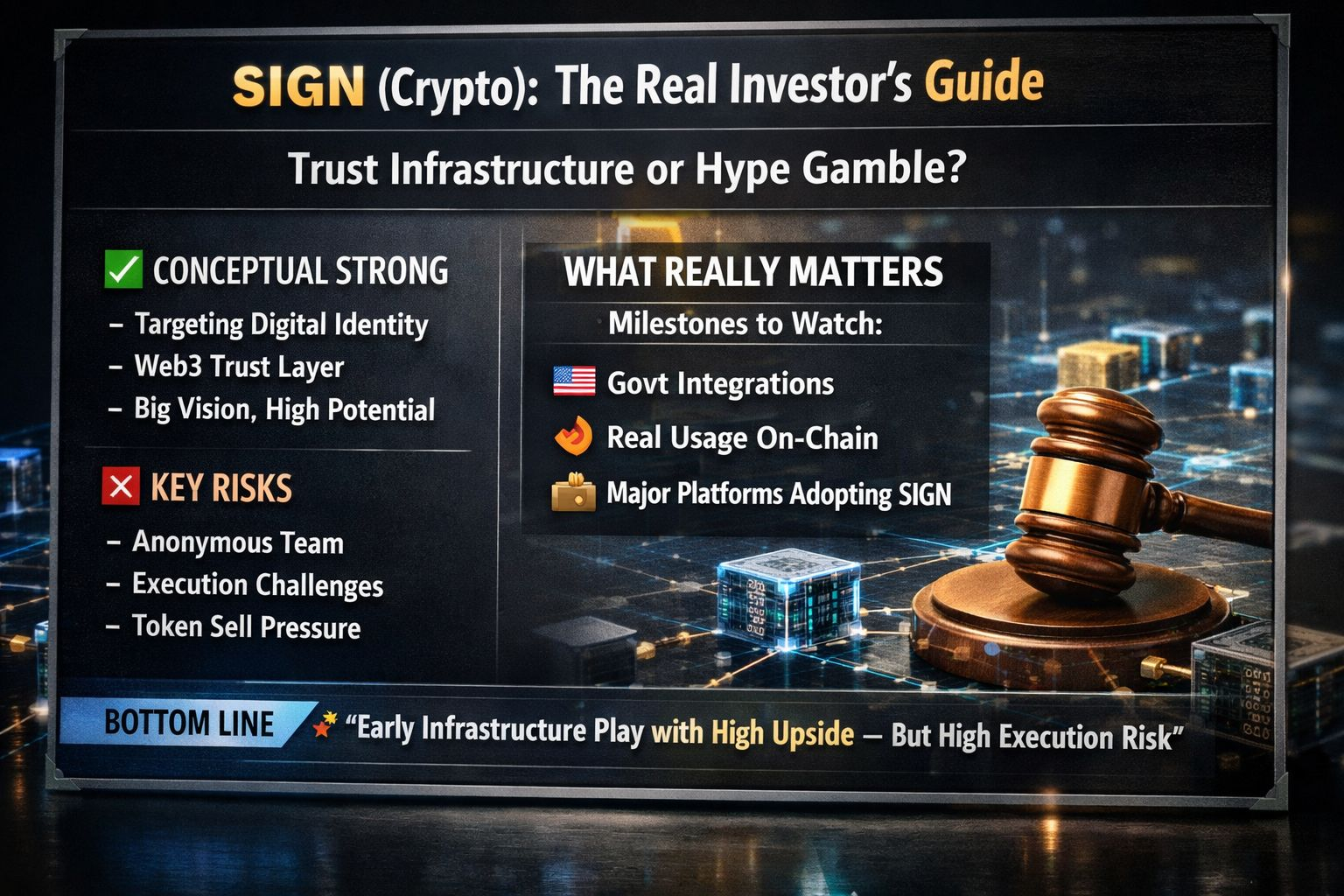 ting real-world systems, not just DeFi hype—but it still needs clearer positioning and proven execution