For a long time, I assumed systems only reset when something breaks.
If the logic is correct and the data is there, things should continue smoothly.
But the more systems interact, the more a different pattern starts to appear.
They don’t reset because they fail.
They reset because they don’t carry understanding forward.
A user does something once.
They participate.
They contribute.
They meet a condition.
That moment creates clarity.
Somewhere, a system processes it.
It reaches a conclusion:
this qualifies.
That should be enough.
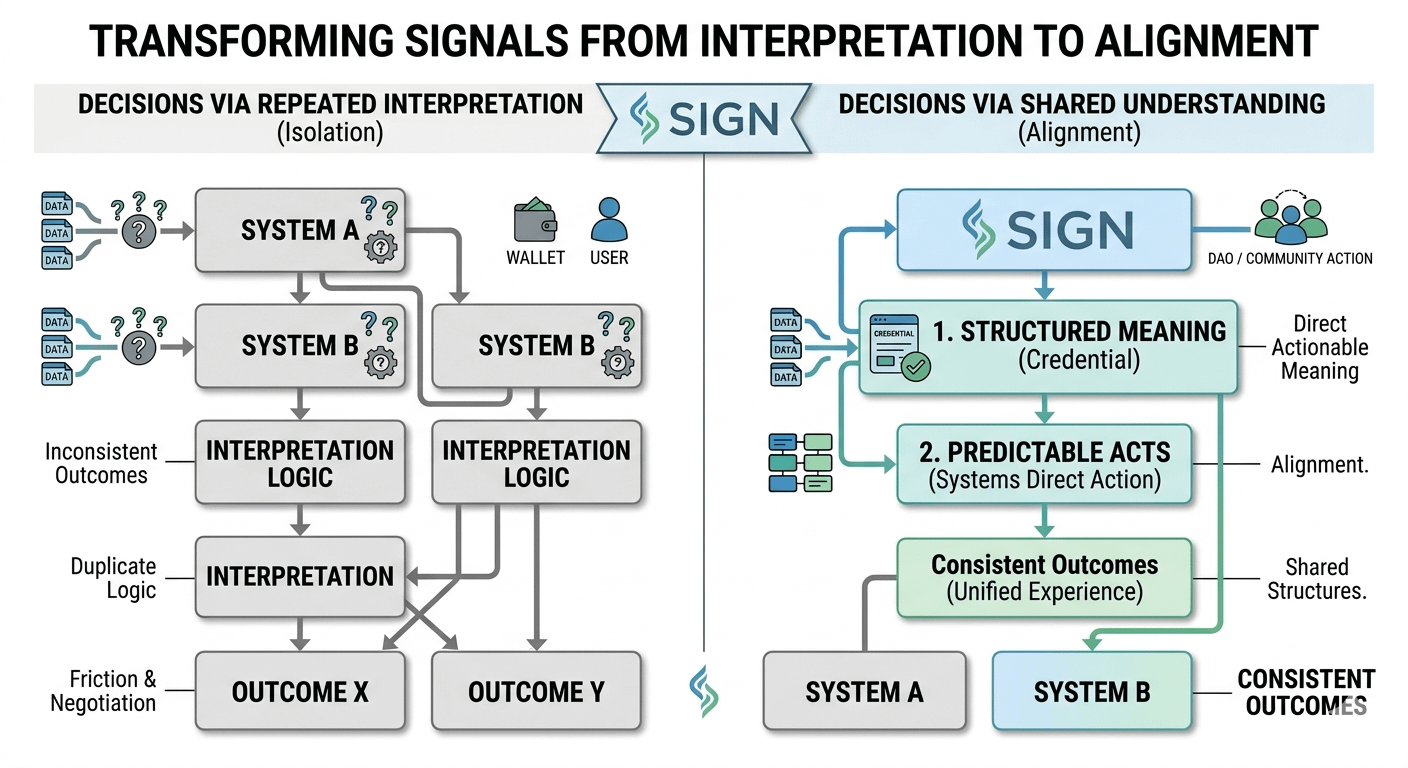
But when that same user moves into another system, something changes.
The conclusion doesn’t move with them.
The system doesn’t continue from what was already understood.
It starts again.
Does this qualify here?
Should this matter in this context?
The answer might be identical.
But the process resets.
This reset feels normal.
But at scale, it becomes friction.
Developers rebuild the same logic.
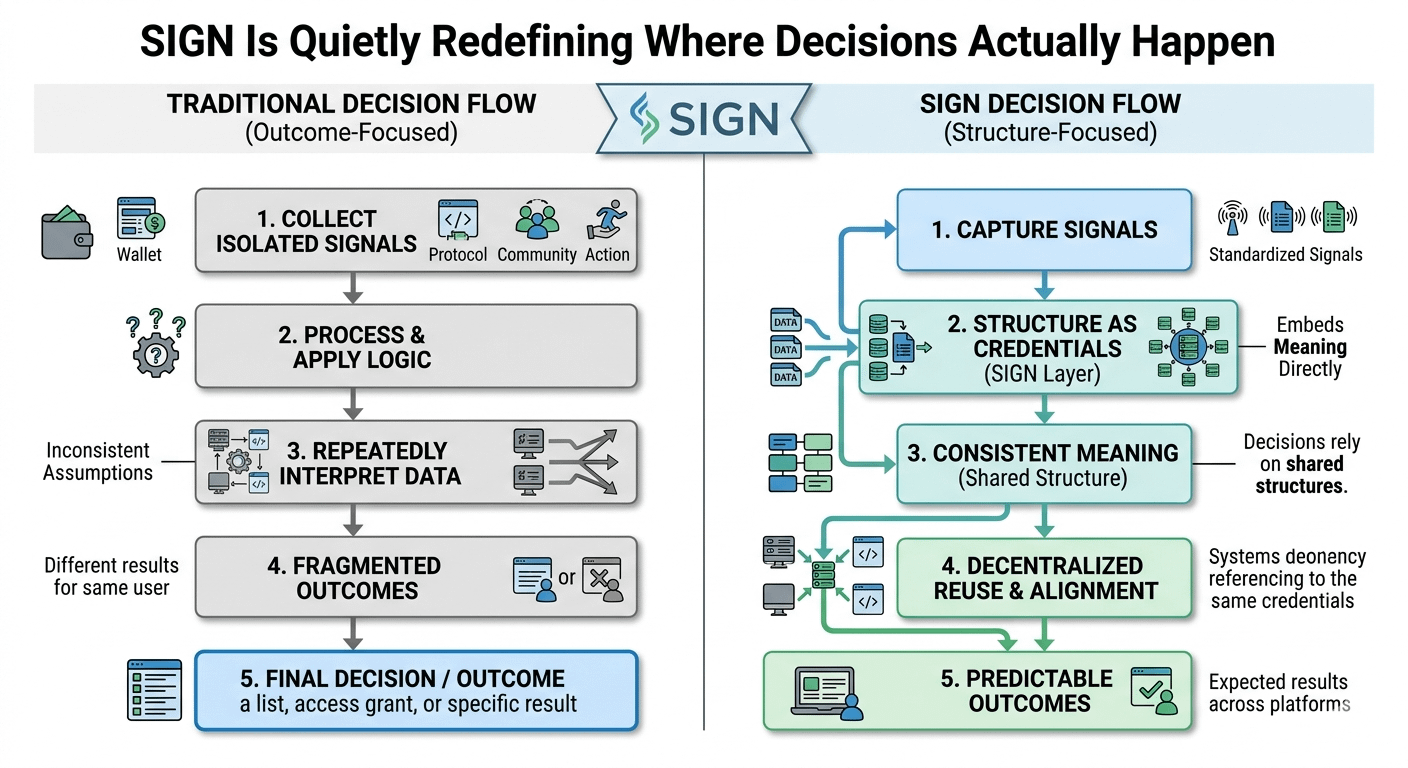
Systems evaluate the same signals independently.
Users experience slight inconsistencies across platforms.
Nothing breaks completely.
But continuity disappears.
SIGN appears to focus directly on this reset.
Instead of improving how systems make decisions,
it changes how decisions persist across systems.
In most environments today, understanding is local.
It exists inside the system that created it.
But it doesn’t travel well.
So every new system becomes a fresh starting point.
SIGN introduces a different structure.
Understanding doesn’t just happen once.
It becomes something systems can continue from.
This is where credentials take on a different role.
They are not just records of activity.
They represent conclusions that have already been reached.
So when another system encounters that signal,
it doesn’t need to start from zero.
It doesn’t need to reinterpret everything.
It can continue from what is already known.
That removes something most systems quietly depend on.
Reset.
And that changes how coordination scales.
In most ecosystems, growth increases restarts.
More systems means more independent evaluations.
More evaluations means more chances for divergence.
SIGN moves in the opposite direction.
It reduces how often systems need to begin again.
Understanding becomes continuous.
That continuity has a compounding effect.
Consistency improves.
Outcomes align more closely.
Systems behave more predictably.
And over time, something subtle changes.
Systems stop behaving like isolated checkpoints restarting the same process…
and start behaving like parts of a flow that builds on what already happened.
That flow is what most systems are missing.
Not because they lack data.
Not because they lack logic.
But because they lack a way to carry understanding forward without resetting it.
SIGN is working exactly at that layer.
It doesn’t eliminate decision-making.
It reduces how often systems need to start over.
And when systems stop resetting everything from scratch…
they don’t just become faster.
They become continuous.
Because coordination stops being a cycle of restarting…
and starts becoming a process that actually moves forward.
@SignOfficial #signdigitalsovereigninfra $SIGN