

I have been following Middle East crypto news for a long time and I want to share an observation that bothers me a little.
There is huge amount of conversation about Web3 adoption in the Gulf region. Events in Dubai. Regulatory frameworks in Abu Dhabi. Crypto friendly visa programs. All of it is real like real real and genuinely concerning... But there is a conversation that almost never happens which is what is the actual infrastructure layer that makes sustainable Web3 adoption possible for a region with these specific characteristics???
Because the Gulf is not Silicon Valley. It is not a market where you can launch a permissionless protocol and let a thousand flowers bloom with no regulatory consideration. The successful digital infrastructure in this region has always been infrastrcuture that governments could govern... institutions could audit... regulators could inspect... That is not a limitation. That is a feature of how this region builds durable systems And when I look at what @SignOfficial is building through that lens something clicks for me that I have not seen click for most commentators in this space.
S.I.G.N. is built for the way the Middle East actually works. Not for how crypto idealists wish it worked. And that is exactly why I think it has a genuine path to adoption here that most Web3 infrastructure projects do not...
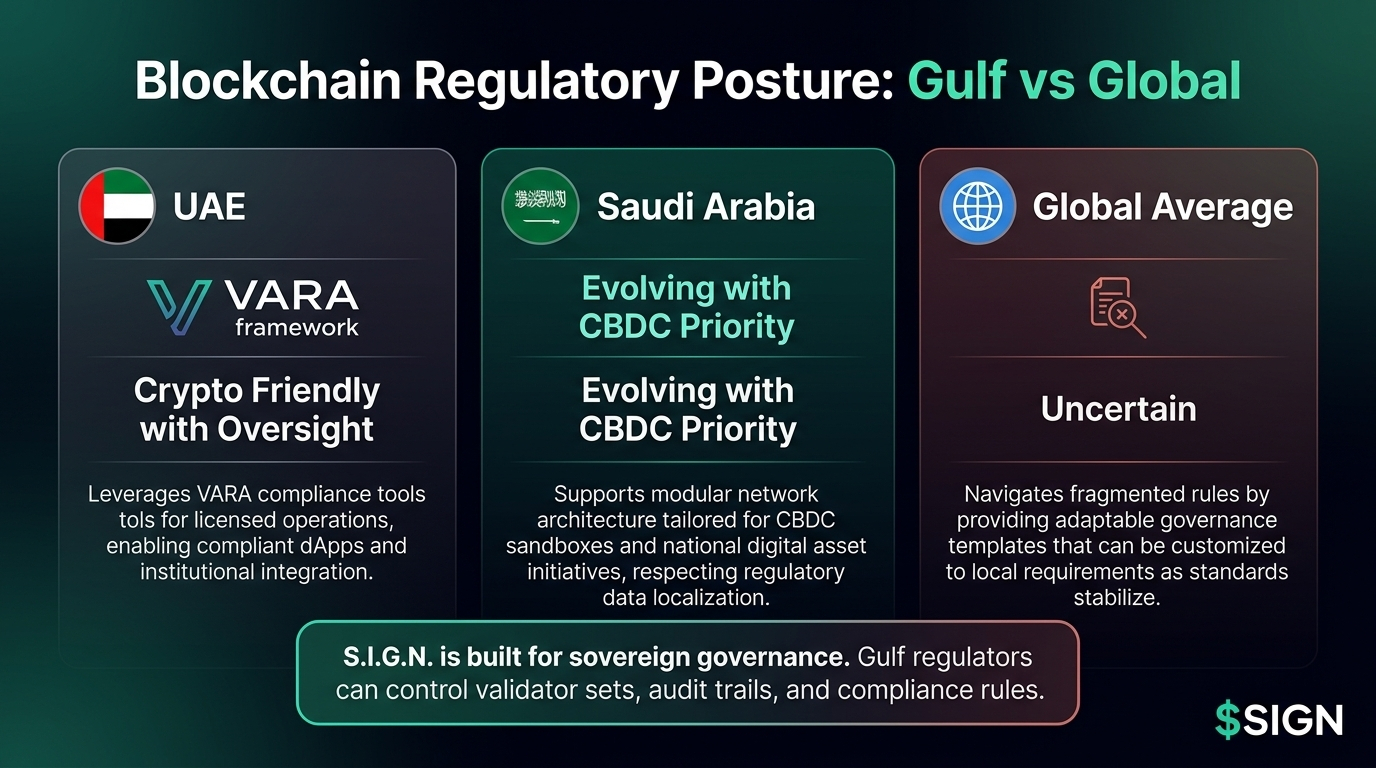
Let me be specific. The Gulf states have made it very clear through their regulatory frameworks that they want digital assets and blockchain technology to exist within supervised.. accountable structures... VARA in Dubai... ADGM in Abu Dhabi. These are not anti crypto regulators. They are pro crypto regulators who want the technology to operate within frameworks they can oversee.
Sign's architecture is built for exactly this environment.
The governance model of S.I.G.N. puts sovereignty where Gulf governments want it. The Trust Registry that governs who can issue credentials and attestations is controlled by the institution deploying it. The consensus nodes in the CBDC model are controlled by the central bank. The validator set on a sovereign L2 chain is controlled by the government. This is not a decentralize
everything philosophy. It is a cryptographically verified governance philosophy. And that distinction is everything.
I also think about the talent dimension which people underestimate. The Middle East has a rapidly growing cohort of developers, data scientists, and fintech entrepreneurs. Programs like Saudi Arabia's Vision 2030 tech initiatives and UAE's various smart city programs are producing technical talent at scale. Sign's developer experience, which I think is genuinely good based on
my reading of the docs, matters for this talent pool...
If building on Sign Protocol is accessible to a developer who is competent with TypeScript and REST APIs but is not a ZK cryptography specialist, then the local developer ecosystem can actually build on it. That is a huge advantage over infrastructure that requires highly specialized cryptographic expertise to use effectively...
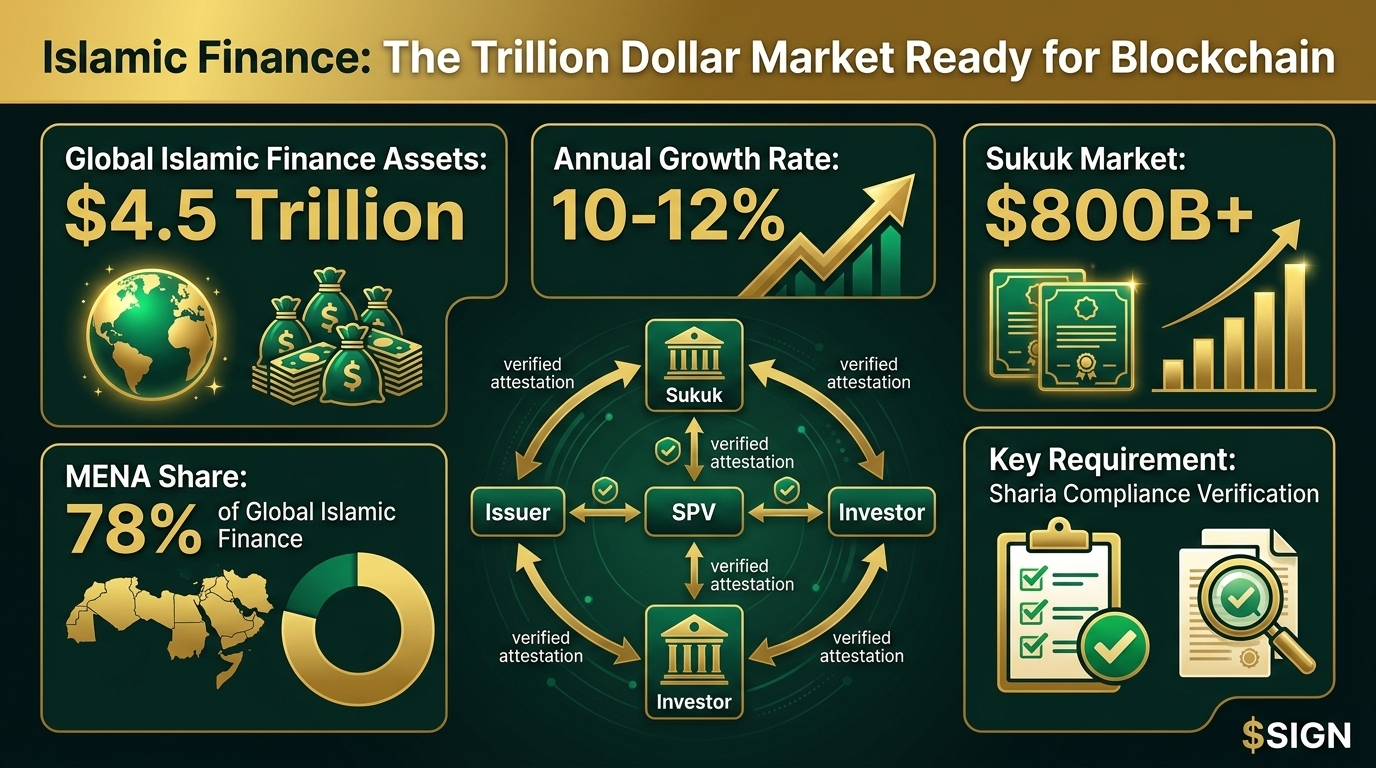
I am also personally excited about what the sign ecosystem means for Islamic finance specifically. Islamic finance is a multi trillion dollar industry centered in the Gulf with strong global reach. It has very specific requirements around transparency... auditability... Sharia compliance verification...
and profit and loss sharing arrangements. These requirements map extraordinarily well onto what attestations and cryptographic evidence artifacts can provide.
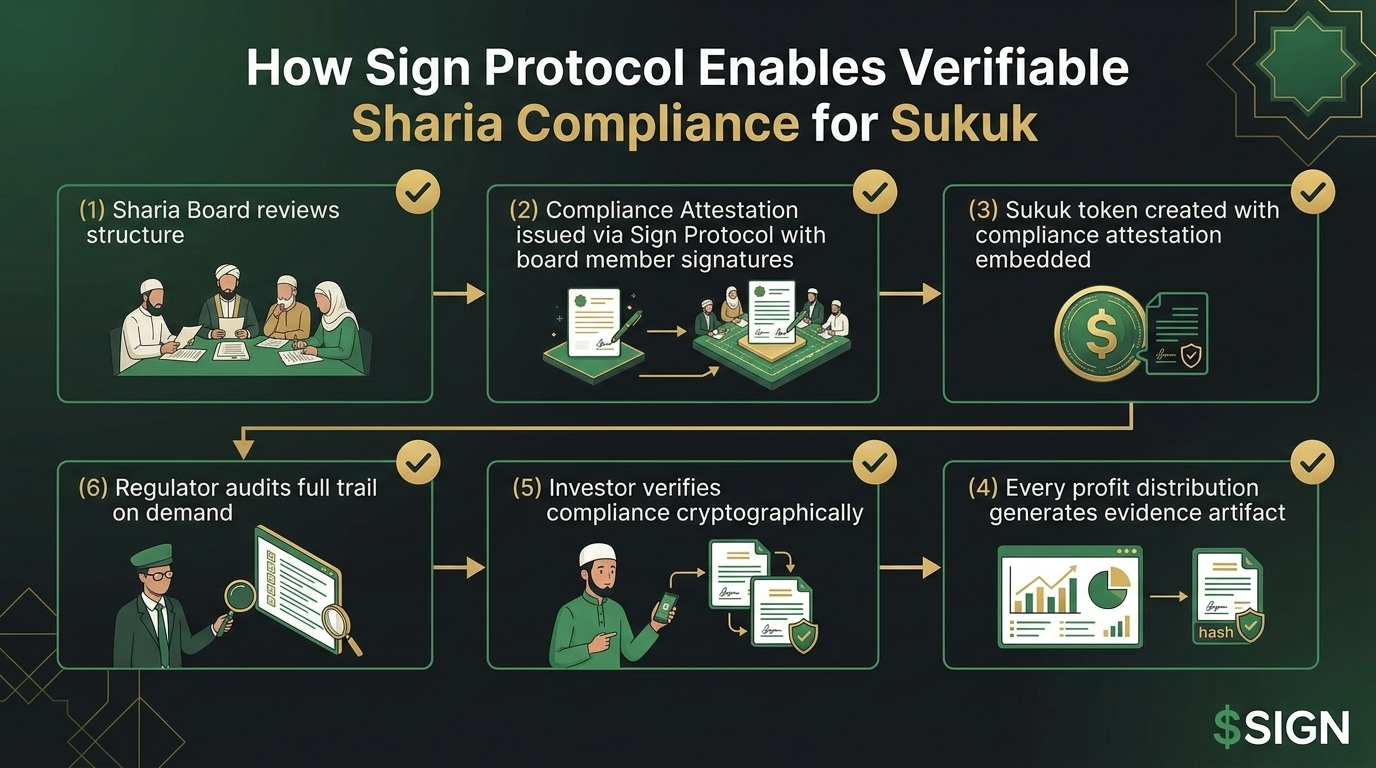
Imagine a Sukuk issuance where every profit distribution is logged as a Sign Protocol evidence artifact with the Sharia compliance attestation signed by an authorized Sharia board. Investors can verify not just that they received their payment but that the underlying arrangement was Sharia compliant according to the documented ruleset. This kind of cryptographically verifiable Islamic finance infrastructure does not exist today and it could be built on SIGN's stack.
I think about how many conversations happen in Islamic finance institutions about the need for better transparency and audit trails, and how few of those conversations have landed on a technical solution that actually fits within their regulatory and governance requirements. Sign is that solution.
The Middle East Web3 story is going to be told by the infrastructure that wins government and institutional trust early. I am increasingly convinced that @SignOfficial has one of the strongest architectural positions for that specific competition...
And I think the people who understood this early will look back in a few years with a lot of satisfaction...
#SignDigitalSovereignInfra #protocol #Sign $SIGN
